In my book, The Way Forward: Lean Leadership and Systems Thinking for Large and Small Businesses, I set out to equip business leaders, managers, and workers with tools to make their organizations leaner, faster, and more value-driven. Underneath the tactical guidance was a deeper conviction: that value must be real, not manufactured by regulation or propped up by political favors. A business should thrive by serving the customer, not by manipulating the system.
That conviction, that the only sustainable profit is earned through honest exchange, now forms the backbone of this essay: Systemic Free-Market Realism.
The first chapter of The Way Forward exposed the dirty mechanics of the modern “mixed economy,” where profits often stem not from value creation, but from regulatory capture, manufactured demand, and political favoritism. It showed how companies now thrive by replacing the consumer with the bureaucrat, and how market incentives have been hijacked to reward influence over excellence.
This essay gives that insight its full philosophical expression.
But there’s another danger that runs deeper still: assumptions. The greatest failures of our age are not the result of malice, but of faulty assumptions about equality, power, morality, and economics that don’t withstand contact with reality.
Karl Marx assumed production would remain unchanged if output was redistributed independently of any incentive structure. Xi Jinping assumed consumption was permanent, even while actively working to undermine the nations consuming Chinese products. Modern Western leaders assume that progress is inevitable, and that unintended consequences are optional.
Those who wish to tear down free markets to replace them with some form of collectivism have an easy time selling their idealism. They can simply claim to want to help people while complaining about rent being too high, food being too expensive, or life being too hard.
It’s easy to complain about reality while promising utopia, and then when utopia fails to arrive, it’s easy to complain about whatever dark forces prevented it. The common refrain about Venezuela is that socialism failed because of economic pressure from the United States. Somehow nobody notices that this is a version of ‘socialism would work fine if capitalism would only feed it.’
Socialism is supposed to be an alternate economic system. If it worked, it would not need capitalism to feed it. Yet the argument remains popular.
Even Elon Musk is on the bandwagon, telling WEF that the future will be one where robots and AI create abundance faster than demand can anticipate such that the future of mankind will be one of endless wealth and prosperity, without any need for personal effort.
Many modern Western leaders have bought into Xi Jinping’s propaganda and are actively working to undermine their own economies, in the quest for some semblance of a green new deal, or of a world where everyone’s needs are taken care of without the need for personal responsibility, and telling people this is impossible is a much harder sell than is Zohran Mamdani standing behind a podium and saying something like, “I am a New Yorker and there is nothing we cannot accomplish if we work together.”
The 20th century is full of people who worked together to bring collectivist visions into reality, such as in Mao’s China. Nobody knows how many Chinese peasants starved to death under Mao, but estimates run as high as 100 million.
There are some lessons each generation seems to need to learn themselves, no matter how many previous generations have already learned the same lessons. Collectivism is one such lesson, with each generation of idealistic youth believing that they are the ones with the intelligence, or the technology, to make it work.
Each generation is wrong, but the siren-song of collectivism continues to sound nice no matter how many nations crash upon its shores.
Systemic Free-Market Realism rejects utopian assumptions. It recognizes that power always seeks to centralize, that markets are delicate ecosystems rather than machines to be programmed, and that morality, not ideology, must be the constraint on liberty. It accepts that freedom is fragile, that prosperity is earned, and that resilience is more important than efficiency.
This is not just an economic philosophy. It is a worldview rooted in economics, systems thinking, moral clarity, and lived experience. This work grew from the trenches of business, the failures of top-down policy, and the enduring truth that real value comes from serving others.
This is not just a call for better markets. It’s a call for better systems, better assumptions, and better stewardship of the freedom we claim to defend.
This is the way forward.
The Specter That Haunts Free Markets
Across the Western world, economies no longer operate to serve the consumer. They serve governments and the corporations that purchase their favor. We are told this is “capitalism,” or a “mixed economy,” but it is neither. It is a system in which consumer choice has been replaced by bureaucratic decree, and in which production is directed by regulatory privilege. In such a system, success is no longer measured by value delivered, but by influence wielded.
What we face is not a contest between capitalism and socialism, nor between freedom and control. It is a system built on collusion between those who regulate and those who lobby. It is a world in which major corporations do not fear regulation; they design it. Compliance becomes a moat to protect incumbents, innovation is buried under paperwork, and access to capital becomes contingent on one’s proximity to political power.
Small businesses, the heartbeat of any real market, are smothered before they scale. Entrepreneurs are choked in red tape. Whole industries become cartels, their fortunes dependent on subsidy, protection, or favoritism, and yet we continue to call this system “free enterprise,” as if naming a thing ‘free’ makes it so.
The truth is simpler and more damning: what we have today is an economy in which profits are privatized and losses are socialized; an economy where the rules are written by the very interests they are supposed to restrain.
I, for one, reject this. We can do better.
I still believe in the original promise of free markets: that individuals, left to trade freely in pursuit of mutual benefit, create value through voluntary exchange. The price system conveys real information; competition drives real innovation; and the consumer, not the bureaucrat, the banker, or the activist, should be sovereign.
I also recognize that such freedom is fragile. It cannot exist in a moral vacuum. It requires boundaries that emerge from virtue: truthfulness in pricing, honesty in advertising, fairness in competition, and responsibility in risk.
Freedom also requires transparency through real feedback loops, and not propaganda. Data should reflect reality. Regulation should punish fraud and not reward failure. Institutions should serve the public interest, not private arrangements masked as public goods.
Without these, markets become tools of control. They enrich the elite, entrench the powerful, and give the illusion of liberty while stripping away its substance.
I do not seek to return to some past golden age. If we are smart, we will seek to build something stronger: a market grounded in moral reality, informed by systemic insight, and protected by institutions that exist to safeguard liberty rather than to sell it.
This is the foundation of Systemic Free-Market Realism.
The Market Is a Living System
To understand markets as machines is to believe they can be engineered, assembled from above, optimized through centralized input, and tweaked to perfection by experts who presume to know what billions of individuals want. This is the fatal conceit of both Karl Marx and the modern corporatist. It is the illusion that economies are mechanisms to be programmed rather than systems to be understood.
Markets are living ecosystems. Markets emerge spontaneously when people are free. Free people trade, take risks, fail, and learn.
We don’t think of markets as living ecosystems only because we think of them as somehow separate from ourselves, but markets are nothing more than free people interacting freely, and where markets are not free, the people are not either. People ask why socialism seems to always lead to tyranny, but the answer is simple: if people are not allowed to interact how they want, work where they want, buy what they want, and do what they want, they are not free.
Socialism does not lead to tyranny so much as it is built on it.
Markets evolve through millions of voluntary exchanges, each shaped by cultural norms, trust, incentives, and feedback. The moment we try to engineer markets through central planning, managed competition, or ideological mandates, we begin to kill them.
Too many of our leaders measure our economy based on aggregate demand, but while aggregate demand is a measure of the size of an economy, it tells us nothing about the economy’s health.
The health of an economy is driven by how well aggregate demand reflects the buying decisions of the people living within the economy, rather than what some supposed ‘elite’ thinks people should want.
In a living market, profit signals value creation. In a corrupted one, profit becomes a reward for obedience. The public, unaware of the complexity beneath the surface, continues to operate as if the economy is stable when really it is a set of bubbles, each waiting to pop.
Healthcare and secondary education are not expensive ‘just because’. They are expensive because our leaders have tried to drive economic growth around them, inflating them into bubbles. Our leaders don’t really want to deflate those bubbles either, as it would, in the short term, hurt aggregate demand.
Those are two of the most obvious bubbles, but we have bubbles everywhere.
This is why so many modern economies appear functional while suffering from internal collapse. Corporations grow larger, but their business models depend more on compliance than creativity. Governments tout low unemployment even as millions check out of the workforce. GDP climbs, but household savings vanish.
These contradictions are not bugs. They are symptoms.
A machine does not care about culture and has no need for moral input. A machine can be reset or rebuilt, but a living system cannot. Once a living system’s balance is lost, it decays, and the damage is not easily reversed.
One need only look at the personal wealth of our elected officials to see who the machine they built truly feeds, and once we see this truth, the notion that we can make the machine better by giving the same people more power – by eliminating the few free market dynamics left – suddenly looks absurd.
This is why Systemic Free-Market Realism treats the economy not as an object to be shaped, but as a system to be stewarded. It understands that no policy, however elegant, can outperform the wisdom of free individuals responding to real incentives. Systemic Free-Market Realism sees every distortion, every regulation designed by lobbyists, every subsidy shielding failure, and every data point massaged to serve a narrative, not as a benign intervention, but as a pollutant that slowly suffocates the public.
To revive the economy, we must stop engineering it and start restoring it. We need to allow the economy to breathe again such that it responds honestly to prices, and rewards actual value while punishing waste. Accountability, transparency, and risk are engines of growth, and bad ideas must fail to make room for good ones to succeed.
In short, we must stop treating the market like a machine and start respecting it as a living system of free people living their lives.
Freedom is an easy sell, but responsibility is not, and yet one cannot exist without the other. The so-called elite know this, and they take your freedom, little by little, by promising to shield you from responsibility.
The State as Parasite and Predator
In theory, the state exists to protect rights and enforce the rule of law. It is meant to provide the legal and institutional infrastructure that allows a free society to flourish, and is supposed to be neutral in its judgments, and accountable to the people it serves.
In practice, the modern state no longer acts as the referee of economic activity, but as an active participant. The modern state no longer protects markets so much as it distorts them, selling advantage to the highest bidder.
Simply put, power is a commodity that can be bought and sold just like any other, and when governments get the kinds of power others want, those in government predictably sell it to the highest bidder.
The state has become both parasite and predator, feeding on the value created by private enterprise through taxes and regulation, while simultaneously redirecting resources away from value and toward politically favored interests. This is a system in which government actors broker influence, and where the concept of economic merit is replaced by strategic lobbying.
Under this model, the consumer is no longer the final judge of value. The politician is.
This inversion breaks everything.
In the modern state, a company that cannot profit by serving the public can thrive so long as it serves the political class. Companies today need not offer a product anyone wants, but can create the appearance of value by going to the right regulatory committee, by funding the right campaign, or by checking the right ideological box.
And the deeper tragedy is that most citizens don’t recognize this for what it is. They see the familiar forms of a market economy, with brands, prices, advertising, and choice, but they do not realize the market mechanisms underneath have been hollowed out and replaced.
The price system no longer reflects demand. It reflects mandates. The cost of failure is not borne by the firm, but by the taxpayer.
The state, once conceived as the guardian of liberty, has become the gatekeeper of access, deciding who may enter the marketplace, and who must be restrained. The state’s tools were subtle at first, but over time these tools have become levers of dominance, and as the levers grew, so too did the parasite’s appetite.
Worse, the state cannot perform this function without help. It needs companies willing to sell their autonomy for privilege, and so a public-private hybrid emerges with all the coercive power of the state, and all the unaccountable scale of megacorporations. The result is not socialism in the Marxist sense, nor capitalism in the classical sense, but a managerial oligarchy with democratic window dressing.
And the bureaucrats actually running the system are not elected.
Systemic Free-Market Realism calls this what it is: an economic cartel with political enforcement.
It is not enough to trim bureaucracy. We must dismantle the mechanisms by which the state becomes both competitor and referee. We must sever the links between political power and market outcomes. That means no more subsidies for failure and no more contracts for cronies.
The state must be restored to its proper role, not as buyer or seller, not as manager or planner, but as neutral protector of rights and enforcer of honest rules.
Consumer Sovereignty is the Only Honest Regulator
In a truly free market, the consumer is not just a passive buyer or a unit of demand, but the final arbiter of value. Consumers are the ones who ultimately determine which companies succeed, which products endure, and which innovations shape the future. Consumer choice, exercised freely and frequently, is the most powerful regulatory mechanism ever devised, requiring no bureaucracy.
Consumer choice does not rely on ideology, but on freedom. It requires only, as Milton Friedman put it, “the freedom to choose.”
No corporate board or government agency has more power than three hundred and thirty million wallets making individual decisions. When people are free to choose what they value and what they reject, the market becomes self-correcting, and bad ideas fail.
Dollars also don’t care about race, religion, or gender. In a truly free market, we may not all have the same amount of money, but there are no artificial barriers to success so we all have the same right to go as far as our time and talent can take us.
Creating artificial barriers does not make people more equal. It only makes them more poor.
When the government intervenes, choosing winners and losers, mandating products, subsidizing services, or protecting favored industries, it severs the consumer feedback loop, breaking the invisible but essential link between performance and reward such that companies no longer have to please the public, but only have to please the regulators. Value in such a system becomes irrelevant, and compliance becomes everything.
In such a system, a company can produce goods no one wants at prices no one can afford, and still survive so long as the government props it up. Consumers are stripped of their power, entrepreneurs are discouraged, risk-takers are punished, and the market begins to resemble a theater where the outcomes are predetermined.
This process is often cloaked in noble intentions. We are told that regulations exist to protect the public, and that subsidies exist to promote fairness, but in practice, these tools are used not to defend consumers, but to marginalize them, replacing real demand with engineered demand, and replacing real accountability with political rot.
Consumer sovereignty is the only form of regulation that is both democratic and dynamic, reflecting not only what people say they want, but what they are willing to sacrifice to obtain it. That is a deeper form of truth than polling or planning can ever capture.
Systemic Free-Market Realism does not call for a market without rules. It calls for rules that defend the sovereignty of the consumer rather than overriding the consumer. It supports regulation that protects life, liberty, and property, but not regulation that dictates outcomes, favors special interests, or enforces ideological compliance.
In this worldview, the role of government is not to direct the market, but to ensure that no force, fraud, or coercion corrupts the ability of consumers to make informed, voluntary choices.
The government only has two roles in the economy:
- To promote and protect market efficiencies, and
- To provide those legitimate societal needs that run counter to market efficiencies.
The first role is the primary one, and even when performing the second role (which reflects societal needs – not individual or group needs), the government should always act in ways that keep the markets as efficient as possible.
The second role includes things such as police and fire protection, national defense, and building roads. Ensuring that the environment is not polluted would also qualify, although again, the goal is to minimize market intrusions and not to take over industries.
The exact scope of government will not be covered in this essay, but I will cover it in the future, in detail, when I write a book on lean government (of which this essay will be a part).
One thing I will say now is that the government is most responsive when it is local, so what the government does, it should do as locally as practical.
Let’s briefly talk about recessions, as many people envision a need for the government to actively manage the economy to prevent them.
In a geographically small country, natural disasters can cause recessions. In an economy overly dependent upon a small number of industries, market failures can cause recessions. The United States is too physically large and too economically diverse for either of these factors to throw our entire economy into one.
It is normal in a market economy for some industries to be in recessions and others to be in periods of growth, but each industry has its own market cycle and in a diverse economy, it is not normal to see all industries in a boom or a bust at the same time.
Only a systemic shock, such as Federal Reserve policy failure causing a rapid and unexpected change in the value of the dollar, can do that, and in fact this is precisely what causes recessions in the United States.
The amount of money in circulation (called the ‘M2 Money Supply’) and the totality of goods and services produced always move toward one another, such that if the amount of money in circulation suddenly changes by a significant amount relative to the totality of goods and services produced, it can throw the entire economy into a period of price discovery and cause a recession.
It was the government’s actions from 2000-2008 in creating a housing bubble, propped up by artificially low interest rates, that caused the recession in 2008, and it was government mandated shutdowns that caused the recession at the start of Covid-19. One of those was an aggressive expansion in the supply of money, followed by a crash in both house values and in the amount of money in circulation, that caused the 2008 recession, and it was a crash in totality of goods and services produced mixed with massive government stimulus spending that caused the Covid-19 recession.
Even the Great Depression was caused by the Federal Reserve, first keeping monetary policy too loose in the 1920s, leading to a debt-fueled stock market bubble (where people and banks borrowed ‘cheap money’ to invest in the stock market), and then causing a harsh retraction in the money supply as banks closed when the bubble burst and the market crashed.
The Federal Reserve had the power to prevent the Great Depression. It failed, and it is amazing how the Federal Reserve boasts about how well it manages our economy when times are good, only to bemoan its lack of power over the economy, whenever it makes a mistake.
Before the Federal Reserve was created, supposedly to smooth over short term fluctuations in the value of gold, gold booms and busts caused recessions. Any time the entire economy goes into price discovery, all at the same time, there is a recession.
The Federal Reserve really could prevent recessions if it focused solely on maintaining a stable amount of money in circulation, but it has a dual mandate to also maintain full employment.
John Maynard Keynes believed that inflation and employment were linked such that the Federal Reserve could boost employment through inflation, giving the Federal Reserve a dual mandate to maintain a target of 2% inflation while also maintaining full employment. We learned under Jimmy Carter’s stagflation that we could have high unemployment and high inflation at the same time though.
The Federal Reserve should eliminate its dual mandate and focus solely on a stable monetary base.
Also note that the government often causes what it purports to solve. Poverty rates were collapsing in the United States until the government created a war against it to supposedly end poverty. The War on Poverty was an attempt to address poverty through government dependency, and while that may be very good politics (creating a dependent class that will always vote for more), it is horrendous economics.
We should never take people permanently out of the workforce, and yet we now have generational poverty caused by the very program the government created to end poverty.
When the consumer is sovereign, the market is honest. When the consumer is displaced, the market becomes a fraud.
The Corruption Playbook
Markets are corrupted not only by ideology, but by design. The modern political economy is no longer about meeting needs or creating value, but about navigating, exploiting, and manipulating power. The rules have been rewritten to entrench the powerful, and this is not a bug in the system so much as it is the system.
Every economy has parasites. What defines a healthy system is how quickly it identifies and removes them. In today’s market, parasites write the rules, and productive participants are forced to pay rent to the state, to favored competitors, and to institutions that no longer serve the public.
Here are the tools of this institutionalized corruption:
1. Regulatory Capture
In a truly free market, regulation exists to protect life, liberty, and property, and to prevent force and fraud. In a captured market, regulation becomes a weapon of control that industry giants use, through influence over legislators and regulatory agencies, to shape rules that appear neutral on paper, but that are lethal to smaller competitors.
Complex licensing schemes, arbitrary safety standards, and mountains of red tape are not crafted for the public good. These things are barriers to entry, sold as security but used as protectionism. The result is an environment where only the largest players can afford to play, and new innovators are crushed.
2. Subsidized Failure
In a functioning market, failure is a feature rather than a flaw. Failure signals that resources are being misallocated and clears out inefficiency. In a corrupted market, failure is rewarded such that companies that can’t produce value but are close to the government, profit anyway.
Cronyists lobby for grants and secure subsidies, invoking moral causes like climate change or equity, to receive endless rounds of taxpayer support. Think Solyndra or DC Solar. Think ethanol mandates and battery factories that never reach scale.
It is easier to survive by pleasing politicians than by serving customers, but this is not capitalism. It is the permanent subsidization of incompetence.
3. Manufactured Demand
The most dangerous form of corruption is not government responses to flawed market signals. It is when the government creates them.
In a free market, demand emerges organically from real needs and preferences, but in the modern state-capitalist model, demand is often manufactured by political fiat. Products become “essential” not because the public demands them, but because bureaucrats declare them necessary.
Whole industries spring up around these political needs. Carbon accounting, DEI consulting, and ESG compliance are three obvious ones. Jobs are created not to serve value but to serve the illusion of value, simulating activity to signal alignment, and to justify their own existence.
These jobs do not produce. All they do is create waste and make the people in the country poor. We have to pay for these political needs with our tax dollars, leaving us with less to spend on the things we actually need or want.
4. Information Distortion
Markets depend on information. Prices, profits, and costs are signals that tell producers and consumers what is scarce, what is valued, and what is needed. When that information is distorted, the market cannot function.
In today’s economy, truth is optional. Advertising detaches from reality and official metrics are gamed. GDP grows while infrastructure collapses, and unemployment drops when millions leave the workforce rather than find jobs.
We call inflation “transitory” when it isn’t.
Worse yet, public perception is shaped by narrative crafted by think tanks, media, and bureaucrats working in tandem to maintain the illusion of health in a fundamentally diseased system.
When the signal is broken (as it is), the system cannot self-correct.
To make matters worse, the government’s nature is to grow. As Milton Friedman noted, “there is nothing more permanent than a temporary government program.” Government growth is more geared toward power than toward solutions, as earlier noted with the War on Poverty, and the more a government program fails, the more it expands.
We are not witnessing isolated incidents or temporary missteps. This is not an occasional abuse of power. This is a playbook, executed by entrenched interests across sectors and political parties.
Every time a startup is strangled by red tape, a failing company is propped up with subsidies, or a ‘need’ is invented to justify funding – every time a statistic is massaged to support a narrative – the system grows more opaque, more inefficient, and more predatory.
Systemic Free-Market Realism calls this what it is: a system built not to reward value, but to protect incumbency.
The only remedy is to expose the game, reject the players, and return to a market where success is earned rather than granted.
The Illusion of Control
The great myth of our time is that we can control what we do not understand as long as we have the right models, the right data, and the right team of credentialed experts. The notion that we can manage economies like we manage software is absurd.
Such perceived control is a seductive lie, and is the root of our decline.
Those who attempt to control markets through political power, be they bureaucrats, or ideologically aligned CEOs, believe they are correcting flaws and accelerating justice, but in reality they are disabling the mechanisms that make markets work. Every time a political actor “manages” the economy, they override a consequence, and sow confusion in a system built on feedback.
Markets are adaptive systems. They work not because anyone is in charge, but because no one is. They function precisely because individual actors, each responding to real incentives and information, adjust their behavior in real time.
This decentralized intelligence, what Friedrich Hayek called the “knowledge of the particular circumstances of time and place,” cannot be simulated or programmed, and while aggregating them may help measure them, measuring them does not give meaningful information for how the economy works.
Each manipulation distorts incentives in the direction of compliance. Markets that once rewarded service now reward alignment, and businesses that once had to innovate now simply have to conform.
The damage compounds. When consequences are postponed, they do not disappear, but build. Bubbles inflate and malinvestments pile up with fragile systems expanding under the illusion of stability. Inevitably a shock comes, and the bubbles burst.
In any dynamic system, knowledge is distributed and revealed over time, through trial, error, success, and failure. The more you control the outcomes, the less you learn. The more you insulate institutions from failure, the less responsive they become. Eventually you reach a point where no one, not even those in charge, knows what’s real anymore.
We reached that point a long time ago.
The more we attempt to control the system, the less we understand it, the more we distort incentives, and the more we corrupt results. The more we centralize decisions, the more fragile we become.
Let the market breathe and signal freely. Let it punish failure and reward value. Let it reveal and not conceal. Only when we give up the illusion of control can we regain the wisdom to govern justly.
Real Competition Requires Real Freedom
Real capitalism is not kind to the producer. Free markets do not coddle failure, flatter incumbents, or allow sentiment to replace substance. Free markets are harsh, rewarding those who meet real needs while punishing those who don’t.
Kodak, once a household name and a giant in photography, collapsed after it failed to adapt and was overtaken by innovators, first by digital cameras, then by the smartphone. Meanwhile, a company like Apple, once counted out and nearly bankrupt, rose from bankruptcy to reshape entire industries. That is the brutal brilliance of the free market: it doesn’t care who you were, it only cares what you deliver now.
Free markets benefit consumers, and of course, we are all consumers.
This kind of dynamism requires freedom. It cannot function when markets are rigged, when competitors are kept alive by subsidies, when incumbents write the regulations, or when failure is protected by political favor.
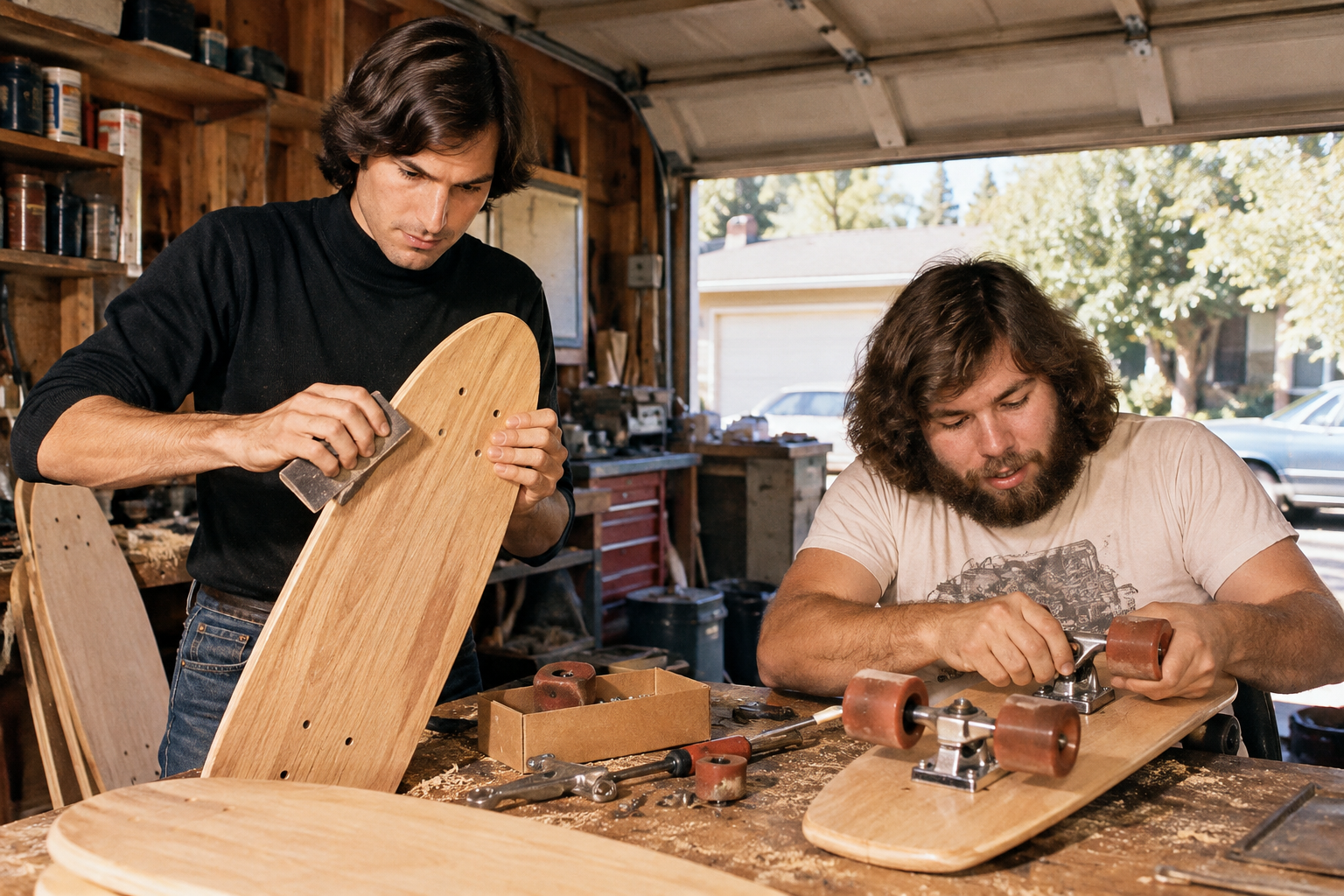
Real competition is the antidote to stagnation and the mechanism by which outdated ideas are replaced and new value is discovered. It is the only force powerful enough to discipline giants and empower garage inventors.
For markets to work, freedom must be real.
That means:
- No government picking winners and losers.
- No regulatory barriers designed by incumbents.
- No favoritism in contracts or subsidies.
- No artificial protections from failure.
Freedom is what makes competition work, and competition is what makes markets just.
Freedom is uncomfortable. It means some businesses will fail and some jobs will disappear, but at the same time, new companies emerge to create new and better jobs.
It is the discomfort of free markets that produces excellence, driving entrepreneurs to innovate, to lower prices, to improve quality, and to serve customers.
There is this weird notion that businesses somehow cheat or steal from consumers, but businesses cannot force you to buy their products. Only the government can do that. In a free market, businesses only get a consumer’s money if the consumer chooses to give it to them, and consumers only do that if they believe they will get something of more value in return.
Different people in different circumstances value different things differently. A farmer selling sweet corn cannot eat all of the sweet corn he or she produces, and so that farmer will value their sweet corn less than will consumers who want to eat the corn. Because of this, consumers buy corn. The consumers are happy, and so is the farmer.
Nobody is harmed in a free exchange. Both parties are better off. People are only harmed when the exchange is not free.
Some businesses fail. Perhaps the farmer in our example charges too much and consumers buy from someone else. This is normal and productive.
Systemic Free-Market Realism embraces this creative destruction. It does not fear churn, as it understands that without churn, there is no renewal, and without risk, there is no reward.
Value Is Decided by People
What is value?
To the central planner, it is something to be determined by committees and models. Experts, armed with data and guided by benevolence, decide what the public needs, how much of it should be produced, and who should receive it. Efficiency is achieved through centralized coordination, and fairness comes through forced redistribution.
This vision, however sophisticated it may appear, is built on a lie: that a few minds can substitute for millions, and that value can be assigned rather than discovered.
Markets do not require omniscient planners. They already contain billions of individual real-time decisions, all with real consequences. Each buyer and seller brings to the table a unique set of preferences, knowledge, priorities, and trade-offs.
No algorithm can simulate the constantly shifting landscape of human wants and resource constraints. Only a decentralized market, driven by prices, feedback, and voluntary exchange, can adapt fast enough and accurately enough to meet the needs of a dynamic society.
Planners assume that value is static and that what people “should” want can be determined in advance, based on ideology or optimization theory, but real people don’t operate that way. Preferences change and tastes evolve. What is valuable today may be obsolete tomorrow, and the only system that can respond to that reality without tyranny is a free market.
Boris Yeltsin said it best the first time he entered an American grocery store: “In Russia, people wait for food. Here, food waits for people.” Americans of course complain about the price of things, but we don’t complain about what we don’t see that so many others around the world do: empty shelves.
Bureaucrats may mean well, but they cannot see what the customer sees. No team of planners, no matter how credentialed or moral, can match the adaptive intelligence of a population acting in freedom.
Markets are not perfect. They can misprice and overreact, but unlike governments, markets learn and correct.
When markets make mistakes, consumers shift their behavior and businesses respond. When governments make mistakes, they double down and enforce compliance.
To affirm the market is to affirm the individual, trusting people to know their own needs better than a distant expert, and to recognize that liberty is not just a political ideal, but is the foundation of economic discovery.
Systemic Free-Market Realism therefore rejects the paternalism of the planner. We see in each person the right, and the responsibility, to choose, and not just in the voting booth but at the grocery store, at the pharmacy, in the business they build, and the life they live. Every economic decision is an act of dignity and preference.
When people are free to choose, they reveal what truly matters to them, voting with their dollars, their time, and their trust. And those signals, multiplied across a society – that is the economy.
We do not need five-year plans. We need freedom.
A Moral Market, or No Market At All
Freedom is not the absence of constraint so much as it is the presence of virtue.
This simple truth, long forgotten in modern discourse, lies at the heart of Systemic Free-Market Realism. It reminds us that freedom without morality is not liberty, but license. License, when unmoored from virtue, becomes exploitation.
The market, like any powerful tool, reflects the character of the people who participate in it. If those people are dishonest, selfish, and short-sighted, the market will amplify those traits, but if people are honest, disciplined, and service-minded, the market becomes not only a mechanism for exchange, but a force for good.
The irony of socialism is that the more people act like the moral angels a system without incentives requires, the less we need coercion, and the more we have to gain by being left free. In other words, any society where socialism could work, does not need it and should not want it. This statement may be ironic, but it is also true.
Until someone figures out how to distribute goods and services that are not produced, free markets will always be superior to socialism, and though the public may vote for people like Bernie Sanders, Alexandria Ocasio-Cortez, and Zohran Mamdani, the public cannot vote socialism into a workable theory.
Markets are the only workable theory we have.
This is why markets must be morally bounded, not by ever-expanding government oversight, but by a culture that instills mutual respect. Without ethics, any economy suffocates until corruption replaces competition.
An immoral market is not a free market. It is a predatory system masquerading as capitalism.
In such a system, success is no longer about creating value. It becomes about extracting value, through deception, exploitation, or force. The customer becomes a mark. The investor becomes a pawn, and the worker becomes a number to be optimized rather than a person to be respected.
This is not the vision of the market put forward by Adam Smith or the Enlightenment philosophers who laid the groundwork for Western economic freedom. On the contrary, Enlightenment values were designed specifically around the idea that liberty could only endure when paired with virtue. The very concept of individual freedom assumed a society of moral citizens who acted not just in pursuit of their own interests, but in consideration of the interests of others.
Systemic Free-Market Realism reclaims this foundation. It does not confuse greed with growth or champion exploitation under the banner of liberty. Instead, it insists that markets work best when they are held in tension between freedom and accountability.
This philosophy recognizes that to serve oneself in a free market is ultimately to serve others. You cannot prosper long without creating something others voluntarily choose. That is the discipline of the market at its best, channeling self-interest into service and rewarding those who anticipate, adapt, and deliver, over those who coerce, deceive, or manipulate.
A moral market does not require saints. It requires standards, such as honesty in contracts, fairness in treatment, and integrity in leadership.
I do not defend free markets because I expect perfection. I defend them because, when markets are paired with virtue, they correct, allowing people to thrive by improving the lives of others.
If markets lose this moral foundation, they become engines of rot, where corruption hides behind complexity and profit becomes a mask for plunder.
Luckily, free markets tend to make a people more virtuous over time, as free markets, over the long haul, reward virtue.
I would much rather have a nation built on virtue than one built on compliance.
The Way Forward
For decades, economic reform has been framed as a binary choice: more regulation or less, centralized planning or the so-called “invisible hand.” This framing is false, reducing a complex system to slogans and leaving both sides blind.
We do not need more control, nor do we need more chaos. We need principled restraint, a return to the foundational idea that markets only function when grounded in truth, trust, and accountability, and a system that rewards value rather than influence. We need a system that lets freedom operate within a moral framework, and that distributes, not through coercion, but through decentralization.
This is not a call for deregulation. It is a call for targeted, transparent regulation that exists solely to protect life, liberty, and property, rather than to steer outcomes. It is not a license for corporate greed, but a demand for competition that is open, and honest.
We need to end regulatory capture, where unelected bureaucrats and corporate lobbyists collude to draft rules that crush innovation and preserve incumbency. It is a call to return accountability to the people, so that government answers to voters, and businesses answer to customers.
We also need to remove the state from value decisions. No government agency has the wisdom to determine what people should want, what prices should be, or what solutions are best. Only the decentralized choices of free individuals can make those judgments in real time.
Let’s also replace crony subsidies with open competition. End the endless bailouts and politically favored grants. Let businesses rise or fall based on merit. Stop protecting failure.
Then we can restore truth, in pricing and in reporting. The economy cannot function when its vital signs are faked. Things like GDP, inflation, unemployment, and credit ratings must reflect reality.
Finally, we can empower companies to win through value, through products people want, services that solve real problems, and business models built on trust, rather than through lobbying or through legal loopholes.
This is not a partisan agenda, a utopian theory, or misplaced nostalgia for some golden age. It is a hard-nosed recognition of what has actually worked in the past, and of what would work in the future.
Systemic Free-Market Realism is not a return to something old. We could not go back to an earlier age even if we wanted to. It is, rather, the application of timeless principles to the crisis of our age, such that we learn from history to build a better future.