When I first learned of the Trinity, I thought of a fish tank. When I want to interact directly with the fish tank, I don’t climb into it. I use my hands. I’m right handed, so I generally use my right hand, but I may well use my left hand too. It is my hands that I use to move plants or rocks around, and to do other things inside the fish tank.
In the Christian tradition, we are made in the image of God, and when someone says, “How can Jesus be God?” I think of my right hand. When I hear the same question of the Holy Spirit, I think of my left hand. As such, I have never found the Trinity to be in any way difficult to understand.God interacts with the world the same way we would if the world were a fish tank.
John 1:1 reads, “In the beginning was the Word, and the Word was with God, and the Word was God.” In this telling, Christ is the literal Word of God, and was with God at the start of creation. God speaks the universe into existence, making Jesus the literal force of creation. That’s not as visual as hands in a fishtank, but nor does it differ in a theologically significant way. Jesus is God’s Word, or the part of God we can hear and interact with. Jesus and the Holy Spirit are in the fish tank with us.
Alexander the Great conquered long before Jesus walked the Earth, and a non-Christian Gnostic movement formed in the post-Alexander, late Hellenistic period. It was based on the idea that gnosis, or secret knowledge, can free the logos, or the soul, from the material world.
Today we would call Gnosticism a ‘cult,’ as the ‘secret knowledge’ was not in any way factually based, and could not actually deliver on what was promised.
In the early centuries after Christ, the Gnostics adopted a Christian subtext, teaching that Jesus was not God in human form (His right hand in my analogy – God’s word in John 1:1), but a man who achieved divinity through secret knowledge. Sin, to them, was ignorance, and redemption came from seeing what others could not.
If only one could learn all of Jesus’s secret knowledge, the Gnostics said, one could be as powerful as Jesus, which of course means they promised to make man God.
Actual Christianity involves humility and grace, with truth revealed to all rather than hidden for a few. Salvation, to the Christian, is an act of faith.
Gnosticism made salvation a set of secrets. As one moved up in the movement, they learned more secrets, and whether or not those secrets were true was irrelevant.
The true goal was control.
Gnostic Christianity is largely dead as a faith, but the concept of ‘secret knowledge’ remains. Groups like the Masons are built on this.
Two forces drive this transformation. The first is the ancient human craving for secret knowledge, and the desire to feel initiated by receiving it. The second is modern: the collapse of trust in the institutions that once mediated truth. Together these forces have created a civic religion I call Political Gnosticism that replaces humility with superiority and grace with supposed awareness. Salvation no longer comes from repentance or reason but from knowing, and as with Christian Gnosticism, much of what is purported as ‘known’ is not true.
As always, we need to define our terms. Political Gnosticism is the belief that political or moral legitimacy comes from possessing hidden or superior knowledge that others lack. It treats “being in the know” as a substitute for wisdom, virtue, or evidence, and it divides society into the enlightened and the blind. In Political Gnosticism, truth is not discovered through dialogue or proof but claimed as a secret revelation that grants status, belonging, and authority. It is pride disguised as insight, or a civic religion built not on reality, but on the belief that only the initiated can see reality.
Note that not all secrecy is pathological. Some protects legitimate statecraft. Political Gnosticism arises only when secrecy becomes a source of authority in itself, when “we know and you don’t” becomes credential.
Gnosticism is intoxicating because it does not just make someone feel insightful; it absolves them of responsibility. If hidden forces are to blame, then nothing about oneself must change.
Gnosticism sells because it is sexy. It promises revelation, superiority, and the warm belonging of an enlightened few. It tells its followers: you’ve been lied to, we can explain it, and you can join those who truly understand. That emotional formula powers every modern movement built around “seeing through the illusion.” Think Dan Brown’s The DaVinci Code.
Even those who try to stay factual are drawn to it. My own podcast, Cutting Through the Chaos, bears the tagline “We cut through the lies and propaganda to bring you the Outloud Truth.” That resonates because it appeals to that same gnostic instinct Dan Brown taps into: the desire to pierce the veil and stand among those who see. The difference, I hope, is intent: I want listeners to think, not to join a priesthood, and I am careful to give actual truth listeners can verify from other sources. Still, the marketing appeal of the tagline is undeniable.
People rarely want to be informed; they want to be initiated. The ancient Gnostics had oracles for that, and the modern political version has smart phones with TikTok.
Gnosticism flatters both intellect and ego, replacing the slow grind of learning with the thrill of revelation. Whether it’s Wokeness, the notion of Michelle Obama being a man, or some other such thing, there is a tendency to feel superior to others when we believe we know something – even something false – that others do not.
The Shortcut of Political Gnosticism
The gnostic impulse doesn’t live only in politics; it fuels everyday life. Gossip is Gnosticism in miniature. The story itself hardly matters. What matters is possession: knowing something others don’t. Gossip grants the illusion of intimacy and the pleasure of power.
In a way, Political Gnosticism is a reflection of the first sin, and not Eve’s curiosity, but Lucifer’s pride. His rebellion was a rejection of God’s eternal vision, and since God is truth, Satan is the original Gnostic.
The same appetite drives our fascination with celebrity secrets. The tabloids and entertainment feeds are built on the promise of hidden revelation: who is cheating, who is collapsing, or who has been “exposed.” It is a mass-market form of gnosis, feeding us the sense that we have knowledge we should not have of those who are famous.
At every scale, from office rumor to world politics, the craving is the same: we are happy to know something secret if it makes us believe we know something others do not, and that is true even if what we believe we know is not factually true. In fact, in many cases the secret may be better if it is false.
True knowledge requires patience and discipline; Gnosticism skips both. It feels like learning but is in fact the opposite.
In a culture addicted to speed, that makes it irresistible. It offers meaning without mastery, and moral superiority without moral effort. It is the intellectual equivalent of junk food, engineered to satisfy the craving for significance while starving the mind. The dopamine rush of sudden certainty replaces the slow satisfaction of truth earned.
The modern form rests on two roots, one psychological, one institutional.
The Psychological Root:
Humans are pattern-seeking creatures. The moment we detect meaning, our brains reward us with dopamine. “Seeing what others can’t” feels like victory, and moral narratives amplify the reward. We don’t just believe we’re right; we believe we’re righteous. We ask, “how can they believe that,” but dopamine is the chemical that drives addiction, so once initiated, how can they not?
The Institutional Root:
The same time-period that wired us for meaning also taught us not to trust our gatekeepers. Governments, media, academia, and corporations have lied, spun, or concealed too often. From weapons of mass destruction to manipulated statistics to “mostly peaceful” riots, the story keeps shifting, and people have learned that official ‘truth’ is often propaganda. Once transparency dies, the mind assumes that reality is being hidden.
These two forces fuse. The need to know collides with the belief that everything visible is false, producing a culture where hidden truth feels more authentic than official truth.
Every institutional lie creates its counter-myth. Each counter-myth justifies new secrecy.
Institutional lies cause citizens to distrust the institutions, leading to more Political Gnosticism, and then the institutions lie again. The cycle feeds itself.
The digital economy monetized the process. Algorithms reward novelty and outrage rather than accuracy. The headline “What They Don’t Want You to Know” has become the theology of the feed. The more deceit people sense, the more they crave revelation, and the more the market supplies it. Falsehood has become a service industry.
Political Gnosticism Across the Spectrum
The Woke Left
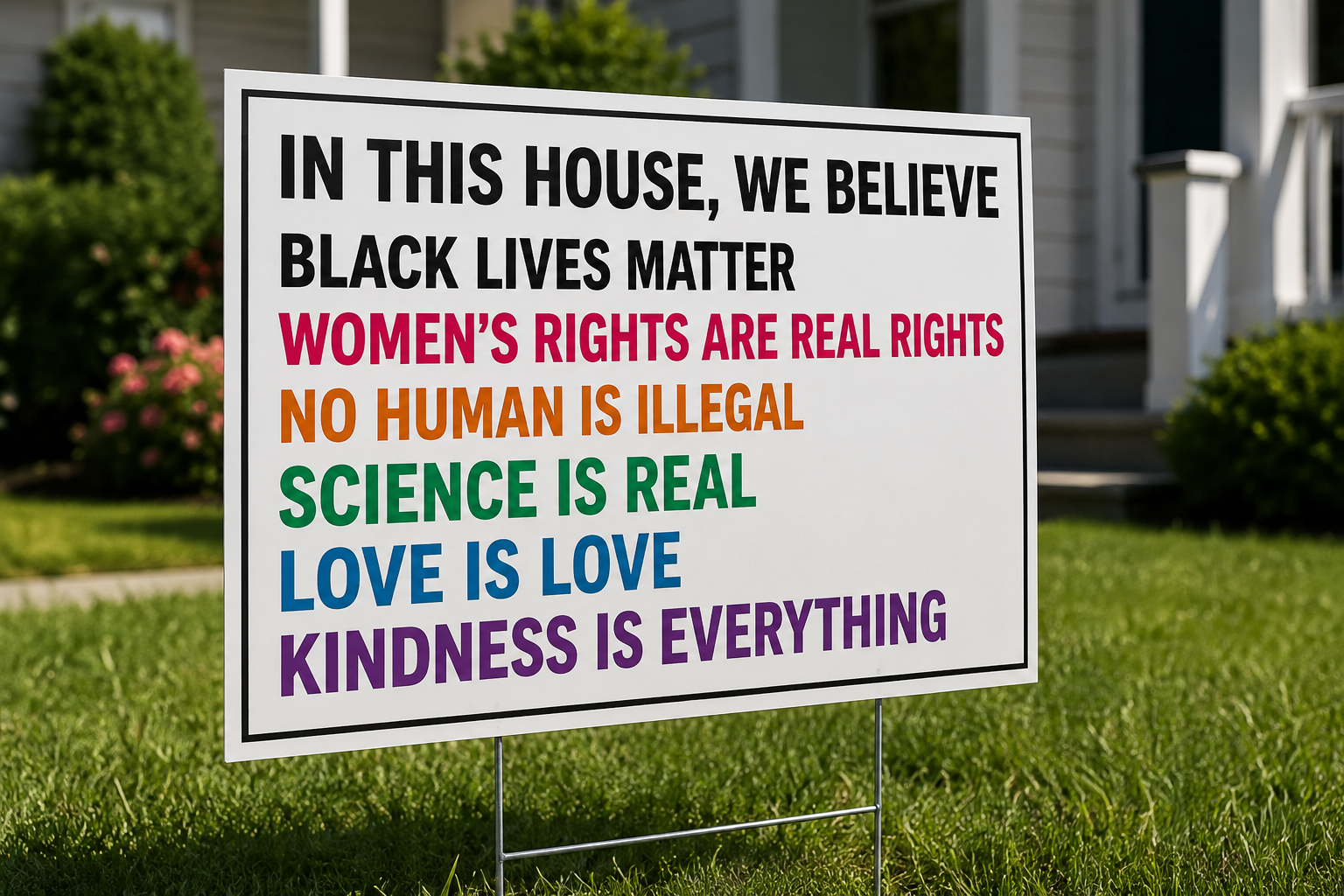
I define ‘woke’ as the ability to see oppression where it does not exist. This creates a kind of virtue defined through the awareness of invisible systems: white privilege, patriarchy, etc.. “Awake” people perceive structures of oppression that the uninitiated cannot.
ANTIFA
The thing about ANTIFA is that it pretends what it is for is less important than what it is against. It is, of course, against what it sees as ‘fascism,’ but it is for communism. The original movement was, in fact, created and financed by Joseph Stalin. To ANTIFA, everyone outside the movement is, by definition, fascist. Violence then becomes a form of purification or an act of justice revealed. Its circular logic of “if you oppose us, you prove our point” is pure Gnosticism.
Marxist Revivalists
Every generation insists it has discovered the secret formula that will finally make Marxism work. Repeated failure deepens the faith; the truth was merely hidden too well before. The phrase ‘real Marxism has never been tried’ hides the fact that every attempt to try it stalls in what Marx called the ‘dictatorship of the proletariat,’ not because the people running the system hate actual Marxism, but because the utopia they are trying to bring about is not possible.
The MAGA Movement
Trump positioned himself as a revealer with the phrase, Only I can fix it. His followers became the “red-pilled,” or the enlightened who see through the deep-state illusion. The movement also birthed its own hidden-truth myths: that Obama was foreign-born, that Michelle Obama is secretly male, etc.. Each story gave believers the thrill of forbidden knowledge. The tricky thing here is that there really is a deep state, but when the political right aligns itself as a party of one man it also becomes a cult of personality, which is a form of gnosticism.
The Woke Right
Commentators such as Tucker Carlson and Candace Owens claim access to “unspeakable truths,” including tales of Jewish or global conspiracies. Followers are promised enlightenment through defiance of taboo facts, which mirrors the woke left’s moral revelation. Where the left sees ‘oppression’ behind every blade of grass, the woke right sees ‘the Jews’ behind every moral failure.
The Anti-Trump Establishment
The Steele Dossier and years of “classified evidence” created an elite Gnosticism in which Trump’s guilt was assumed even when proof failed to appear. The absence of evidence became evidence of concealment, ironically increasing the vitriol held against Trump. In this case, Democratic politicians like Adam Schiff openly and repeatedly lied to the public, serving as Gnostic priests. The secret evidence was always one more investigation away.
The Anti-Establishment Right
The lies surrounding Covid-19 destroyed the legitimacy of the government, or of ‘experts,’ and of the mainstream media as gatekeepers of knowledge. This led not only to a healthy distrust of those things, but to an entire counter-culture of ‘secret knowledge,’ including Qanon and a host of similar things. Qanon is the poster-child of Gnosticism, with ‘revelations’ that can mean anything. And Qanon ‘revelations’ were worded in ways that could mean anything. Following Qanon is like following Nosterdamus.
Each gnostic group separates itself from everyone else, creating a series of fishbowls, and unlike the fishbowl of a shared reality, gnostic fishbowls give no chance for redemption.
As an American, I of course focus on this through an American lens, but the same thing is happening in Europe, and in fact, in Europe it is much further along. How can the authorities excuse grooming gangs without viewing the world through a gnostic lens? The authorities refused to prosecute based on a judgement that the appearance of Islamophobia was worse than repeated rape. That may be the best example of Political Gnosticism ever, as well as the most heartbreaking.
Political Gnosticism cannot be disproven, as disbelief in objective reality is built into its logic. Doubt equals blindness; absence of evidence proves concealment.
The left says, “You deny it because you’re privileged.” The right says, “You deny it because you’re brainwashed.” The establishment says, “You deny it because you lack clearance.”
The structure is identical. Truth becomes possession rather than process. Once knowledge is owned rather than earned, reason has no entry point.
The serpent’s promise, “your eyes shall be opened, and ye shall be as gods,” was the first gnostic creed. Every ideology recycles it, promising righteousness through understanding ‘secrets.’ Political Gnosticism is pride disguised as virtue, and pride is the most marketable product in history. Pride, of course, cometh before the fall.
Political Gnosticism works because it offers godlike status without similar responsibility. We can be all-knowing without being good, and infallible without being honest. In that sense, Political Gnosticism is not a fringe disease but the default religion of modernity. Even deeply religious people can fall for it, politically.
When everyone believes only they see the truth, dialogue dies. Debate becomes exorcism, the goal no longer being persuasion so much as purification. Each conversation becomes a ritual casting out of the blind in which both sides try to make the other feel ‘owned.’ The victor is deified, his face turned into a meme and his creed reduced to swagger with the creed ‘Thug Life.’
Society fractures into competing cults of revelation, each convinced that compromise is heresy and that those who question them are agents of corruption. The left insists that to doubt its vision of justice is to hate the oppressed. The right insists that to doubt its revelations about the “deep state” is to serve it. The center, clinging to institutions that have long since forfeited trust, insists that to doubt official narratives is to threaten democracy.
Here is where the observers will divide: some will see this as spontaneous decline, others as manufactured.
I don’t believe this to be a coincidence. I believe we are in the middle of a CIA-led regime change operation, and before you blow that off as exactly the kind of gnosticism I am writing about, read the article where I build the case. It is my belief that the CIA began to use the same regime change operations it has used for decades abroad, within the United States, as soon as Donald Trump – a man they cannot control – decided to run for President.
Whether CIA led or not, however, each side begins with certainty and ends in accusation. The vocabulary of debate, including facts, evidence, and reason, loses meaning. We are left with nothing more than moral diagnostics: Are you awake or asleep? Are you saved or damned? Are you woke or based? The slogans differ, but the spiritual structure is identical.
When shared reality dies, politics devolves into theater. Candidates no longer present policies; they perform identities. The citizen ceases to be a participant in self-government and becomes an audience member in a morality play that never ends. The ballot box is not an instrument of choice but a means of exorcism, each vote cast to banish the heretics on the other side, be they the ‘mind virus’ or the ‘bucket of deplorables.’
Once that happens, persuasion gives way to panic. Every disagreement becomes existential, and every election apocalyptic. To lose politically feels like moral death.
Nations can survive hatred, but not when mixed with hysteria.
People feed on fear in such an environment because it assures them they are still alive, still “seeing through” the lies that ensnare everyone else. Anger offers belonging in a fractured world, and is in fact the only emotion that still feels certain. The cycle of revelation and rage repeats until reason becomes suspect, and then gets dismissed as a tool of the enemy.
The result is what I will describe in more detail next week as politics in Fight or Flight Mode, or a civilization caught between rage and retreat.
Those in “fight” mode seek to purge the unclean through censorship, cancellation, assassination, or revolution, while those in “flight” mode withdraw into cynicism and isolation, abandoning the possibility of civic repair. Both responses are emotional reflexes to fear, and as with a person living in Fight or Flight Mode all the time (what we call ‘hypertension’), the end result is cardiac arrest or stroke, but of the nation rather than the individual.
That level of existential panic is physiological.
I take medication for hypertension, and I can remember very clearly how, when my blood pressure would drop from around 200/120 down to normal levels, I could feel the world re-open around me. When my blood pressure was sky-high, I was hyper focused on whatever was immediately in front of me as if looking at it through a tunnel. As my blood pressure came down, suddenly I became aware of the peripheral world. The danger is that while you can feel it when you come out of hypertension, you have no awareness of it while you are still in it, and we are all currently so focused on hatred toward the other side that we cannot see all that still binds us as a people.
We only see what is in the fishbowl of our own gnostic making.
At that point, politics ceases to be a contest of ideas and becomes a contest of competing faiths. No one argues to learn; they argue to affirm. We listen to detect blasphemy. Our forums of discourse, such as the academy, the press, and social media, have become temples of competing gods, each demanding total allegiance and punishing doubt as sin.
Our civilization once defined truth through dialogue. Now it defines it through division. The marketplace of ideas has become a bazaar of revelations, and each believer guards his booth with fury. Without humility, there can be no conversation, and without conversation, there can be no peace.
The easiest way to get someone who disagrees with you to laugh is to say something they disagree with that can be demonstrated as true. Do that online, and the response will be a laughing emoji. You are ridiculed for being right.
Truth is easily ignored once it becomes a laugh-track.
The Antidote
The cure for Political Gnosticism is not another revelation, but the recovery of a shared humility.
We do not need new truths; we need fewer false certainties. We need to remember that no matter how certain we may feel, we can always be wrong.
Humility is not a feeling but a posture: it begins with the discipline of admitting uncertainty before assigning motive.
We need to remember that, as with hypertension, what can affect the individual can affect a group. All of us are affected by this, at least until we learn to bring the collective blood pressure down.
The impulse to know cannot be destroyed, but it can be sanctified. True knowledge begins not with secret insight, but with reverence for a shared reality, and recognition that the world exists independent of our opinions. We are not gods interpreting reality from above (as Postmodernism treats perception), but participants within it.
The ancient Gnostics erred by trying to escape the world; the modern political ones err by trying to dominate through explanation using ‘facts’ that are often not true. Both forget that understanding is not ownership, that it often takes a great deal of time to earn, and that there can be actual truths on both sides.
Read a controversial news event on both CNN and Fox News. Note how both focus on totally separate sets of facts. In many cases, I find that both sets of facts check out as true, but by focusing only on those facts that fit the lens they want their readers to see through, CNN and Fox News create two separate versions of reality.
We ask which version is correct. I’ll answer that: neither is. If you want the truth, you need to read both and hope that there are not more relevant facts both sides ignore.
Institutions must relearn honesty; citizens must relearn grace. Power cannot be trusted unless it first learns to tell the truth, and people cannot live in truth until they learn to accept its absence.
More than that, we need to learn the humility of a people who do not know everything. As I said before, we can always be wrong.
Transparency will not end deceit but it will slow the feedback loop that turns it into dogma. A government that admits uncertainty is stronger than one that pretends omniscience, just as a citizen who confesses ignorance is freer than one who worships certainty.
We have not had a real news source in thirty years. I hope Bari Weiss is able to give us one now that she’s running CBS, but she has a ton of institutional rot to cut through.
What we now call ‘news’ needs to be broken in two. First, news organizations need to tell us what happened. Give us the facts, and give us all of them. After that, ideally in another show, they can give us their opinion, or their analysis, or whatever label they want to use for what is no longer news. Be honest with the public when transitioning from news to opinion.
Admitting ignorance is not weakness. It is, in fact, the first act of strength. It is not only both the beginning of wisdom and the restoration of fellowship, but also the moment when learning – actual learning – becomes possible.
Shared reality is impossible without humility. Only humility creates the conditions in which a person is willing to be wrong, and truth can only become common property when it can be tested rather than possessed.
The moment we say, “I don’t know, but I want to understand,” we invite others into the conversation. Humility opens the door that pride keeps locked. Once reality is no longer hidden or rigged by unseen forces, people can act within it again instead of merely interpreting it.
True knowledge invites doubt. False knowledge demands obedience. The more confident a movement becomes in its moral or intellectual superiority, the less capable it becomes of self-correction. The Political Gnostic does not seek to learn. They seek to be right without learning.
The humble person seeks truth even when it contradicts what was previously believed, allowing belief to shift.
We cannot rebuild trust until we stop selling certainty. We cannot recover unity until we stop treating disagreement as sin. The task is not to win the war of revelations but to end it, and to trade the pride of knowledge for the patience of understanding. Until then, we will keep trading revelations like gossip, mistaking the pleasure of gnosticism for the work of truth.
When all the ‘secret knowledge’ has been exhausted, when every hidden hand has been exposed and every lie avenged, we will find that truth was never hidden at all. It was only waiting for us to stop shouting long enough to hear it whisper: “Be still, and know that I am God.” Only then can we return to a form of rational inquiry.
Political Gnosticism puts us all in separate fish tanks. It is long past time to collapse the walls and re-enter a shared reality.