There are certain questions in history that can guide us by looking not at what did happen, but what did not.
What would the Middle East look like today had Jimmy Carter helped the Shah prevent Iran’s Islamic Revolution?
What would American Exceptionalism still look like had America won the Vietnam War?
What would the world look like had Karl Marx preferred Adam Smith to Thomas Malthus?
And most critically, the one everyone misses: what would the world look like had the French Revolution followed Thomas Jefferson and James Madison, instead of Thomas Paine?
The fracture inside the Enlightenment was not just about monarchy. It was also about human nature. Those who tried to separate God from the Enlightenment values also tried to separate man from his fallen nature. Paine was the proto-Marx of his era: an ideologue determined to carry theory all the way to its logical conclusion, even when human nature cannot reach that far. Man is incapable of utopia, and so every utopian dream fails.
It’s not just communism. Any ideology will fail if taken to its logical extreme, and this is why when I call myself a ‘libertarian,’ it is always with a lower-case ‘L’. This is also why Thomas Sowell’s perspective on the ‘constrained vs. unconstrained visions’ is so important – only those who understand mankind’s flawed nature truly understand the dangers behind utopian views.
France was right to have its revolution. What failed was not the revolt, but the decision to attempt a mob form of democracy. The better path would have been to understand man’s fallen nature, and then to use the only governing model ever designed to restrain government power.
Pure democracy always fails. Democratic Republics work, not because they give the people the right to vote, but because they limit the powers the people can collectively exercise, and though the French revolutionaries called their revolution a ‘Republic,’ it was a Republic in name only.
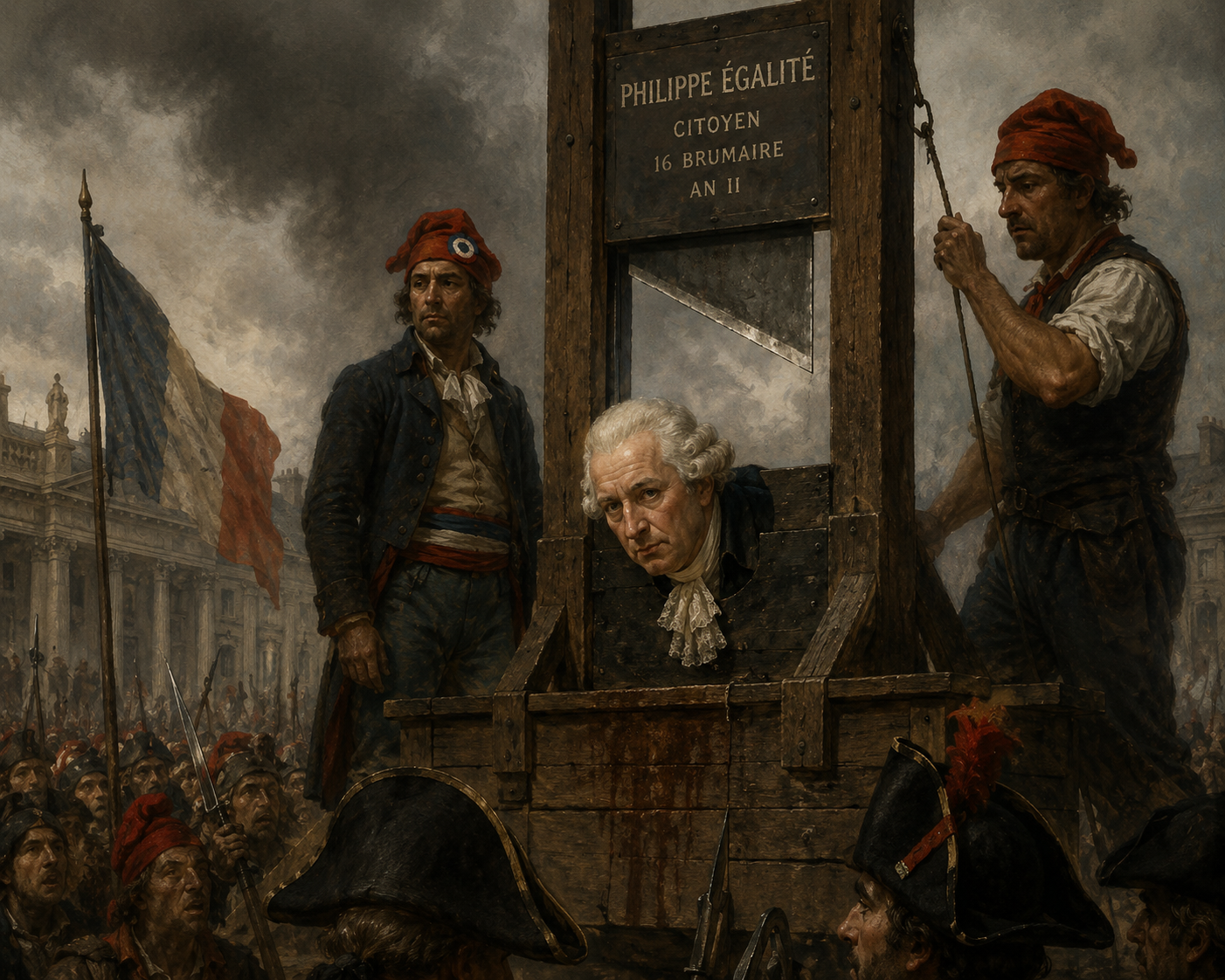
The French Revolution lacked restraint, and once the mob ran out of royals to guillotine, it began to guillotine indiscriminately. It is a sad fact of history that all Napoleon really had to do to become Emperor was to promise to tell the people to stop.
Liberty does not survive by unleashing the will of the people, but by binding it to a structure that forbids excess before excess begins, and that framework had already been built on the other side of the Atlantic with the United States Constitution, and its federalist structure.
After its revolution, France should have listened to Lafayette and adopted our exact Constitutional framework.
I might push one step further. Imagine the world had France become our fourteenth state.
Institutional Rot
France’s failure was not just political. It was also philosophical. By rejecting the American model of ordered liberty, France rejected the only Enlightenment framework built to restrain human pride before it metastasized into institutional power.
France also rejected its own tradition during the revolutionary period, including the Judeo-Christian moral inheritance that grounded public life. Morality was forced to stand on reason alone, and reason is never enough to hold a people together once they no longer agree on first principles. When morality is detached from anything higher than the individual or the state, it quickly becomes contested, and ultimately imposed.
The revolution tried to impose morality by mob. Without a shared moral framework, the mob started sending more and more people to the guillotine for violating its ever shifting morality, until Napoleon became emperor and imposed his moral order from above.
France was lost without virtue. The same lesson is now being repeated across the Western world.
Today, we are seeing large numbers of people, not only rejecting belief in God, but rejecting all that comes with belief in God, including the shared moral order that has always held Western nations together. If we do not regain that shared moral footing, we will either have mob morality (and the bloodshed that comes with it – England is bordering on this right now) or, more likely, state-defined morality.
State-defined moral systems always bend into tyranny, and tyranny knows no restraint.
Once restraint is severed, the intellectual class within our universities gradually ceases to be a steward of truth and becomes an architect of ideology. It is in fact the university system that is ‘teaching’ our children to reject our shared moral values.
Our university system was not founded by the government, but by private actors working out of the Enlightenment, trying to illuminate the world through science and reason such that this illumination could be taught to the rest of us.
These institutions were built outside of government precisely so that the government could never control the source of truth or the formation of conscience.
Harvard was founded in 1636 by Puritan ministers; Yale in 1701 by clergy frustrated that Harvard was drifting from its theological seriousness; Princeton in 1746 by Presbyterian revivalists seeking to preserve both liberty of conscience and classical reason. These were not bureaucratic organs of the State, but private academies rooted in a civilizational mission to form people capable of self-government.
The university was once understood as the guardian of a worldview. That worldview may change and adapt over time, but carefully and only with good reason. Today, our universities have been reduced to license bureaus by rejecting this worldview entirely.
Legitimacy once flowed outward from the institution to the society it enlightened. The State depended on the university, as constitutional order requires a morally literate citizenry. Today the institutions flow inward, teaching students to question our nation’s legitimacy, and to reject the worldview our universities were created to protect.
Universities now seek legitimacy from the State and repay that dependence by producing subjects rather than statesmen. Professional bureaucrats lean left, even when Republicans are in office, and of course the universities follow. Professionalized obedience, generally to the left, has replaced our cultivated independence.
This was, in retrospect, unavoidable, as the very nature of educating an elite cadre of intellectuals necessarily separates them from the people they are expected to lead. Over time, those in our institutions began to see themselves, not only as above the masses, but above objective truth. Such people began to think they could shape rather than describe reality, and Postmodernism was born.
Postmodernism did not corrupt the universities by accident. It was invited in as justification. Once the academy abandoned the possibility of objective truth, it could never again be held accountable to anything outside itself.
My son tells me that postmodernism is not really a thing outside of the art world, and in art it serves a purpose, but it should have lived and died there.
Whatever its insights about language and power, postmodernism became a license to treat truth as an act of will rather than correspondence with reality, and once imported into gatekeeping institutions, it turned accountability away from truth, and toward what looks like an intellectual version of the French Revolution’s mob. This fake ‘truth’ has no basis in objective reality and, as with all things based on a mob, it shifts constantly, usually in the wrong direction.
If no truth exists, then no betrayal is possible, and if no meaning is fixed, then no obligation is binding. If all narratives are equal, then the only thing left to arbitrate between them is force, and the university became the place where force is declared “moral” such that it can be deployed.
Entire fields were built on the premise that reality is a social construct that can be rearranged. Gender Studies, in its extreme forms for example, is premised on the claim that biology is oppressive and that “identity” is more real than are chromosomes.
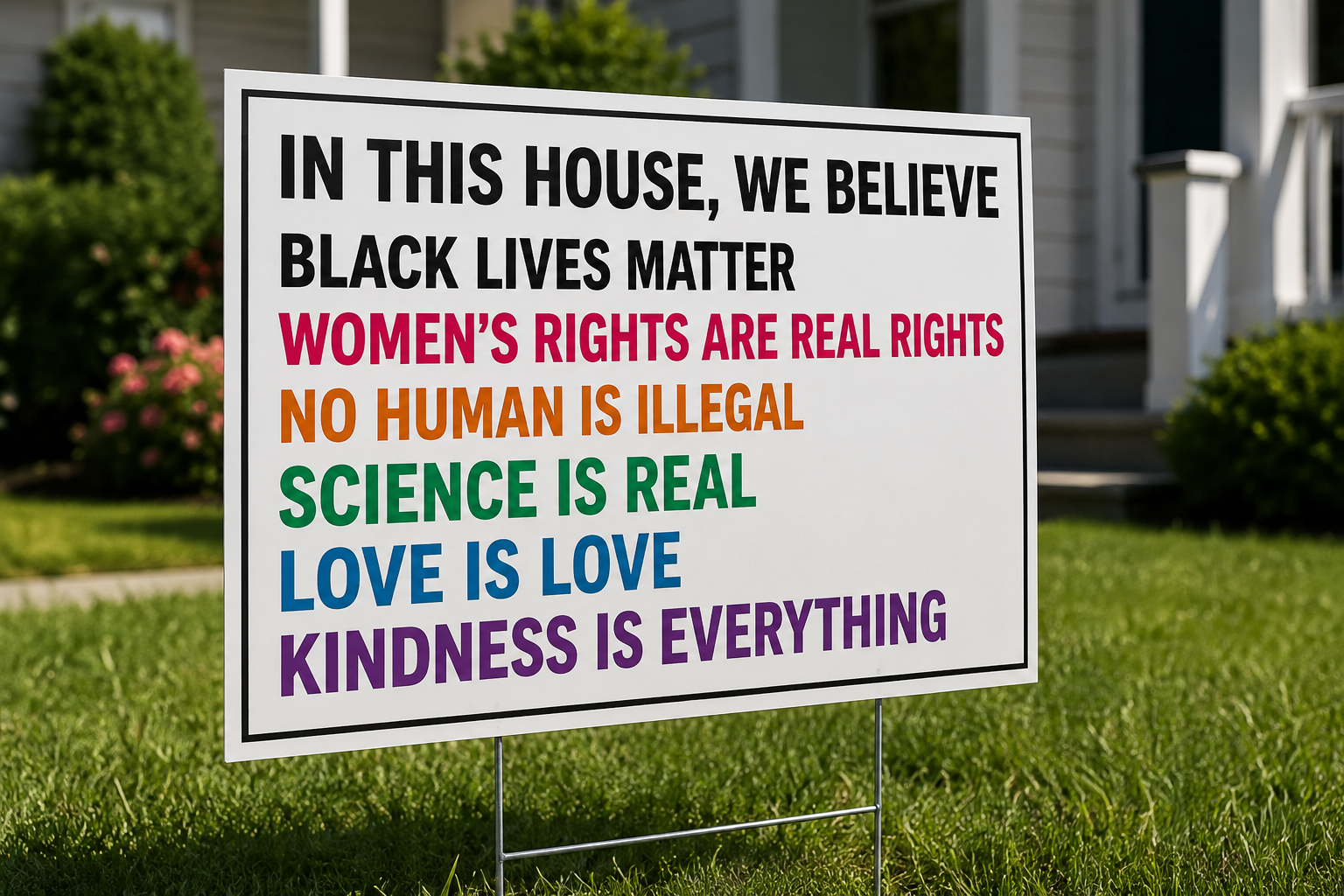
Postcolonial Studies insists that achievement is suspect unless it comes from a “marginalized” group, and that Western advancement must be viewed as theft. Critical Race Theory treats disparities as proof of invisible social systems that can only be corrected by tearing society down. Queer Theory defines subversion as virtue and makes normlessness a moral imperative.
These fields do not focus on knowledge so much as grievance, credentialed and weaponized. They exist outside objective reality, and are designed only to destroy.
Postmodernism therefore did not merely weaken the academy. It replaced scholarship with a liturgy of resentment. Knowledge no longer has to be true – it only has to be politically useful to those who hold institutional power.
A person can now earn a doctorate without encountering a single testable claim, measurable standard, or falsifiable thesis. They are credentialed not because they have mastered reality, but because they have learned how to deny it under scholarly garb.
The Enlightenment gave birth to institutions that eventually repudiated the Enlightenment’s own premise: that truth is objective, existing outside of power. The university now teaches the opposite: that truth is constructed by whomever controls the institutions.
The Enlightenment produced schools to defend liberty, but Postmodernism has converted them into factories that train the next set of Social Justice Warriors, with the intention of tearing liberty down.
The consequences are visible everywhere.
Schools of education produce teachers who cannot do math but can recite privilege taxonomies. Law schools graduate lawyers who know more about “lived experience” than due process. Medical schools now instruct future physicians to prioritize “equity outcomes” over medical outcomes. Even engineering programs are being rewritten to incorporate “decolonized design,” as if gravity is a cultural bias.
What was once an engine of illumination has been reduced to a credentialed caste justifying its own existence. The academy no longer prepares citizens capable of self-government. It prepares dependents who cannot imagine life without being governed.
The institutions are dead.
Root Causes
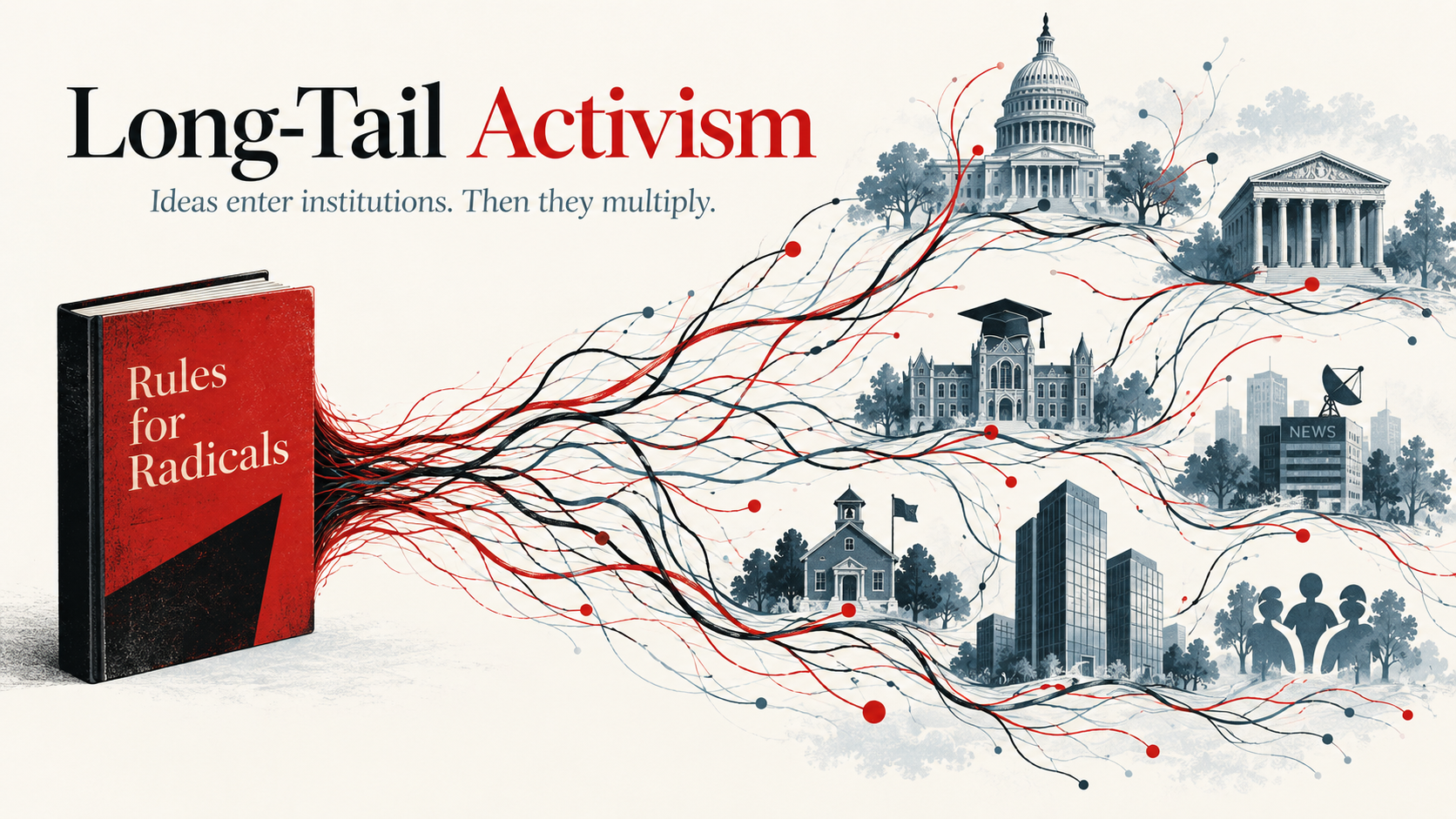
The rot we see in our universities did not begin with the Vietnam War. It began the moment Europe decided that liberty could survive without the structure that makes liberty possible.
Institutions do not collapse when they become wrong. They collapse when they become unaccountable.
Some want to blame Postmodernism, foreign donations, Cultural Marxism, or some other such thing for the collapse of the institutions, but though those things are perhaps causes, they are not root causes. If we wish to truly solve the problem, we must address root causes.
Causes return unless root causes are addressed.
Postmodernism can provide a pseudo-intellectual excuse to move from revealing reality to an attempt to rebuild it, but the root cause of collapse was built into the institutions from the start.
The institutions created credentials, and credentials created prestige. Prestige created ego, and ego listens to the voice on the opposite shoulder from conscience.
Ego listens to pride.
We should not be surprised that over hundreds of years, pride begets pride. I’ve heard it said that Republics have about a 200 year shelf life (a notion I dispel in the essay, ‘Rebirth is the Rule, Collapse the Exception’), but while it is true that civilizations often radically shift, or collapse in that general time frame, that does not mean the civilization must collapse.
We have all had weekend romances. We have also had two-week romances, six month romances, eight month romances, and one year romances. There are specific reasons why romances often fall apart at those moments.
A weekend romance is a relationship between people who do not like one another but are physically attracted. A two week romance is between two people who like each other, but where at least one of them has something about them that makes the pair incompatible. Six to eight months is how long it takes to become comfortable enough for the ‘real me’ to emerge – up until that point we tend to put our best foot forward. A year is where engagement starts to become an expectation.
Romances follow a universal psychological arc. So too do institutions.
It is not civilizations or republics that have 200 year shelf lives, but intellectual structures. It takes 200 years for the institutions to rot. Whether a civilization collapses is determined by whether or not the rot continues.
The institutions have lost their first principles, and thanks to a mixture of size, power, and pride, we are not getting them back without first replacing them.
The institutions will fight, of course, but if they lose that fight they will do what all organisms do to survive: they will adapt, copying the new system to regain their former place.
A New Intellectual Class
Now that the institutions are dead there is an obvious question: from where will a new intellectual class emerge?
The natural impulse is to look for it from within the universities, but that will not work. As Sean Connery said in The Untouchables, “When the barrel is rotten, you go to the tree.”
The intellectual class existed before the institutions, so that is where we find the tree.
The institutions were originally built to carry forward the best of lay knowledge to future generations. The next intellectual class will emerge the same way, from medical doctors and engineers, and from people with degrees in mathematics, manufacturing, or other tangible skills. These will be people advancing real disciplines rather than managing abstractions, and perhaps more importantly, they will be people who are still responsible when they are wrong.
Some credentialed thinkers joined the lay scholars who built Harvard, Yale, and Princeton, but most of the original intellectual class came from practitioners who excelled in their fields and educated themselves in other areas, outside of formal structures. Whatever they learned, whether in economics, philosophy, history, or other things, being self-taught, they did not bring institutional baggage with them. Their authority rested on mastery rather than reputation.
They formed outside the rot.
Even England’s Oxford and Cambridge were founded by those passing on practical knowledge, but unlike the American model, they developed under caste assumptions to educate a ruling class. That is why America, rather than England, produced a system designed for liberty to widen as much as expand.
Donald Trump does not mark the beginning of a new era. He marks the end of an old one. He is not the figure who lifts us out. He is the figure who exposes the decay so that it can no longer hide behind legacy or prestige. Restoration will not come from him. It will come from those who follow him, and who still wish to learn.
When institutions depart from the purpose for which they were created, authority passes to those who remain faithful to that purpose. Intellectual legitimacy does not come from age, pedigree, or inherited prestige. It comes from continued custody of truth.
Truth is not the property of institutions. Liberty of mind precedes permission from gatekeepers, and a free people do not need permission to speak.
The Enlightenment did not make the university sacred. The pursuit of truth did. The university has abandoned that pursuit. It no longer enlightens, and by severing itself from reality, it has also severed itself from authority.
The custodianship of truth has already passed to those outside the academic estate. The responsibility to illuminate therefore falls to those who still will. Discovery, debate, argument, and refinement must now be carried forward by independent thinkers who have not traded courage for credentials.
A new intellectual class must rise to resume the work the institutions abandoned. If someday the old universities return to the pursuit of truth, they may stand alongside what replaces them. Until then, their seal is no longer a mark of authority. Society must declare independence from them.
Legitimacy now lives in a distributed commons: peer-review in the open, standards bodies rebuilt outside the old guilds, independent journals and fellowships, cross-disciplinary salons, and apprenticeship pipelines tied to actual production. These are not substitutes for universities, but they are the ordering principles that precede them.
Authority reattaches to verifiable work, transparent critique, and standards that can be replicated by anyone, anywhere.
The light has not gone out. It has moved. Wherever truth is defended with honesty and moral courage, a New Enlightenment begins.
We will not reform without sacrifice. Professionals will have to risk status for speech and politicians will have to surrender power. Cancel culture will not give up without a fight.
Apologizing to cancel culture does not work, so when sacrificing righteously we can also do so with courage and conviction, knowing that the public at large will see through cancel culture into the virtue of the sacrifice. More to the point, if the institutions no longer have legitimacy, they can’t really cancel anyone anyway.
None of this is hypothetical. It has happened before.
The rise of America’s early universities followed the rot of those in England. The public university system arose in response to the rot of the Ivy League. Jordan Peterson’s Peterson Academy exists because of the present rot in modern universities, and the Peterson Academy will not be the only one.
Others will follow, and in time they will necessitate a new and independent accreditation body that recognizes only those programs that return to education’s first principles and base themselves on truth.
Ironically, that body will not be able to accredit the Ivy League until the Ivy League learns to adapt.
In time the new institutions being built will also begin to rot. The pattern never ends. The institutions don’t rot so much as those within them do, and they do so because of the fallen nature of man.
Every 200 or so odd years, we have to start this process all over again.
It is no coincidence that America needs to be reborn at the same time its institutions do. Our political rot is a part of the exact same cycle. Our political leaders on both sides have forgotten that they exist for the country rather than the country for them, and have begun to do things that 200 years ago led to the gallows pole.
Nobody seems to be able to put their finger on exactly why Trump is so hated, so let me try: he is hated because he comes from the exact same place from which the new intellectual class will emerge. I view Trump as an anti-hero more so than as a hero, but an anti-hero is often the tip of the spear.
One might ask how we transition from the old intellectual class to a new one, but the new intellectual class already exists. It’s just not very big. It will expand, and now that we know where to look it will likely expand faster than we expect.
In terms of transferring legitimacy, that too is happening. As I wrote about in my article on fight-or-flight politics, the political left is heading toward cardiac arrest.
We can see the cardiac arrest approaching by watching polls of the popularity of the Democrat Party. It is dying, to be replaced by something else after collapse.
Once that cardiac arrest moment happens, the credibility of the left’s current leadership will necessarily change, even among their own voters. Whether that is something akin to what the party was in the 1990s or the new AOC/Mamdani wing, will determine whether the party remains national, or becomes regional. Either way, the will of the public will transfer legitimacy to the new intellectual class.
And here is the crux: a rebirth of institutions does not remain academic for long. Whenever legitimacy relocates, political authority eventually follows.
America Reborn
The Constitution was built on the assumption that truth exists outside of government and that free people can only govern themselves when truth is not controlled by power.
Once a new intellectual class restores custodianship of truth, the states will again be able to assert the sovereignty the federal architecture presupposes. Intellectual renewal is therefore the precondition for political renewal, and federal reform becomes possible only after the authority to define reality has passed back to the people. Once we have new institutions we will necessarily enter a new age.
We have to decide what that new age will look like. It is coming whether we like it or not. Also, the renewal is happening in the United States, so we have to decide how to export it back to the rest of the Western World.
The answer is not to retreat from liberty, and it is definitely not to hand power back to prior unelected elites who believe civilization can only endure if freedom is restrained.
The solution points the other way. We need an expansion of self-government, not of bureaucracy. We need to return to constitutional limits on federal power so that liberty can scale.
I already touched on this in the essay, From the Lie to the Blueprint. I’ll expand on it here.
The Constitution is an empowering document that defines what the Federal Government can do, and the Bill of Rights is a constraining document that defines what no government at any level can ever do. Any nation that is willing to abide by that framework should be willing to join, if that framework is actually followed.
In this framework, the states are the sovereign entities, and the federal government exists only within the narrow space defined for it in Article I, Section 8 of the Constitution.
The Federal Government was not supposed to control the states. It was only supposed to do the very few things that the states cannot do on their own. From its onset, it was what the United Nations only pretends to be – a covenant of sovereign equals bound by moral law.
The Tenth Amendment reaffirmed the Federal boundary, such that anything not explicitly given to the Federal Government remained with the states, or the people. The Bill of Rights then stood as a firewall protecting the individual from intrusion at every level. This is an ingenious idea that allows the individual – all individuals – to flourish just as far as their time and talents can take them.
Social Security, Medicare, Medicaid, and a plethora of other government programs are all constitutional if done by the states, but they are not constitutional when done at the Federal level. The courts don’t have to order those programs removed, but they could order them spun off onto the states, where they belong.
Any spin-off must include multi-year funding transfers, beneficiary portability, and state compacts to avoid cliff effects. The idea isn’t to hurt people – it is to ensure we are helping them at the appropriate level of governance.
Governance is most responsive where it is most local. Your mayor is far more likely to know you, than is the President of the United States. The notion that everything must be done top down is false – we want bottom up, self governing systems, wherever and whenever possible.
Re-applying federalism, however, is not enough. We need backstops to prevent Federal expansion in the future.
Power corrupts, and as that corruption grows, so too does the desire for more. That is a problem in human nature rather than a problem in governance structure, and the solution is to ensure that this corruption grows in a way that keeps it in constant check.
The framework must create checks and balances between the states and the Federal Government such that as the two work against one another, they also prevent one another from expanding beyond their scope. That requires giving the states the final word on interpreting the Constitution.
We need a Constitutional Amendment that gives state legislatures the power to collectively nullify any federal law, regulation, or court ruling, by declaring that it exceeds the enumerated powers of the Federal Government. No agency in Washington should have the ability to rewrite the civic compact of Utah or Jerusalem simply by issuing a rule.
Individual states should not be allowed to nullify Federal programs and laws, but there needs to be a framework in which the states can collectively do so. It may be a majority of states, or perhaps a super-majority, but some such framework is needed.
The nullification process will also need guardrails to prevent abuse – and we need debate as to what exactly this amendment will look like. We need to get this right.
There will be a huge difference between requiring a majority of states vs requiring a two-thirds majority. There should also always be enough time between the start of the process and any vote to ensure ample debate anytime nullification is attempted.
All new Federal powers should be approved by the states, either implicitly (by doing nothing) or by nullification failing.
And any state within the Union should be able to start that process.
The Constitution is still the highest law of the land, so following it as written is supposed to be the law.
I don’t believe the Federal legislature will vote itself smaller, and whatever Trump is able to cut, some future President could restore. It is the courts that will have to do the heavy lifting. If a majority of Supreme Court Justices decide that unconstitutional powers are unconstitutional even if they have been in place for a long time, then all the citizenry needs to do to restrict the Federal Government back within its true powers, is to sue. Those suits could be brought by states, or individuals, and we may already have a Supreme Court willing to go along.
We also need to keep electing people, particularly for President, who believe in an originalist interpretation of the Constitution. This requires civics classes.
It is the ‘living document interpretation’ that allowed the Federal Government to expand. The public needs to be taught to reject the ‘living document interpretation.’ We can have honest disagreements about interpretation, but honest disagreements don’t ignore what the Constitution actually says.
We all know that America was not perfect when it was founded, but the American system was built to become more perfect over time. The Constitution says this explicitly, the preamble claiming a ‘more perfect union,’ rather than a ‘perfect’ one. We have over time made it less perfect in construct, even as we have made it more perfect in terms of application across groups. It is time to also renew it in form.
Exporting Liberty
For this model to grow, the states must reclaim their original role as guardians of limited government. Without that, any nation joining the United States would not be entering the constitutional republic the founders built. It would be submitting to the administrative state that supplanted it.
If we can reduce the Federal Government back to doing only what it was created to do, then suddenly France could join, as in Lafayette’s time, while still being France. That is the critical piece. The difference now is that the United States, once the weaker nation, is now the stronger one.
We are, in fact, so strong compared to other nations, that joining guarantees security.
The United States of 1789 had little to offer the world. Most of Europe thought the American Experiment would fail. Now we know they were wrong. America became the most powerful force on Earth because of its framework. Our strength is proof of the framework, and when used correctly, it works. The fact that we are now weakening is proof that our strength will not continue outside that framework.
And if we go back to true federalism, as designed, the security guarantees of statehood can look very appealing to other nations built on liberty. We can become a super-nation of liberty that spans the globe, and that is utterly untouchable, militarily, from without.
The methodology for new states to join already exists. It consists of treaty, plus an admission act, plus enabling legislation, and, if needed, targeted amendments for representation and cultural autonomy.
There is no reason this framework could not include modern allies. One can easily imagine Germany or Poland retaining their languages, customs, and legal traditions, while adopting the same constitutional protections enjoyed by citizens in Michigan or Wisconsin. Their identity would be secured.
Consider Israel. Iran attacks Israel today because it calculates risk based on Israel standing alone. If Israel were a sovereign state within a restored Union, an attack would carry the weight of a direct assault on the United States and would be met with overwhelming force. Israel would still retain cultural autonomy under a properly enforced Tenth Amendment, but its security would be unassailable.
Israel would be allowed to have a strictly Jewish character as long as it is political in nature, and not predicated on belief. This is precisely how Israel already operates. Cultural self-definition remains lawful so long as civil rights and equal protection bind every citizen; no civil disability may rest on creed or ancestry.
Even the problem of Islam is solved, as in this framework Islam could only involve personal submission to Sharia. Forced submission would be prevented by the Bill of Rights within the Union. If a state should try to implement Sharia in a way that violates the Bill of Rights, the Federal Government could act decisively to restore the rights of the people.
Alaska, Hawaii, and Texas were all once far more distant and culturally distinct than most Americans remember. We have done this before.
We already share military alliances, intelligence networks, and economic ties across the Western world. A Constitutional Union is a logical extension of what already exists.
The Constitution is not what makes America unique so much as the Bill of Rights. Moral relativism erodes rights quickly where they are not enshrined beyond reach. In this Union, the Bill of Rights would be.
The only true barrier to this idea is not cultural difference, but global inertia. The global ruling class distrusts liberty, as liberty transfers power back to ordinary people. The global elites want that control for themselves, so taking this proposal seriously would cause major pushback by globalist groups.
This framework does not just address encroachment by the WEF or the UN though – it makes those organizations obsolete. It is a model that maximizes human potential in a way that the global elite can complain about, but cannot stop.
Conclusion
Some say our national collapse is inevitable, but collapse only becomes inevitable when people wait for existing institutions to reform. This essay explicitly calls for new institutions under a new intellectual framework.
The Constitution was built for exactly this moment. It was not written to help us sift through rubble after collapse, but to restore balance before collapse occurs.
The founders designed a system capable of expansion, not as empire, and not under central control, but as a shield for liberty that can widen to include any people willing to uphold its principles. Some will call this empire building, but you can’t really call it ‘empire’ when it is done by consent. Empires are built by conquering. This is voluntary. We could even discuss a mechanism where states could leave, as the threat that some might is a great way to keep the Federal Government constrained.
It is not a question of whether or not other countries will join. If we reform our nation around our First Principles in such a way that we are worthy, nations that still wish to remain free will gravitate toward the shield we represent, not out of allegiance to the United States, but out of allegiance to the liberty of their own people.
Poland joined NATO for protection against Russia, and wonders if the rest of NATO really would come to their aid. Statehood, not as subject but as sovereign equal, with their military fully integrated into our own, answers that question definitively. England need not worry about becoming an Islamic state if it accepts the Bill of Rights as supreme.
The role of government is to protect liberty, not to manage decline. Federalism only works when the people practice the virtues that make liberty livable: courage, honesty, restraint, and subsidiarity, all with the humility to solve problems at the lowest competent level, before appealing upward.
The Constitution was a moral architecture before it was a legal one. Its strength depends on a citizenry capable of self-government.
If the federal government returned to its proper scale, liberty could expand again. And so could civilization.
Real federalism allows California to attempt a socialist model if it wishes, provided it does not violate anyone’s civil rights, and provided that people remain free to leave. That is genuine pluralism. That is how a diverse system stays stable without force.
This is not a fantasy. It is a framework deliberately designed to be lived. The stumbling block is not the vision. The stumbling block is getting the world to look through the lens of Thomas Jefferson and James Madison, rather than through the lens of Thomas Paine or Karl Marx.
When enough people again see through that lens, liberty will not merely survive; liberty will lead the world.