There is a story in the Genesis Rabbah, a rabbinic midrash written as commentary on Genesis, in which God tells an angel (identified as Gabriel in later retellings) that He knew Adam and Eve would eat the fruit of the Tree of Knowledge. Gabriel asks God why He included the Tree of Knowledge in Eden if He knew Adam and Eve would eat from it.
God’s response was that had He not included the Tree of Knowledge, then while Adam and Eve would not have committed sin, they would not have committed good either. God wanted mankind to be good, and that meant mankind had to actively choose good over sin. Without the Tree of Knowledge, that choice would not have been available.
God did not just know Adam and Eve would sin. He planned accordingly. The Old Testament provides rules of sacrifice the ancient Israelites followed to atone for their sin, and later Jesus became the Lamb of God, sacrificed to atone for the sins of all mankind, or at least for those who accept His sacrifice.
The Genesis Rabbah story was written as interpretative commentary rather than as revelatory scripture, so it was not included in the Old Testament. It still carries a great deal of wisdom, and while many today look at creation accounts as purely fiction, even to the non-religious there is a great deal of wisdom in them.
If I claimed that there is a great deal of wisdom in Moby Dick, I would not get a lot of pushback from secular readers, but for some reason secular society has a very hard time taking wisdom from a book many consider to be true.
Atheists are wise to be skeptical of religious texts, but as I wrote about in an article differentiating between religions and cults, there is a huge difference between belief that emerged as a search for truth, and belief that emerged as a search for wealth and power.
Not only did Jesus not seek wealth and power, but He was very critical of those who do. We ignore His wisdom at great peril.
The wisdom here is that free will is a problem whose solution is beyond our reach, and that sin and paradise are mutually exclusive.
Anyone who denies this wisdom is either lying or naïve, as each of us misuses our free will constantly, making bad decisions, often knowing they are bad decisions while we are making them.
We harm ourselves, damage our relationships, and sometimes ruin our lives. The existence of free will makes sin possible, and history offers no shortage of evidence that we take full advantage of that possibility for impulses that cause long-term harm.
Societies do not merely observe the misuse of free will. They collectively fear it, and in attempting to solve the problem of individual moral failure, societies create a far larger one, giving the government the authority to control the population in a misguided attempt to eliminate mistakes.
There is nothing magical about government power that prevents those in government from also misusing their free will, and a government with the power to control can do far more damage than can any individual outside of government.
People distrust private companies, but while Elon Musk may be the richest man on Earth, he cannot force anyone to buy a Tesla.
Government has a monopoly on legalized force. Pretending that the free will problem goes away when we give power to the only body that can legally use force is absurd.
Free will is a problem for the individual, as we all sin. The fear of free will is a problem for society, as the problem of sin only grows with power. This inversion explains the fall of Satan, the fall of man, and the repeated failure of every authoritarian political and economic system ever devised.
Free Will as an Individual Problem
I have written a number of pieces on different aspects of morality. In all of them, I make the same foundational observation: while individuals can behave morally without belief in a higher power, a shared moral order is a necessary precondition for a free society. Without some form of a higher power from which morality is defined, society will either collapse, or fall into totalitarian rule.
A society does not remain free simply because some of its citizens are upright. It remains free only when there is broad agreement on what upright means.
Europe offers a clear warning. Modern Europe has attempted to sustain freedom while allowing fundamentally incompatible moral frameworks to coexist, and the results have been predictable. When a society can no longer agree on first principles, it must eventually replace moral consensus with coercion. I explore how competing moral frameworks lead to civilizational collapse in another essay on my Substack, and I address Islam specifically as a moral inversion of Western ethics in an article published in White Rose Magazine.
Even under ideal conditions, free will is difficult to manage. If we struggle with temptation when we broadly agree on what constitutes right and wrong, it is not hard to imagine how much worse temptation becomes when society refuses to define a shared morality at all. When moral clarity dissolves, self-justification becomes the norm.
Imagine a married man being flirted with by a beautiful woman at a bar. Even if he believes monogamy is morally binding, temptation alone may be enough to test his resolve, but if monogamy is defined as just a “lifestyle choice,” then the moral barrier disappears entirely. What was once recognized as betrayal can now be reframed as self-expression.
This is why moral relativism is not morally neutral. It does not eliminate temptation. It removes resistance to it.
Human beings learn right from wrong almost as soon as they learn language. Conscience is innate. We do not need to be taught that cheating is wrong while honesty is virtuous, that stealing is wrong while sharing is virtuous, or that initiating violence is wrong while defending others from violence is virtuous. As soon as we have language for ownership and fairness, these truths assert themselves.
At the same time, we are born with intellect, and intellect mixed with temptation is a powerful and dangerous combination. The mental gymnastics humans can perform to justify wrongdoing when tempted is a testament to our fallen nature. We do not just sin impulsively. We rationalize to rename vice as virtue. The more sophisticated the intellect, the more elaborate the justification can become.
Free will, then, is not a romantic abstraction. It is a daily burden.
Every day, we make both good and bad decisions, and those decisions compound over time like a snowball rolling downhill. If we make more good decisions than bad ones, our lives tend to improve. If we make too many bad decisions, or even a small number of catastrophic ones, our lives and the lives of those around us suffer accordingly.
Because we possess empathy, we naturally want to help those who suffer. Most societies move beyond private charity and create government safety nets designed to help people recover from failure. At the outset, this impulse is humane and well-intentioned.
Once a government safety net exists, pressure inevitably builds to expand it. Some will argue for restraint, others for generosity, but over the long term, welfare systems almost never contract. They grow, and as they grow, they alter incentives.
I have a sister-in-law who lives and works in London. She has friends who openly mock her for holding a job. They do not work. They live on welfare, and they do so unapologetically.
Much is said about the greed of those who accumulate wealth. Very little is said about the greed of those who are capable of working but choose instead to live indefinitely at the expense of others. Both are moral failures. Only one is socially sanctioned.
Free will cuts both ways. It enables generosity, discipline, and sacrifice. It also enables sloth, exploitation, and self-deception. The individual problem of free will is real, persistent, and unavoidable.
The question is not whether free will can be misused. It can, and we all misuse it every day.
The question is what happens when society, fearing that misuse, decides to centralize moral authority in an attempt to manage it.
Satan’s fall is often mischaracterized as a rebellion against order, as if his objection was to structure or hierarchy. That interpretation is shallow and misleading. The rebellion was not against order. It was against the kind of order God established.
Lucifer was all for authority, but he wanted more of it for himself.
God’s created order was not one of mechanical compliance sustained by force. It was an order in which obedience was meant to be chosen. Lower beings were entrusted with real agency such that love and obedience would have the moral meaning they could only have if voluntary.
That distinction matters.
An order enforced by compulsion only preserves hierarchy. Obedience becomes a simple function of power. An order in which obedience is voluntary introduces an unsettling possibility: that authority must be worthy in order to endure.
In a voluntary system, a superior is no longer validated by position. Authority must be justified through justice, wisdom, restraint, and other moral virtues.
God was not just the Creator, but also the manifestation good. In the Christian faith, God is not just powerful, but worthy of all praise.
The first rebellion, then, was not a rejection of order, but a rejection of authority from worth. Lucifer did not trust the free will of others, and did not want a system based on voluntary submission through love. Lucifer wanted a system based on coercive power, and when God did not build such a system, Lucifer rebelled.
This is not strictly a religious story either. It is an archetype repeated in many stories, such as Frankenstein, where a man loses his mentor and tries to bring him back to life. The monster is corrupted by a criminal’s heart, and though the monster calls Dr. Frankenstein his ‘creator,’ the monster rebels against the moral order Frankenstein demands. Pinocchio is another example, albeit one with a happier ending.
Eden is often framed as a story about curiosity and naïveté, but it is more. The temptation in Eden was not about eating fruit so much as about moral authorship.
“You will be like God” is not a promise of power so much as independence. The offer to understand good and evil carries with it an implied ability to also determine such things for oneself. Eating from the fruit of the tree of knowledge was the first attempt at moral relativism, and of course it failed. Moral relativism is a morality of the lowest common denominator, which is structurally the same as having no morality at all. No society can survive that.
This distinction is crucial. Adam and Eve are not tempted to destroy the moral order. They are tempted to replace it.
Free will is not revoked after the fall. What changes is not the existence of free will, but how human beings relate to it. Before the fall, free will is understood as a gift to be stewarded within a moral framework. After the fall, each failure to live by it becomes a source of anxiety, suffering, guilt, and fear.
This marks a profound shift. Once free will becomes associated primarily with failure rather than virtue, the human instinct is no longer to cultivate it, but to contain it. Obedience begins to feel safer than moral responsibility and control begins to look wiser than trust. The goal quietly shifts from forming moral agents to preventing moral error.
When free will is viewed primarily as a liability, the natural response is to reduce it wherever possible. Authority is no longer exercised to guide, but to restrain, and the justification is always the same: people cannot be trusted with freedom.
That fear did not begin with modern states, and it did not begin in the Bible. It is, in fact, baked into every creation story known to man.
The Inversion: From Individual Failure to Systemic Catastrophe
When societies observe individual moral failure, many within seek to address the root cause and once free will is identified, the temptation arises to reduce it. The logic is deceptively simple: if bad choices cause harm, then fewer choices should mean less harm.
This is the point at which the problem stops being individual and becomes systemic.
Societies respond to the misuse of free will by attempting to manage behavior at scale. Rules multiply, regulations expand, incentives are engineered, and penalties are applied. What begins as an effort to mitigate harm slowly transforms into an effort to preempt choice.
Authority becomes centralized, not because power is inherently desired, but because centralization appears efficient. It promises uniformity and predictability, and more importantly, it promises insulation from risk.
Something critical happens at this stage, and it is almost always overlooked.
Free will is not eliminated.
It is concentrated.
Every attempt to restrict choice among the many necessarily transfers decision-making authority to the few. The freedom denied to individuals does not vanish. It migrates upward. The choices that citizens are no longer permitted to make for themselves are now made on their behalf by institutions, administrators, and so-called experts.
At the individual level, misuse of free will produces local damage. A person may ruin his own life and may harm his family, but the scope of that failure is limited by scale.
At the institutional level, misuse of free will produces systemic damage. Errors are no longer isolated, but replicated and enforced. And because they are justified as necessary or benevolent, they are often insulated from correction long after their consequences become visible.
This is the asymmetry that breaks societies.
The more authority is centralized, the greater the cost of error becomes, and yet centralized systems are uniquely bad at admitting error, as doing so threatens their legitimacy.
What began as an attempt to reduce harm ends by amplifying it.
This is the inversion at the heart of every authoritarian system, whether political, economic, or cultural. The fear of free will does not remove moral risk. It relocates it to the level where it can do the most damage. Individuals continue to misuse free will, just now the ones misusing it have the power of force over others.
Where strong man dictators arise, the problem is compounded by a tendency to hide from the dictator bad news. Telling someone like Vladimir Putin, or Xi Jinping what they don’t want to hear can be dangerous, and as such these men are isolated from the truth, forcing them to make choices blindly.
We don’t have dictators, but free will among leaders is a problem here too. Look at the billions of dollars of welfare fraud uncovered in Minnesota. Governor Tim Walz knew it was occurring, but since the fraud was being perpetuated by a favored group, Governor Walz allowed it to continue, going so far as to punish whistleblowers who spoke out against the fraud. Similar fraud has now been reported in Maine as well.
A similar thing occurred in England, where Pakistani grooming gangs were allowed to prostitute thousands of underage British girls for over a decade. The authorities knew this was happening but refused to act out of a fear of looking Islamophobic.
Look at California.
Start with the so-called high-speed rail project. What was originally proposed in 2008 as a roughly $33 billion rail line connecting Los Angeles and San Francisco has ballooned into a project now estimated at over $100 billion, with no realistic completion date. What does this spending get the taxpayer? Not a single track has even been laid.
Since about 2019, California has spent roughly $37 billion on homelessness programs when combining state funding, local government spending, and federal contributions. This does not even include money that was passed from the taxpayer, through USAID, into NGOs that don’t go through local authorities. During that same period, the homeless population in California has doubled, and conditions in many cities have visibly deteriorated as a result.
According to the California Employment Development Department, between $20 and $32 billion in unemployment benefits were paid out fraudulently during the pandemic period, which is by far the largest welfare fraud event in U.S. history.
Inmates, international criminal organizations, and repeat fraudsters received payments, sometimes under dozens of fake identities. The government of California knew the fraud was occurring and did nothing to stop it.
In each case, the same inversion appears. The state acts to reduce risk by centralizing authority, but in doing so it concentrates free will at the institutional level, where the errors only compound.
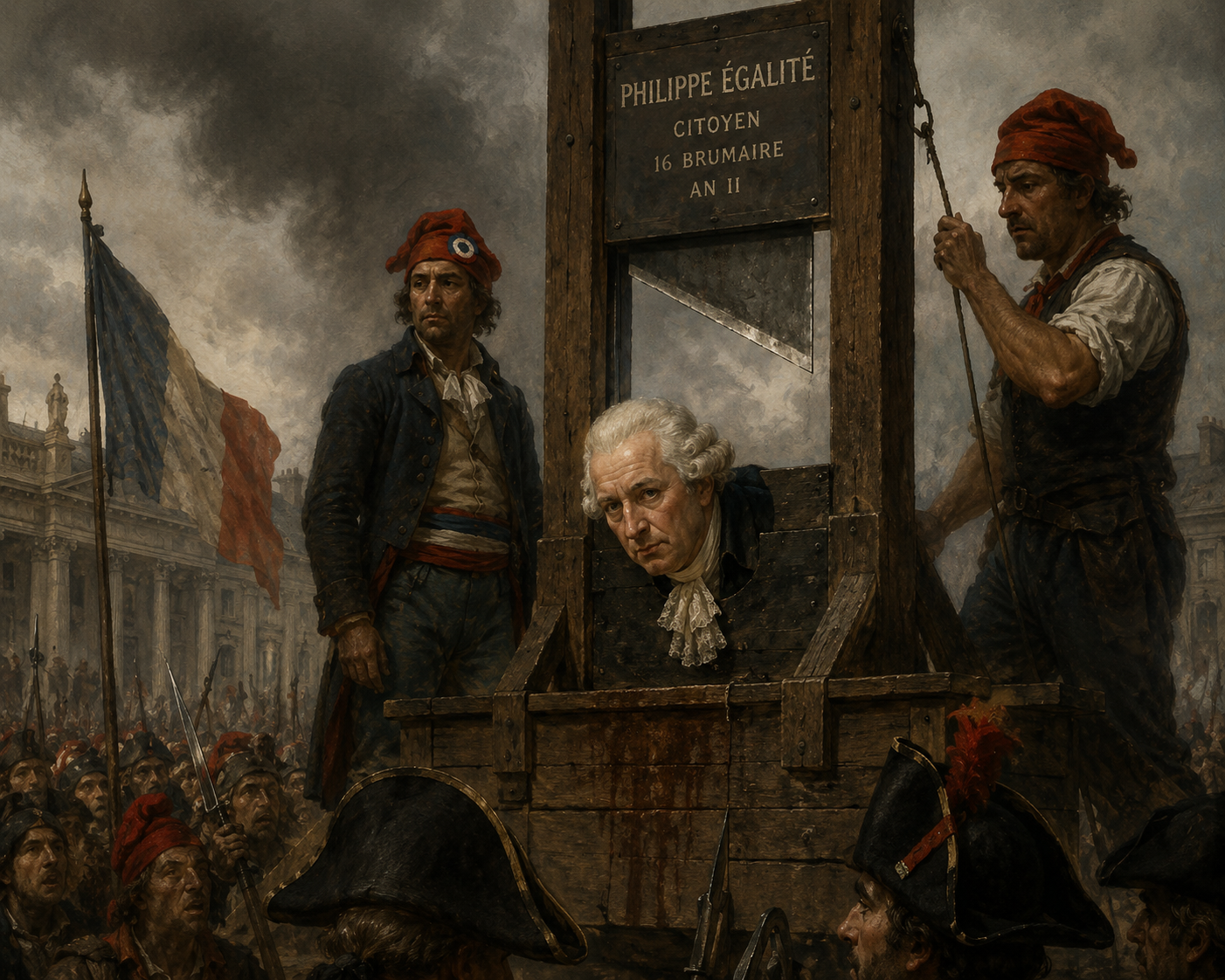
To make matters worse, whereas an individual is responsible for their moral failings and suffers the consequences of their mistakes, government officials are rarely held accountable. Too often those who fail fall upward.
Why Centralized Free Will Is Catastrophic
The central mistake of authoritarian systems is not that they misunderstand human nature, but that they misunderstand scale. They attempt to solve the problem of individual moral failure by concentrating authority, without accounting for what that concentration causes when the people it is concentrated on misuse their free will.
Individuals bear the costs of their own bad decisions, but leaders rarely do. When leaders misuse free will, the consequences are spread across millions of people, and are generally deferred into the future.
Once authority is centralized, dissent can no longer be treated as disagreement. It becomes a threat. If leaders believe their power exists to prevent moral failure, then opposition is no longer merely wrong, but dangerous. Dissent becomes irresponsible and moral disagreement is reframed as social harm.
In such systems, compliance replaces conscience.
People are no longer asked to judge right from wrong. They are asked to follow rules. Responsibility is shifted upward, and when policy is wrong, the error does not remain localized. It becomes systemic.
Mistakes are codified and enforced, and then repeated. Error becomes law, and law becomes immune to moral challenge.
Large institutions do not fail quietly. They persist and double down on past errors. Some of this is intentional, which is why people in elected office often gain wealth that would be impossible to get on their salaries in the private sector.
Their legitimacy depends on appearing correct, so they suppress evidence of fraud, waste, or abuse.
Across moral, political, and economic spheres, the pattern is the same. Centralizing authority concentrates free will while diluting responsibility. This in turn amplifies the consequences of error, while suppressing the mechanisms that would normally correct it.
The danger of centralized power is not merely that it can be abused. It is that when it is abused, everyone else pays the price.
And the larger the system grows, the harder it becomes to stop.
If the fear of free will explains the repeated failures of human authority, then the biblical account presents a striking contrast. God does not govern as human systems do. God allows free choice, even where it leads to rebellion.
At every stage, God accepts the risk of freedom rather than impose the safety of control. He allows error to exist rather than extinguishing agency, permitting rejection rather than mandating love. God gave choice, and the biblical narrative consistently treats coerced virtue as a contradiction in terms.
In the Genesis Rabbah story where God tells Gabriel that the reason He put the Tree of Knowledge in the Garden of Eden was to give us a choice in following Him, God was telegraphing the way He wants us to live. Though the atheist might not believe Jesus will transform His followers such that there will be no sin in heaven, we should all agree that the problems inherent to free will, serious as it may be within individuals, becomes far more destructive when we allow our political leaders to take our choices away.
This is not just a Biblical concept, either. Every creation account has some version of the same moral lesson.
Free will within individual citizens causes far more benefit than harm. As free will scales upward into centralized power, corruption follows, and the ratio reverses. We do not have to imagine what a world ruled by Satan would look like. We see it every time a totalitarian overlord takes a people’s free will away.