After Osama Bin Laden orchestrated 9/11 and brought down the Twin Towers, I began to ask how it was possible to recruit people to commit such horrific acts. The answer turned out to be depressingly simple. All Bin Laden had to do was walk into some of the poorest parts of the world and tell people, “Your lot in life is not your fault, and I can help you get back at the people whose fault it is.”
Revenge is a powerful motivator. People will kill, and even die, if they are convinced that their misery was imposed on them by others, and that violence will bring justice.
Bin Laden used revenge. In the modern West, the same psychological trick has been turned inward, but the weapon is not revenge. The West has weaponized guilt. And the West did not turn guilt against others, but on itself.
Guilt is one of the most powerful forces in human life. Properly directed, it sharpens conscience, restores relationships, and makes justice possible. Judges look for signs of guilt in sentencing hearings, and when they do not see it they often lengthen punishments. Those incapable of guilt we call psychopaths, and wise people avoid them.
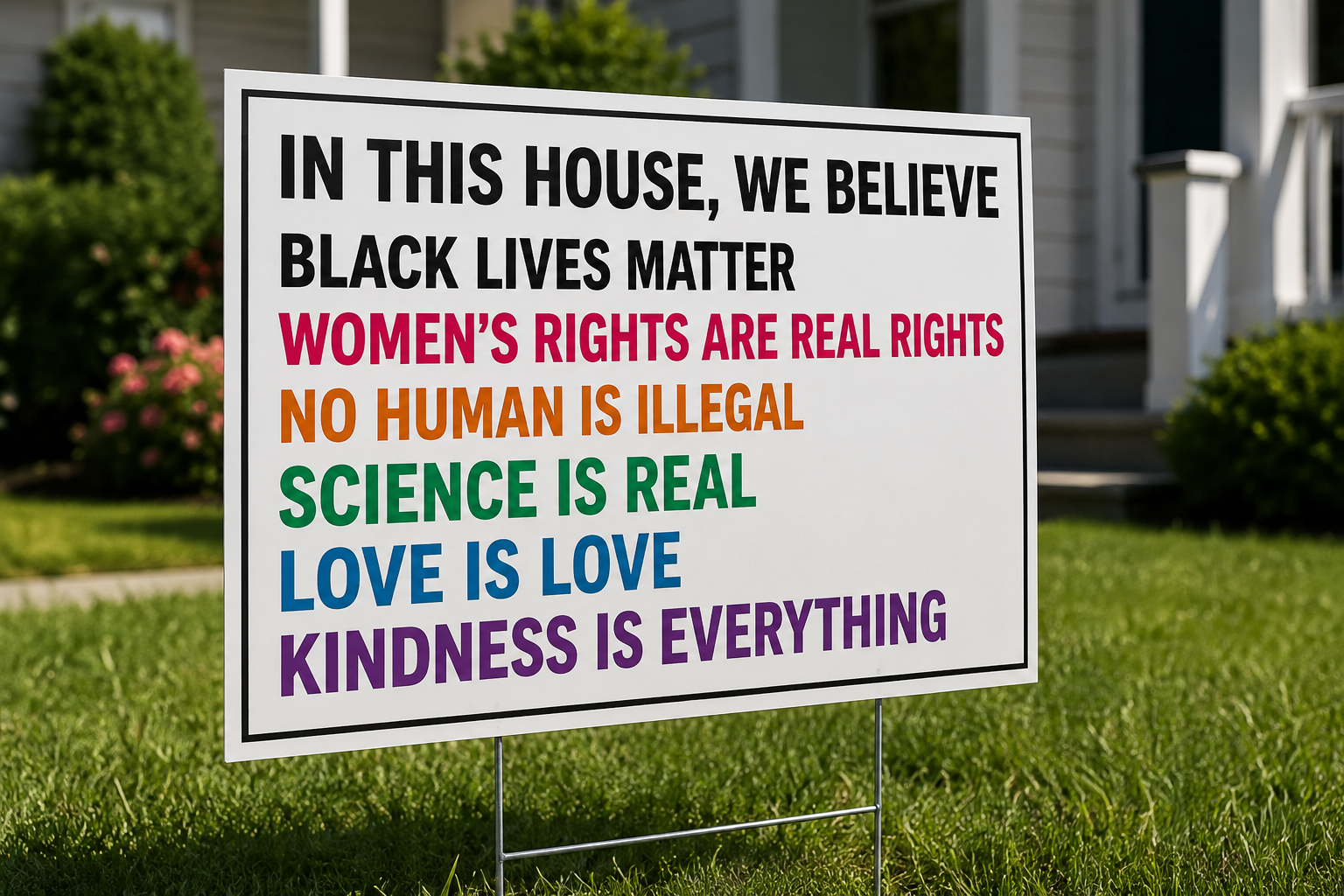
But guilt in the West has been twisted into something else entirely. No longer tied to personal responsibility, it has been recast as a collective inheritance. People are told they are guilty not for what they have done, but for who they are and for what others did centuries before they were born. Entire nations are branded with permanent moral stains, while others are stripped of agency altogether and recast as helpless victims.
Weaponized guilt twists the story of the West. It treats conquest and slavery as if they were European inventions, unique sins that no other civilization ever committed. It lets the rest of the world off the hook by pretending their empires, their wars, and their slave trades were somehow different, or worse, that they were only reactions to Western crimes.
Textbooks follow the script. America is reduced to slavery, Britain to exploitation, and the whole of Western civilization to oppression. Forgotten are the abolitionists who fought to end slavery, along with the institutions of law and liberty that still hold much of the world together. Instead of teaching young people to be grateful for what they’ve inherited and to build on it, we tell them their inheritance is rotten; that the whole thing deserves to be scrapped. And far too many of them believe it.
In a healthy society, each generation is a bridge, carrying forward a culture shaped by the past and refining it for the future. Some traditions are discarded, others are adapted, and still others are preserved, but the chain is never broken. Much of Western society has chosen to break the chain entirely, teaching its children not to carry their parents’ values forward, but to be ashamed of them and ultimately, to cast them away.
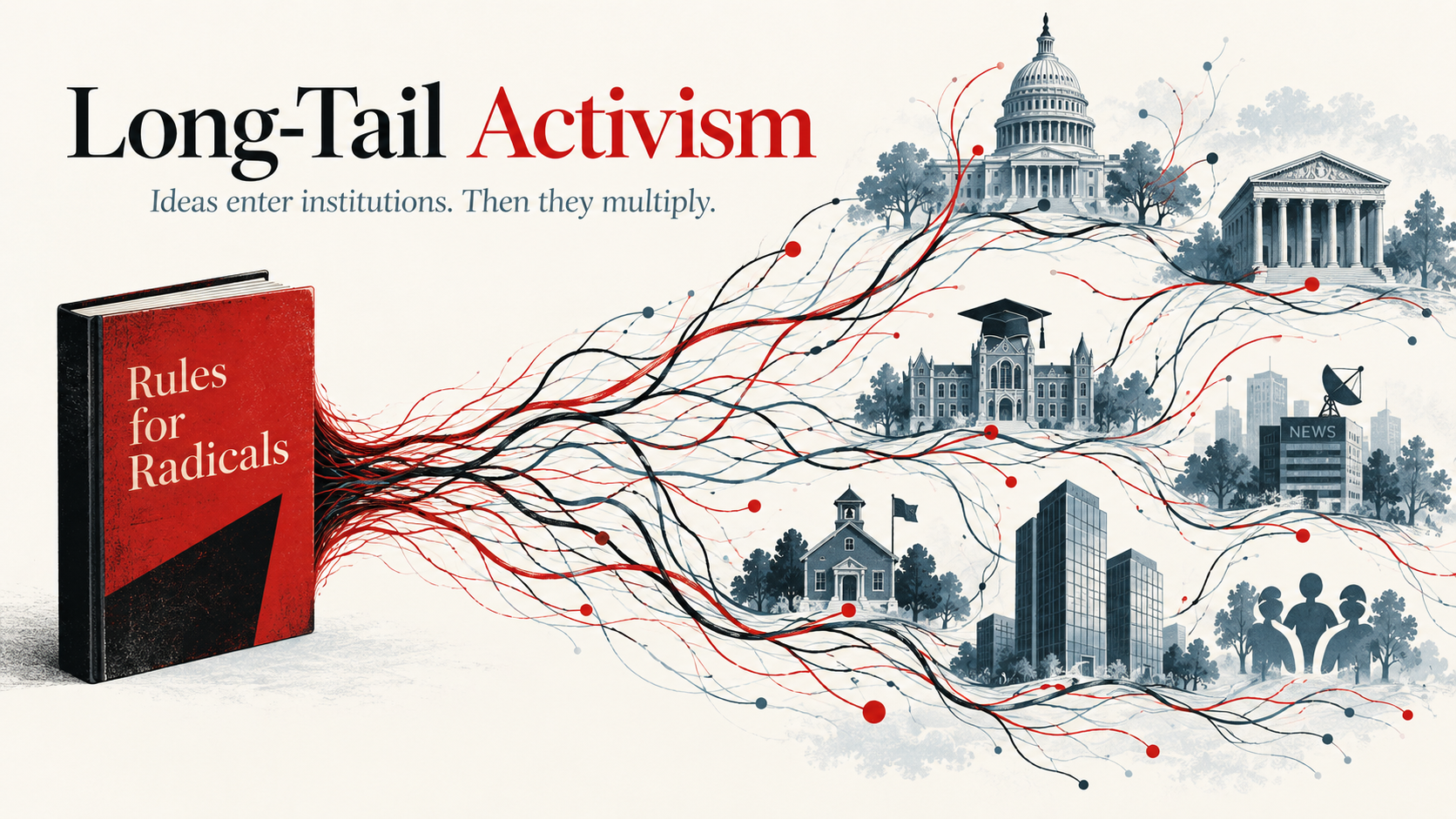
The story of weaponized guilt is the story of how Western societies, the most prosperous and free in history, were taught to see themselves not as examples but as criminals. That deliberate distortion now threatens to undo the very foundations of our civilization.
Malthus and Marx: The Roots of Weaponized Guilt
Thomas Malthus and Karl Marx are rarely discussed together, yet both contributed to a moral inversion that still shapes Western thought. Each, in his own way, stripped human beings of agency and recast prosperity as a source of guilt rather than gratitude.
Malthus, writing at the dawn of the Industrial Revolution, believed population growth would always outpace food supply. He saw human flourishing not as a blessing, but as a curse. Every new mouth to feed was presumed to be a step toward famine, war, or disease. His predictions failed not through bad math, but through a blindness to human ingenuity.
Agricultural innovation, industrialization, and free markets shattered the iron law he assumed could never be broken, and though Malthus would have been aware of this based on the contemporary work of Adam Smith, what endured with Malthus was his suspicion of abundance itself. Prosperity was redefined as dangerous and large families as reckless. In Malthus’ wake, success became something to feel guilty about.
We hear the echo of Malthus in today’s environmentalist rhetoric that treats technological progress as destructive and human flourishing as unsustainable.
Had Marx absorbed Smith, he might have seen that free markets were already solving the problems Malthus feared, but instead, Marx froze Malthus’ pessimism in place and built an entire political superstructure on top of it.
For Marx, wealth was never the result of creativity, discipline, or risk-taking. It was always theft. The rich were guilty by definition. His theory reduced human beings to categories and erased the individual as a moral agent. Morality was no longer about choices but about where one stood in an abstract system of production.
Marx’s economic predictions collapsed under the weight of reality, but his moral inversion survived. To this day, success is often treated as evidence of exploitation, while failure is treated as virtuous.
Together, Malthus and Marx shifted the center of moral gravity away from individuals and onto abstractions. Production was assumed as a background constant, while prosperity became suspect. Guilt was no longer something we felt for what we had done, but something imposed on us for who we were and where we stood within vast impersonal systems. This was the birth of weaponized guilt: a way of thinking in which abundance is shameful, success is immoral, and responsibility is collective rather than personal.
It is no accident that modern Western societies, steeped in this intellectual inheritance, find themselves unable to celebrate their achievements without apology. The seeds planted by Malthus and Marx still grow in every narrative that casts prosperity as a crime and human thriving as a threat.
That moral inversion eventually helped spark a denial of agency in general.
Reductionism and the Denial of Agency
Weaponized guilt thrives not only on distorted history and bad economics, but also on a philosophy that denies human freedom at the most basic level. Richard Dawkins once described human beings as “meat machines,” biological organisms whose DNA “programs” them to survive and reproduce. In his view, our consciousness is a trick of chemistry, an illusion that makes us “think we think,” while in reality we are just vehicles for our genes.
According to Dawkins, our brains are nothing more than complicated computers running on DNA as a kind of computer program, and processing through it human experience as data. Dawkins wrote in The God Delusion, that science has no explanation for free thought, and thus believing in it was to believe in a supernatural force, which is outside the confines of science. Dawkins wrote that there is no rational difference between believing we actually think, and believing in God.
This belief has taken root in academia in the sense that many of the world’s rich and powerful believe that, though we cannot yet control DNA, if we could control people’s lived experiences and their access to information, we can feed them the data they need to operate optimally in the world, as the ‘meat machines’ they are.
If our thoughts and actions are predetermined by genetic coding or material processes, then guilt is not a recognition of wrongdoing but merely a biochemical reflex to programming and data. What we call morality becomes nothing more than evolutionary utility, hardwired to help our species survive. We don’t don’t actually do anything – we just respond, completely beyond our ability to control.
I’ve written before about how we can know something rationally, but have no emotional connection to it, and this belief, popularized by Dawkins, is not something anyone can emotionally connect to, as it violates the law of Descartes: I think, therefore I am.
Far from disproving God, Dawkins wrote a very powerful argument for His existence, even if he rejected that argument himself.
We all know we are conscious beings with sentient, free thought, and we all live our lives accordingly, but though those who consider themselves an ‘intellectual and moral elite’ may live their lives emotionally connected to their own sentience, they are free to rationalize the rest of us away, reducing us not only to machines with no moral agency, but to machines with no moral purpose. We are, to them, disposable.
This dovetails neatly with the logic of weaponized guilt. If individuals are not real agents, then morality can be shifted from persons to systems, and from choices to categories. Crimes are no longer committed by men with will, but by structures, institutions, or entire civilizations. In this worldview, it makes perfect sense to condemn “the West” as a whole while exonerating non-Western actors. If no one truly chooses, then responsibility is simply assigned according to a narrative, and whatever narrative is most useful is the best one to use.
Understand that to those who view us as ‘meat machines,’ truth is not relevant. All that matters is how we respond, and we will be fed whatever data works best to control us, whether fake or otherwise.
Worse, to deny agency is to deny dignity. A man who is only a “meat machine” cannot be justly praised or blamed. He cannot repent or reform. He cannot even be guilty in any meaningful sense, because true guilt requires freedom of choice. The irony is that the very thinkers who reduce human beings to machines still call for moral and political reform. They demand guilt and penance from the West while undermining the very foundation that makes guilt meaningful in the first place.
We know what people really believe based on how they act, and the actions of such people reveals a contempt for human dignity that borders on evil. Richard Dawkins has, incidentally, disavowed this view. He now calls himself a ‘cultural Christian.’
If there is no freedom, there can be no guilt. And if there is no guilt, then weaponized guilt is not a moral system at all but a tool of manipulation, exploiting the illusion of conscience to achieve political ends. By stripping human beings of agency, reductionist philosophies make us vulnerable to the worst kind of moral inversion, where shame is demanded, but never earned, and where innocence is impossible.
Conquest and Colonialism
Conquest is as old as civilization itself. It is not a Western invention, nor is it uniquely Western in its brutality. The Mongols annihilated entire cities, slaughtering populations by the millions and turning fertile lands into wastelands. The Ottomans and earlier Islamic Caliphates spread by the sword across three continents, subjugating Christians, Jews, and pagans alike while filling slave markets from North Africa to Anatolia. In East Asia, Japan’s invasions of Korea and China during the sixteenth and twentieth centuries were among the most savage campaigns in recorded history, marked by massacres, enslavement, and the destruction of entire cities. To single out the West as if it invented conquest is to erase the blood-soaked record of the rest of humanity.
The word ‘slave’ betrays the lie of slavery being uniquely European. Its root is ‘slav,’ which is the ethnicity of Eastern Europe, a people taken by both Vikings and Muslims, in such large numbers that the name of their ethnicity became the word.
There were millions of white slaves in Muslim lands, and the Islamic trade in Africans not only dwarfed the transatlantic trade in numbers and duration, but also persisted long after the West abolished slavery.
The slaves sent to the Americas were in fact purchased from Muslim slave traders in North Africa and the Ivory Coast.
Slavery was common across all corners of the Earth, including among the Native American tribes. So too was war.
It is common today to discuss Native Americans as if they learned war from white settlers, but the Native Americans were no strangers to conquest and brutality. Long before Europeans arrived, they fought ceaseless wars against one another, enslaved captured enemies, and often tortured them to death in rituals designed to instill terror.
The idea that indigenous societies were peaceful utopias shattered only by European arrival is a myth. They practiced the same conquest, enslavement, and domination common to every civilization in history, taking land from one another for the same reasons Europeans later took land from them.
Colonialism is simply conquest across water, and that too was not limited to Europeans.
The Phoenicians established colonies across the Mediterranean, most famously Carthage, which itself became an imperial power.
The Chinese under the Ming dynasty launched vast naval expeditions under Admiral Zheng He, projecting imperial influence and establishing tributary relationships as far as East Africa.
To treat colonialism as a uniquely Western sin is historically dishonest.
What distinguished European colonialism was not its existence but its scope and timing. It occurred during the industrial era, on a global scale, and its effects overlapped with the world we still inhabit. Because its consequences remain visible, from modern borders to the languages we speak, critics have eternalized Western colonialism as if it were a unique crime, while quietly erasing the fact that every great civilization has done the same thing since the invention of the boat.
Nor was colonialism entirely evil. Everywhere the Union Jack was raised, so too was the Magna Carta. British colonialism spread the principles of common law, parliamentary institutions, the concept of limited government, and the notion of equal treatment under the law. Nearly every wealthy nation outside Europe today was once a British colony. The prosperity of these nations is not an accident; it was built on institutions left behind by empire.
Most strikingly, it was the British Empire that led the world in abolishing slavery. The Royal Navy patrolled the seas for decades, at enormous expense, intercepting slave ships and freeing their captives. Britain paid dearly, in treasure and blood, to end the very practice for which the West is now uniquely condemned, while other parts of the world continued it. This fact is rarely mentioned because it undermines the narrative of Western guilt, and of course for “meat machines,” narrative is all that matters.
The truth is that colonialism was a paradox. It exploited, and it built, leaving scars in some places while laying the foundations of prosperity in others. To present it as wholly evil is to distort history for political purposes.
The modern weaponization of guilt depends on teaching people that the West invented conquest and slavery, when in reality the West was the first to seriously challenge them, and to create institutions dedicated to ending them. The distortion is not about history so much as utility: a selective memory of conquest is the foundation on which weaponized guilt is built.
Empire as a Driver of Cultural Exchange and Progress
Empires have been one of the great engines of human development. That is not because empires were moral, but because they forced cultures into contact with one another. Trade has always been the voluntary mechanism of exchange, but empire has been the coercive one, and both have played enormous roles in shaping the modern world. The very technologies that made free trade possible often spread first under imperial systems.
The conquests of Alexander the Great spread Greek language, philosophy, and science across what was then the known world. In Egypt, Babylon, and India, Greek thought blended with local traditions to create advances in mathematics, astronomy, and medicine. This Hellenistic culture provided the intellectual foundation that Rome later absorbed and that Europe rediscovered during the Renaissance.
The Persian Empire ruled over dozens of nations while allowing local cultures and religions to persist, even as its coinage, road systems, and administration fostered integration.
Rome in turn unified the Mediterranean under law, roads, and engineering. By extending citizenship, Rome created a shared identity, while its networks blended art, literature, and philosophy from across Europe, the Middle East, and North Africa.
Other empires also played transformative roles. The Mongols are remembered for their brutality, yet no empire connected Europe and Asia more effectively. Under their protection, the Silk Road carried not only silk and spices but also gunpowder, paper, printing, and navigational technologies westward, while medicine, astronomy, and craftsmanship traveled east.
Chinese dynasties absorbed outside influences through both conquest and trade, with Buddhism reshaped into distinctly Chinese schools of thought and Persian and Arab innovations enriching art, science, and cuisine.
War often sparks periods of rapid technological advancement, such as with the airplane in WWI and WWII. The need to survive in conflict has driven innovation in metallurgy, logistics, medicine, navigation, and communications. Gunpowder transformed Europe. Surgery advanced rapidly during the Napoleonic Wars and the World Wars. The Cold War pushed humanity into space. The same brutality that makes empire tragic also makes it transformative.
Empire, like trade, has been a primary driver of cultural exchange and technological advancement. It broke down barriers, spread knowledge, and forced societies to learn from one another. To pretend that empire produced only exploitation while ignoring the progress it enabled is to flatten history into propaganda, and this flattening is what allows modern critics to weaponize guilt, remembering Western empire only for its brutality while excusing or forgetting the benefits and even the very existence of non-Western empires.
Every civilization has been brutal in the past, but only the West turned that brutality into lessons and built the least brutal civilization the world has ever seen. And yet, in today’s narratives, it is only the West that is condemned, while others are excused as if they had no moral agency at all.
Asymmetrical Moral Agency
Weaponized guilt does not stop at distorting history. It also reshapes the present, stripping moral agency from non-Western societies and transferring it entirely onto the West. In this framework, non-Western actors are not treated as responsible for their own choices. They are cast as helpless victims whose every failure or atrocity must somehow be blamed on Western actions, past or present.
This is a racist view, making Westerners somehow both morally inferior and intellectually superior to everyone else. It is, however, consistent with the notion that narrative exists to fill our heads with the right data, independent of truth.
The truth is that all people, both as individuals and groups, have agency, but that is not what we are told.
When Islamist terrorists strike, the narrative is not that radical ideologies are to blame, but that the West “provoked” them through colonialism, foreign policy, cultural insensitivity, or some other such thing. When African dictators butcher their own people, the explanation offered is that Europe’s colonial borders created the problem, as if men with tanks and machetes have no agency of their own. When Latin America stagnates, blame falls on ‘neo-colonial’ capitalism, while corruption and poor governance are ignored. Even China’s authoritarianism is often excused as a defensive reaction to Western encirclement, rather than recognized as the deliberate choice of its ruling party. In every case, the sins of non-Western societies are reassigned to the West.
This asymmetry does more harm than good. By denying full moral responsibility to non-Western peoples, it infantilizes them. It suggests that only Westerners are capable of real choice, while everyone else is condemned to permanent victimhood. That is not empathy, but condescension. It robs non-Western societies of the dignity of accountability and the possibility of reform. Meanwhile, it ensures that Western societies carry a burden of guilt that never ends.
The cost is not theoretical. Real people get hurt. Worse, our enemies use it against us. Our own news becomes their propaganda, even as they commit genocide. Increasingly, they use our guilt as a weapon against us.
The pattern is clear. Western success itself becomes proof of exploitation. Prosperity is interpreted not as the product of ingenuity, discipline, or freedom, but as evidence of theft. Non-Western failure becomes proof of innocence, framed as the inevitable result of Western oppression.
The inversion is total. The innocent are guilty, and the guilty are innocent, depending only on whether they are inside or outside the West.
The worst thing about asymmetrical moral agency is that it creates the very populations Osama Bin Laden used to recruit from.
The true moral scandal is not that the West sinned, but that the civilization which most reduced slavery, most advanced human rights, and most curbed brutality is the only one condemned for having ever sinned at all.
This is the moral double standard on which weaponized guilt depends. By recasting entire civilizations as perpetual victims and others as perpetual oppressors, it ensures that history is never allowed to rest and that responsibility is never shared. It produces a world where accountability stops at the West’s borders. The very nations that built the institutions of liberty and prosperity are condemned, while those who reject those institutions escape all blame.
Fake History as a Guilt Narrative
To keep the inversion of guilt alive, history must be rewritten. Facts cannot sustain the claim that the West is uniquely evil, because history shows conquest, slavery, and oppression were everywhere. The record must therefore be manipulated until Western faults are magnified and Western virtues erased.
The most notorious example is the 1619 Project, which reframed the American founding not around liberty, but around slavery. It claimed the United States was not born in 1776 with the Declaration of Independence, but in 1619 with the importation of the first African slave into the New World. The project brushed aside the Constitution’s role in limiting and ultimately ending slavery, the enormous sacrifices of the abolitionist movement, and the Civil War in which hundreds of thousands of Americans died to eradicate slavery. It ignored the fact that slavery was universal. Instead, America was presented as uniquely guilty, permanently stained, and defined only by its sins. The goal was indoctrination: to impose a narrative of endless guilt on America’s identity.
The 1619 Project is only one example of a much larger trend. Post-colonial studies, critical theory, and many school curricula repeat the same pattern. Western expansion is described as exploitation, while non-Western conquests are conveniently omitted. Students learn that America was “built on slavery,” but they are not taught that Britain destroyed the global slave trade. They are told of the sins of Columbus, but not of the Mongols who killed tens of millions, the Ottomans who enslaved entire populations, or the Aztecs who sacrificed their neighbors by the thousands.
The selective telling of history ensures that guilt attaches only to the West, while the crimes of others are buried in silence.
This is not education. It is propaganda masquerading as moral instruction. By retelling history in a way that highlights Western failures while erasing non-Western ones, it creates a false moral hierarchy in which the West alone is condemned.
The effect is to ensure that guilt is passed down generationally, and baked into the cultural memory of the West. Young people are taught to see their inheritance as a curse rather than as a foundation to build upon. We tell our children they need to atone for crimes they did not commit. Other civilizations, meanwhile, escape scrutiny altogether, as if they were incapable of sin and are beyond judgment.
The consequence is a population trained to despise its own history, distrust its own institutions, and doubt its own right to exist. That is the real purpose of fake history: not to tell the truth about the past, but to cripple the future by convincing entire societies that their moral standing is illegitimate. It is weaponized guilt at its most insidious, because it replaces memory with myth and conscience with shame.
These fake histories are ready-made propaganda for our enemies, who eagerly use them against us. If we want to commit cultural suicide, there are plenty of rival powers who would be only too glad to help.
Suicidal Empathy
Once guilt is universalized, empathy only flows in one direction. The West now practices a peculiar form of empathy that no other civilization indulges. Healthy empathy recognizes suffering but still demands accountability. Suicidal empathy, by contrast, excuses destructive behavior, and punishes self-defense. It is empathy detached from reciprocity, weaponized against one’s own society.
It is the worst kind of programming.
Germany and Sweden illustrate the problem vividly. Both nations embraced mass migration as a moral duty, insisting that compassion required opening their borders without limit. When crime, terrorism, and cultural clashes followed, leaders did not reconsider their policies. Instead, they scolded their own citizens for being intolerant. The duty of empathy flowed only outward, toward newcomers, while the legitimate fears of long-time citizens were dismissed as bigotry.
Rape was rebranded as ‘misunderstandings.’ In Hamburg, the mayor even advised women to stay indoors without escorts and to dress modestly – a grotesque concession that revealed how far leaders would bend to avoid confronting the problem.
In Britain, the pattern is equally stark. Islamist preachers are permitted to spread hatred openly, while critics of radical Islam risk prosecution for “hate speech.” The Rotherham grooming scandal exposed the most grotesque consequences of suicidal empathy: authorities ignored the systematic abuse of thousands of young girls for years because they feared accusations of racism. The duty to protect their own children was sacrificed on the altar of one-sided compassion.
The United States has embraced the same inversion. Movements to “defund the police” gained traction in the name of compassion for offenders. The result was a surge in violent crime, with the victims disproportionately drawn from the very communities such policies were meant to help. In LA, people began leaving their doors unlocked and their trunks open so that thieves could get into their cars without damaging them.
At the southern border, enforcement gave way to indulgence, because defending the law was framed as cruelty. The suffering of local communities, overwhelmed by crime and chaos, is treated as secondary to the supposed moral obligation to embrace anyone who arrives. We eventually learned that the Biden Administration was funneling $195 billion a year through USAID into NGOs whose sole purpose was to finance mass migrations through South and Central America, into the United States.
Canada provides another example, with Canadian leaders routinely framing their country as guilty of historical sins so severe that penance can never end. The prescribed atonement is endless immigration, endless apologies, and endless concessions, no matter how destabilizing they may be. The logic of compassion is turned inward into national self-abasement, as if a country’s moral legitimacy can only be demonstrated by erasing itself.
In the case of the so-called Native American graveyards outside Indian Residential Schools, when radar anomalies later proved to be septic systems and other benign features, corrections were quietly buried. Most Canadians still believe they were graves.
Suicidal empathy in Canada runs so deep that when guilt proved unfounded, the government suppressed the truth rather than admit innocence.
Germany, long Europe’s industrial powerhouse, decided in the name of “moral responsibility” to shut down its nuclear plants and rely heavily on Russian gas while subsidizing wind and solar. The result was predictable: when Russia cut supplies, production costs skyrocketed, industries shut down, and inflation soared. Rather than admitting the failure of their own policies, leaders blamed producers and speculators while demanding even more sacrifice from their citizens. The guilt narrative calling fossil fuels immoral and prosperity selfish, overrode economic reality, and Germany is now deindustrializing at a pace that threatens the entire European economy.
The pattern repeats across the West. Outsiders are cast as victims without responsibility, while insiders are cast as guilty, burdened not only with their own responsibilities but with those of others as well.
Poland offers a striking counterexample. Unlike much of Western Europe, it refused to accept large quotas of Middle Eastern and North African migrants under EU directives. Brussels accused Warsaw of xenophobia and threatened sanctions, but Poland held its ground, insisting that its first duty was to its own citizens. The result has been telling. While Germany, France, and Sweden grapple with waves of terrorist attacks, mass assaults, and cultural unrest, Poland has experienced virtually none. Its refusal to confuse empathy with self-erasure spared it the turmoil that now engulfs its neighbors. Far from collapsing into bigotry, Poland remains stable, cohesive, and safe, a reminder that nations are not obligated to commit suicide in order to prove their virtue.
Poland is, however, under constant pressure from the rest of the EU, to change its mind.
Empathy flows outward in torrents, while the suffering of citizens is ignored, dismissed, or blamed on ourselves. This is not compassion in any healthy sense. It is self-erasure disguised as virtue, and a moral inversion so extreme that no other civilization in history has ever chosen – or could long survive.
The Political Economy of Guilt
The economic dimension of weaponized guilt flows directly from the same intellectual roots that gave rise to cultural guilt. Socialism did not begin with Marx. It is older, and fundamentally Malthusian. It begins with the assumption that production is static; that the wealth and resources of society are a fixed pie, and that the only moral question is how to divide it more fairly. Incentives are ignored, as if goods and services simply appear in the marketplace no matter what policies governments adopt.
Socialism treats people like farm animals, which is only a slight elevation of how people are viewed by those who don’t believe consciousness exists.
This blind spot has haunted every socialist experiment, because it assumes production is guaranteed, when in reality production is fragile and depends on reward.
Geography reinforces the tension. Production requires space for farms, factories, logistics hubs, and so on, so it naturally migrates outward to suburbs and rural areas where land is affordable. Consumption, by contrast, concentrates in cities, where people gather but little is produced. This creates a political divide.
Cities vote for candidates who promise to make consumption cheaper through subsidies, redistribution, and price controls. Rural and suburban areas vote for candidates who favor policies that keep production profitable. As cities grow in population and dominate electorally, governments tip ever more heavily toward taxing producers in order to subsidize consumers, and otherwise intelligent people jump through the most elaborate of mental gymnastics to try and make this make sense, no matter how many times it fails.
Eventually, as Margaret Thatcher warned, the state runs out of “other people’s money.” Taxes spread downward to the middle class, while output has already weakened. The cycle tightens: fewer jobs, fewer producers, fewer taxpayers, and more demands for subsidy. Inflation rises not only because of monetary policy but because fewer goods are being produced to meet growing demand.
All of this is cloaked in moral language. Healthcare, housing, food, and an education are all declared human rights. The richest country on earth, citizens are told, must provide for everyone.
These claims resonate because they sound virtuous, but they obscure the underlying truth: systems do not run on morality, but on incentives. Goods and services exist only because someone chooses to create them. When the link between effort and reward is severed, production collapses.
At that point governments do not create abundance. They go hunting for imaginary reserves of wealth that do not exist, squeezing producers with new taxes, imposing price controls, and manufacturing scapegoats to blame for the shortages their own policies created. Farmers, energy companies, manufacturers, and small businesses are cast as villains who “withhold” what others morally deserve.
Consumers, in the meantime, are reframed as victims, morally entitled to more. The entire economic system becomes a morality play, with guilt reassigned from those who consume without producing, to those who produce but who fail to apologize for it.
This is the economic expression of weaponized guilt.
Economic realities are buried under moral rhetoric, but reality eventually reasserts itself, always with collapse. The tragedy is that by the time the lesson is learned, the damage is already done, and each generation seems determined to relearn this the hard way.
Gratitude and Responsibility: The Antidote to Guilt
The cure for weaponized guilt is not denial of wrongdoing, but restoration of perspective. Every civilization has sins. The unique strength of the West was never that it was spotless, but that it created the means to recognize its own failures and correct them. Slavery existed everywhere, but the West abolished it. Conquest was universal, but the West built institutions that restrained it. Poverty was once the human condition, but the West pioneered prosperity on a scale the world had never seen.
The real antidote to guilt is gratitude joined with responsibility, and the acknowledgment that we have agency, both moral and otherwise.
I would like to say that the solution is education, but we already have education. What we need is to educate based on what is true and not based on what data will make the public do what the so-called elite demand.
We owe our forebears gratitude for the inheritance of law, liberty, and prosperity built at great cost by generations past, and we have a responsibility to preserve and improve those institutions so they can be handed down to the future.
Guilt paralyzes while gratitude motivates. Guilt erases the past while responsibility redeems it.
These things matter.
A healthy society does not tell its children to be ashamed of their parents. It tells them to honor what was noble, to repair what was broken, and to build on what was good. This is how civilizations endure: not through penance without end, but through gratitude that fuels reform and responsibility that keeps liberty alive.
Sadly, while there are plenty of examples of civilizations renewing after decline, what Western Civilization is going through is something new. No civilization has ever before felt it deserved to be destroyed, and then actively worked on its own demise.
And that is happening to the civilization that most deserves to survive.
The path forward is not denial of the West’s faults, but restoration of truth. Conquest was universal. Colonialism was mixed, containing injustice and progress. The West led the world in abolishing slavery, and its colonial legacies produced many of today’s wealthiest nations.
Of course our forebears committed wrongs, but they also achieved a great deal of good, and history must be taught honestly instead of selectively.
Most of all, guilt must be restored to its proper place: tied to personal responsibility instead of collective identity. Empathy must be reciprocal rather than suicidal.
Richard Dawkins once reduced human beings to “meat machines,” programmed by DNA and tricked into ‘thinking we think.’ If we are nothing but machines, then morality can be reassigned to systems, categories, or civilizations instead of people. If we are more than machines, and of course we are, then guilt, dignity, and responsibility belong to individuals.
A civilization cannot survive by condemning its own virtues. If the West is to endure, it must recover the moral clarity to distinguish between true guilt for wrongs committed and false guilt imposed for political ends. Only then can it defend both its people and the values that once made it strong.
If we fail to regain our strength we will learn that while Osama Bin Laden may be dead, others like him are still recruiting.
Bin Laden used revenge. The West now recruits its own destruction through guilt.