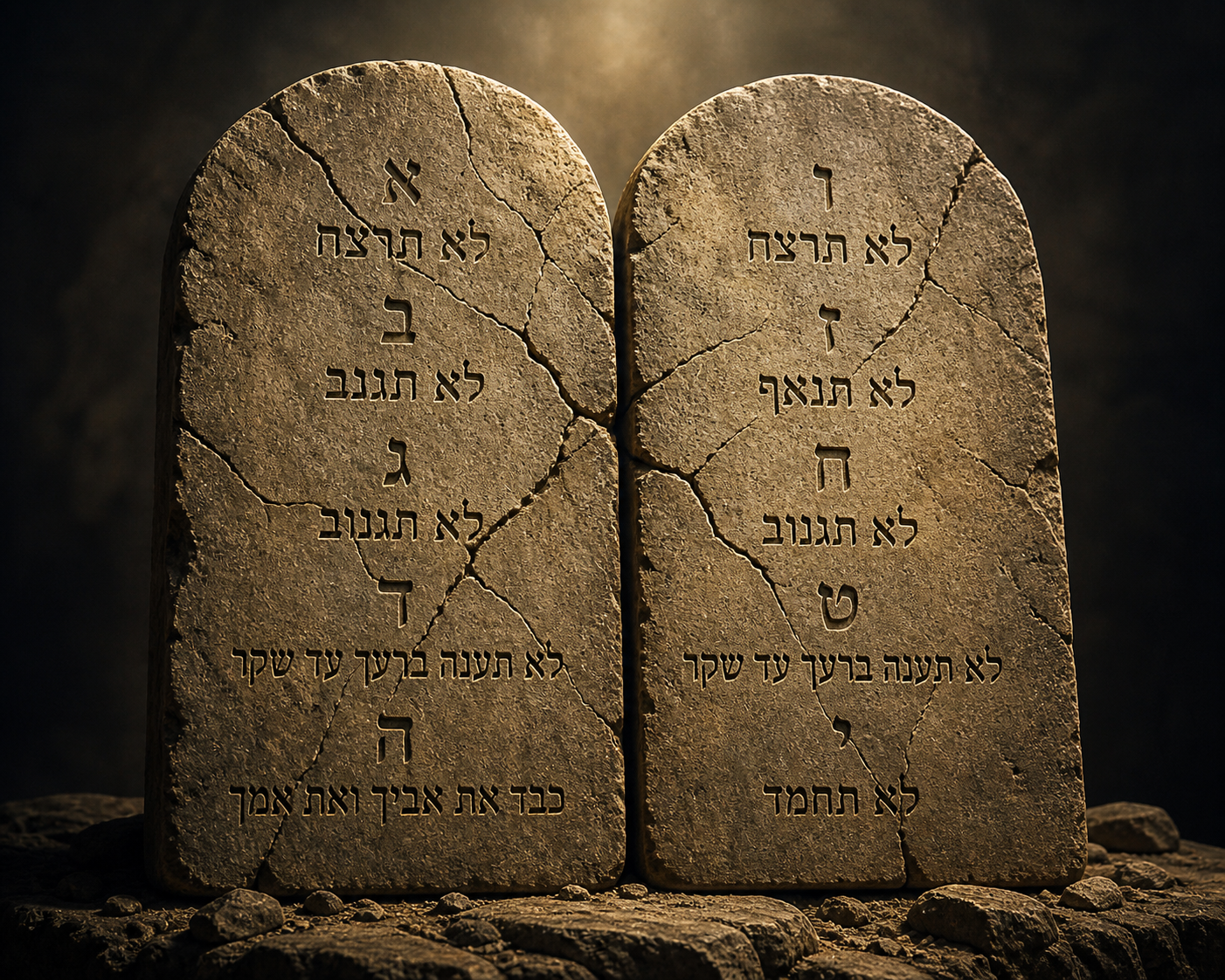
I’ve heard it said that race and gender don’t really exist. Both are cultural constructs.
Race and gender do, of course, exist. Culture does not give some people ovaries and others testicles, and culture does not make some people darker than others. What culture creates are the category names. Culture also decided to call one animal a ‘cat’ and another a ‘dog.’
We could, of course, use different classifications, but changing what we call “men” and “women” would not change the physical differences between them anymore than calling “dogs” and “cats” by the same word would make dogs and cats the same.
Classifications are useful for differentiating between different things.
Human variation is continuous. As such, while calling someone whose ethnicity is from Northern Europe “white” while calling someone from Sub-Saharan Africa “black” may make sense, what do you do to differentiate between someone from Greece and Italy, or Southern Spain and Northern Morocco? Such people may have different languages and cultures, but ethnically, they are almost identical.
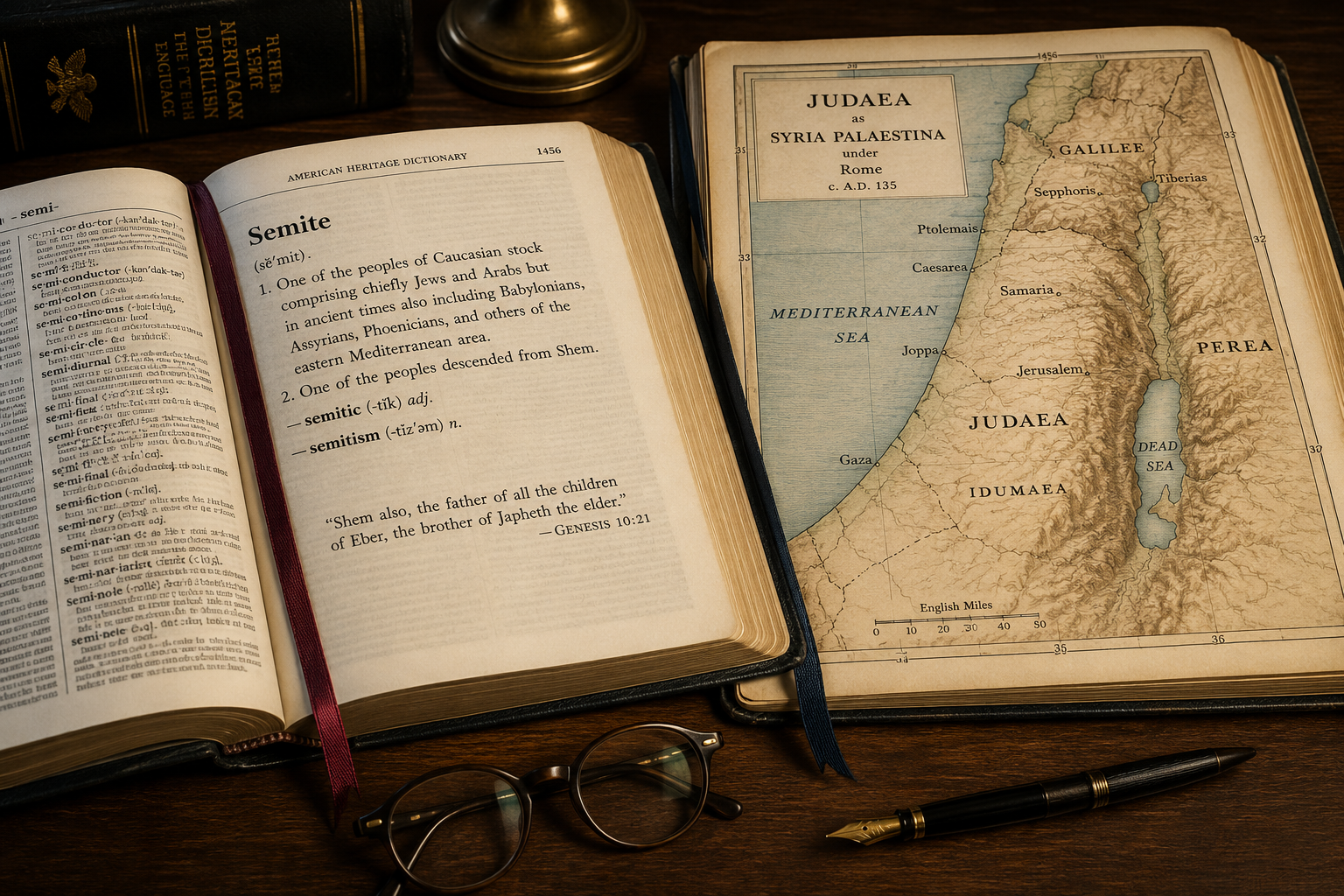
One of the many ethnic classifications is ‘Semite,’ and the word ‘Semite’ is defined in my American Heritage Dictionary (from 1985 – before the ‘War on Words’) as, “1. One of the people of Caucasian stock comprising chiefly Jews and Arabs but in ancient times also including Babylonians, Assyrians, Phoenicians, and others of the eastern Mediterranean area. 2. One of the people descended from Shem.” According to Genesis, Shem was one of Noah’s sons.
Note that ‘caucasian’ includes not only Europeans, but also many peoples of North Africa, the Middle East, the Caucasus, and even parts of South Asia. Ancient Israelites would not have looked like northern Europeans, but nor would they have looked like Sub-Saharan Africans or East Asians. They were indigenous Levantine peoples, sharing ancestry with the Canaanites, Phoenicians, Arameans, and others. Modern genetic studies show continuity between ancient Levantine people and modern Jewish communities, as well as with other peoples of the Levant.
Before discussing Anti-Semitism, Islamophobia, or Palestine, we first have to know what those words actually mean.
An Anti-Semite is defined as, “a person who is hostile toward or prejudiced against Jews,” although many Anti-Semites today prefer the word “Anti-Zionist.”
The word ‘Anti-Zionism’ is not in my dictionary, but ‘Zionism’ is defined as “1. A plan or movement of the Jewish people to return from the Diaspora to Palestine. 2. A movement originally aimed at the re-establishment of a Jewish national homeland and state in Palestine and now concerned with the development of Israel.”
‘Diaspora’ is a new word for me, so I looked that up too. It means, “1.The body of Jews or Jewish communities outside of Palestine or modern Israel. 2. The body of Jews living dispersed among the Gentiles after the Babylonian captivity. 3. A dispersion of an originally homogeneous people.”
Taken together, Anti-Zionism is opposition to the movement of the Jewish people from the Diaspora back to Palestine and, today, to the existence of the State of Israel. But what is ‘Palestine’? That too is not in my dictionary, likely because it has never been a state.
Fortunately, we know what it is. Palestine is a geographic region in the eastern Mediterranean between the Jordan River and the Mediterranean Sea. The word ‘Palestine’ comes from the Philistines.
Some historians believe that the eruption of the Thera volcano on the Minoan civilization’s central island of Strongyle, now known as Santorini, caused the plagues that led Pharaoh to let the Israelites leave Egypt. Whether or not that is true, it definitely led to the eventual destruction of the Minoan civilization, from which the Philistines most likely came.
The Philistines were the Israelites’ primary enemy from the period of the Judges to the period of the unified Kingdom under Saul, David, and Solomon.
The unified Kingdom also included Reuben, Gad, and half of Manasseh, on the east side of the Jordan River. Ancient Israel was on both sides of the river, and I’m including a map of the unified Kingdom with modern Israel superimposed.

Modern Israel Superimposed on Ancient Israel
After Solomon died, Rehoboam became king. Representatives of the northern tribes, led by Jeroboam I, asked him to eliminate taxes used to pay for the First Temple, and Rehoboam refused. The northern tribes broke away to form the Kingdom of Israel, with its eventual capital at Samaria, and were eventually conquered by the Assyrians.
This can be confusing because the unified Kingdom was also called Israel. The northern kingdom retained that name until it was conquered by the Assyrians. The southern kingdom became known as Judah. It survived the Assyrians, but was later conquered by the Babylonian Empire before being restored under the Persian Empire.
The name “Judah” took several linguistic forms as the region passed from empire to empire. The Persians called it Yehud Medinata (or “Province of Yehud”). When Alexander the Great came, the Greeks called it Ioudaia (or “The Land of Judah”). Eventually the Hasmoneans gained independence from the Seleucid Empire during the Maccabean Revolt and called it simply “Judah” again.
When Rome conquered the Hasmonean Kingdom of Judah and subjected it to Roman rule, it used the Latin version of the existing name: Judaea. Following the Jewish Bar Kokhba Revolt in AD 132-136, Emperor Hadrian renamed the province Syria Palaestina, after the long-vanished Philistines. This was intended to deemphasize the Jewish Kingdom of Judah.
From this Roman insult comes the modern word Palestine, which then became a territory of the Byzantine (eastern Roman) Empire, various Islamic caliphates, the Crusaders, the Mamluks, the Ottomans, and finally the British.
During the British Protectorate, the term “Palestinian” referred to everyone in the region, including Jews, Christians, and Muslims. The Palestine Post (now the Jerusalem Post) and the Palestine Symphony Orchestra (now the Israel Philharmonic Orchestra) were Jewish. The modern political use of “Palestinian” developed much later.
The Palestinian Liberation Organization (PLO) declared Palestine a state in 1988. The PLO did not list its supposed geographic borders, but the UN decided to give them the land Israel’s neighbors lost by attacking Israel in 1967. This included the West Bank, the Gaza Strip, and East Jerusalem.
The Oslo Accords created the Palestinian Authority (PA) as an interim governing body in the early 1990s. The PA was separate from, but closely connected to the PLO, and for decades the UN, the US, and Israel all tried to negotiate borders, but no version of the PA, Fatah, Hamas, or the PLO has ever agreed on any set of borders that does not include Israel. In the case of Hamas, it has been very clear that it wants not only to take over the land of Israel, but also to exterminate the Jews and Muslims living there.
In spite of the fact that Hamas wants to exterminate Israel, Israel pulled completely out of the Gaza Strip in 2005. Hamas won the 2006 Palestinian election in Gaza and took control of the Gaza Strip, while the Fatah-led Palestinian Authority continued to govern parts of the West Bank.
Hamas horrifically attacked Israel on October 7, 2023. According to Hamas, Israel has since killed 73,000 people in Gaza, and also according to Hamas half of the people Israel has killed are Hamas militants. The rest are civilians.
How accurate those numbers are is difficult to say as Hamas has been known to inflate casualty counts, but suffice it to say that a one-to-one ratio of militant to civilian deaths is much lower than anyone else has ever managed in modern urban warfare. Israel is going to great pains to avoid civilian casualties as much as possible while fighting a group that uses civilians as human shields, and that brags that they “love death more than you love life.”
Somehow people seem to broadly understand that there is a difference between disagreeing with Judaism as a faith, and with disliking Jews as a people. It is also possible to disagree with specific actions of the state of Israel without being anti-Israel or Anti-Semitic.
As we already established, Anti-Zionism is the belief that the Jewish people have no right to national self-determination in their historic homeland through the existence of the State of Israel. Many people today claim to be Anti-Zionist without being Anti-Semitic on the grounds that they want to see a secular Palestine, rather than a Jewish or a Muslim state. This almost sounds reasonable on its face, and there have been secular states in the region. Lebanon was a Christian-majority country where Christians, Jews, and Muslims all lived peacefully together, until civil war broke out in the 1970s and Lebanon let Hezbollah in. Today Lebanon is about 70% Muslim and 30% Christian.
Lebanon has no Jewish people left at all.
I have a litmus test for Anti-Zionists who claim they are not Anti-Semitic. There are 10 countries that use the Qur’an as their Constitution and Sharia as the official law of the land. Another 13 have Islam as the official religion but have mixed civil/Sharia legal systems. I have yet to see anyone claim those states have no right to exist, and I have yet to see anyone protest them. Anyone who is OK with the world having 23 Muslim states, but who is not OK with the world having a single Jewish state, is Anti-Semitic.
Anti-Semitism is hatred against a specific group of people, and the equivalent with Muslims should be some form of anti-Muslim bigotry, but most definitions of ‘Islamophobia’ include hostility toward the religion. The word is regularly used when the religion itself is criticized. Islamophobia then becomes an umbrella under which Islam as a religion can hide from criticism.
Judaism teaches that human beings are created in the image of God, possess free will, are morally accountable for their actions, and are called to pursue justice, mercy, and righteousness. It emphasizes obedience to God’s commandments, repentance for wrongdoing, charity toward those in need, and hope for the eventual redemption of the world.
Unlike many missionary faiths, Judaism does not seek the universal conversion of mankind, nor does it teach that non-Jews must become Jewish to live moral lives. Traditional Judaism recognizes that non-Jews may stand in relationship with God by observing a limited set of universal moral principles, commonly known as the Noahide Laws, rather than the full body of Jewish religious law. Those are the laws Christians and Jews both say God writes onto our hearts, forming our conscience.
Christians are called upon to spread their faith through the word (‘spreading the Good News’), and Muslims are called to spread Islam through the word when possible, and through force whenever words fail. Judaism is unique in that it is designed as an inheritance rather than as something the faithful are called upon to spread.
Islam is centered on Muhammad, whom Muslims regard as the final prophet of God. Its central teachings are found in the Qur’an, which Muslims believe to be the literal word of God, and the Sunnah, the recorded words and actions of Muhammad preserved in the Hadith. Together, these form the foundation of Sharia, standing as the comprehensive body of Islamic law that has historically governed not only religious practice, but also civil, criminal, commercial, and family law.
The major schools of Islamic law all recognize penalties for apostasy and blasphemy, imposing distinct legal obligations and restrictions upon non-Muslims living under Muslim rule. They also all regard Sharia as the only possible foundation of civil government.
People try to equate these religions by pointing to the brutality in the Old Testament (the first five books of which are also the Torah), but it is important to differentiate between things that a religious text says historically happened at a specific time and place, and things that a religious text commands followers to do today.
It is also important to understand that religions are not only sets of beliefs and customs, but are also moral systems.
When Jesus was asked to give the most important Commandment, he instead paraphrased all of the Commandments: love God above all things, and love other people as much as you love yourself. Some call this the ‘golden rule,’ and Jesus gave it as a summary of Judaism’s Commandments such that Judaism and Christianity share this central belief. The ‘golden rule’ acts as the moral system Jews and Christians both try to live by.
Islam also has two central tenets: submit fully to Allah through strict adherence to Sharia, and force others to do the same.
While Muslims who submit fully to Allah within their own lives can be compatible with classical liberalism, those who want to force others to do the same are not, and the religion’s core texts call for the more violent of the two.
Radical Imams in Western nations often radicalize the newly devout by pointing out that Muhammad said even he was not guaranteed a spot in paradise; only those who die in violent Jihad are. They will say some version of, “You have until now lived the blasphemous, decadent life of a Westerner. If Muhammad, the perfect prophet of Allah, is not guaranteed a place in paradise, what chance do you have? There is however one way for you to overcome your sinful past and find paradise. It is Jihad. I have a suicide vest for you.”
The radicalization in the West is so effective that Saudi Arabia has banned British Muslims from coming to Saudi Arabia out of the fear that British Muslims would radicalize Saudi Muslims.
Note that forcing people to submit to Sharia is completely incompatible with any concept of individual rights.
Individual Muslims can be compatible with classical liberalism, but the faith as a whole cannot be. Some would call me ‘Islamophobic’ for saying this, but I am not criticizing Muslims as people. I am criticizing Islam as a faith. I am criticizing beliefs that come from within that faith.
Christians and Jews criticize one another’s faiths every time we discuss Jesus, and yet Christians and Jews generally get along very well. Both groups want not only to bask in God’s love ourselves, but also to reflect that love toward others. Imperfect as we may be as individuals, this is what our religious texts tell us to do.
Atheists and agnostics have no issue criticizing Judaism and Christianity, and though the faithful may debate them, we don’t take the disagreements personally. We certainly don’t try to convert people by force. Similarly, in a classically liberal, free society, it should be perfectly permissible to criticize Islam.
Classifications are useful. Islam is not a race, but a religion. People possess rights. Religions do not.