

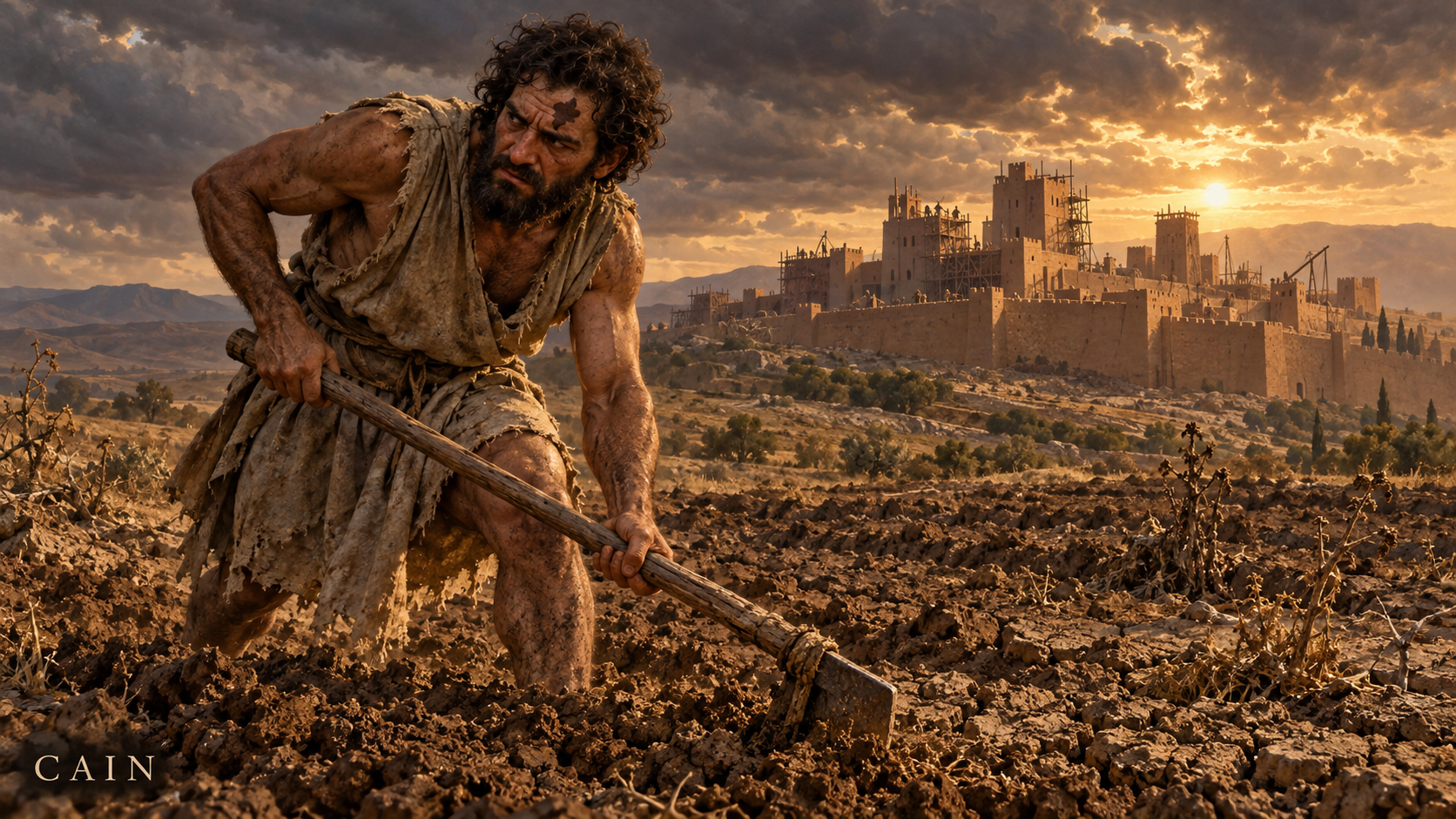
Genesis 4, 1-18 gives us an interesting story:
Now the man knew his wife Eve, and she conceived and bore Cain, saying, “I have produced a man with the help of the Lord.” Next she bore his brother Abel. Now Abel was a keeper of sheep, and Cain a tiller of the ground. In the course of time Cain brought to the Lord an offering of the fruit of the ground, and Abel for his part brought of the firstlings of his flock, their fat portions. And the Lord had regard for Abel and his offering, but for Cain and his offering he had no regard. So Cain was very angry, and his countenance fell. The Lord said to Cain,
“Why are you angry,
and why has your countenance fallen?
If you do well,
will you not be accepted?
And if you do not do well,
sin is lurking at the door;
its desire is for you,
but you must master it.”
Cain said to his brother Abel, “Let us go out to the field.” And when they were in the field, Cain rose up against his brother Abel, and killed him.
Then the Lord said to Cain, “Where is your brother Abel?” He said, “I do not know; am I my brother’s keeper?” And the Lord said, “What have you done? Listen; your brother’s blood is crying out to me from the ground! And now you are cursed from the ground, which has opened its mouth to receive your brother’s blood from your hand. When you till the ground, it will no longer yield to you its strength; you will be a fugitive and a wanderer on the earth.” Cain said to the Lord, “My punishment is greater than I can bear! Today you have driven me away from the soil, and I shall be hidden from your face; I shall be a fugitive and a wanderer on the earth, and anyone who meets me may kill me.” Then the Lord said to him, “Not so! Whoever kills Cain will suffer a sevenfold vengeance.” And the Lord put a mark on Cain, so that no one who came upon him would kill him.
Then Cain went away from the presence of the Lord, and settled in the land of Nod, east of Eden. Cain knew his wife, and she conceived and bore Enoch; and he built a city, and named it Enoch after his son Enoch.
Several things immediately stand out to me in this story. The first is the difference between the offerings. The story says Abel brought from the firstlings of his flock, which are the first born. Abel also brings the fatty portions, which are generally considered the choicest cuts of meat. Abel then is giving God a sacrifice before taking for himself, and also giving God the best of what Abel produces. God finds that to be an acceptable offering.
Genesis does not say specifically what is wrong with Cain’s offering, but nor does it describe the ‘fruit of the ground’ in any way that might represent ‘first fruits,’ as later prescribed in the Law of Moses. When Moses said to give God the ‘First Fruits,’ Moses may well, in fact, have been referring back to Cain not doing so.
Whatever the case, God was not pleased with Cain’s offering, and warns Cain to master the sin hanging around him.
The second thing that stands out is that Abel is the second-born, and though the story does not indicate that Cain thought himself superior to, or more entitled than Abel, it was the custom that the first born inherits his father’s position. God, however, overlooks the first born and provides favor to the second, caring far more for the righteousness of the sacrifice, inferring also the righteousness of the person giving it, than for birthright.
Cain killing Abel is the epicenter of the story. It is the ultimate betrayal not only of Cain’s younger brother, but also of God, for God told Cain to control his sin and Cain instead gives in to his sin, killing his brother, a righteous man, out of spite.
When God asks Cain where Abel is, Cain lies and says he does not know. Cain asks, “Am I my brother’s keeper?”, which is foolish as God already knows the answer to His own question. Also, at this point Cain quite literally is his brother’s keeper – by killing Abel Cain kept Abel from living a full life.
God’s punishment seems fitting. God strips Cain of the ability to farm the soil and makes Cain a fugitive and wanderer of the Earth, but God also marks Cain to prevent others from killing Cain.
Cain understands another portion of God’s punishment: he will be hidden from God’s presence. Sin, of course, separates us from God.
That mark and the protection it bestows is the third thing that stands out. God wants Cain punished, but God punishes Cain directly and provides a warning for others not to add to the punishment God has already provided.
The last thing that stands out is that Cain founded a city after being told by God that Cain would wander. In fairness to Cain, God did not forbid him from settling. He just told Cain that Cain would not do so.
We don’t know what happens to Cain after that. I assume he did not stay in Enoch, but instead wandered, given that wandering is what God told him he would do. The narrative, however, moves on to his descendents before going back to Adam and Eve, who have Seth.
There is a second Enoch that comes from Seth’s line, and this Enoch, we are told, “walks with God.” This line eventually leads to Noah, and to the re-establishment of humanity after the flood.
Lamech is the culmination of Cain’s line, and Lamech boasts about killing a man. Cain’s male line does not survive the flood.
There is a lot to unpack here, but there are several recurring themes. One is that we have agency. God called upon Cain to master sin – not to succumb to it. The next is that though we have freedom, our freedom has moral limits that relate to respect for the rights of others. The third is that punishment has just limits.
Finally, the actions of the father have a huge impact on his children, who are not necessarily bound by the father’s fate, but whose own start will be largely dictated by it.
This basic morality sparked both Judeo-Christian culture, as well as Judeo-Christian morality, and as the country drifts slowly away from those things, a split is emerging within Conservative circles on how much power the government should have to preserve those things.
Sin operates the same way shock-comedy does in that there is a sweet spot where sin is exciting without being so transgressive as to move beyond the realm of temptation, just as shock-comedy operates in a sweet spot where statements are offensive, but not enough so to stop being funny. It is the shock of “I can’t believe he said that” that makes us laugh.
The problem, for those who succumb to temptation, is that the rush they feel in doing so requires the same kind of escalation as shock-comedy, and shock-commedians always eventually become so offensive as to turn-off even their core audience, as happened to Andrew Dice Clay.
Consider a married man who begins exchanging flirtatious messages with a coworker. At first, the secrecy and suggestion are exciting enough. As those exchanges become more familiar, they need to become more intimate to recapture the excitement. Soon it becomes active sexting, which eventually leads to an affair.
A wife is far more apt to forgive her husband if she finds out about the first few text messages and intervenes than if things develop into a full-blown affair, and just as a husband becomes more and more separated from his wife as his affair escalates, so too we become more and more separated from God as we move ever further into sin.
Those who believe in possession describe how it works in the same context I just used to describe sin, except that they attribute the sin to an outside force. Temptation, once followed, becomes more extreme over time. Then comes obsession, infestation, possession, and finally, subjugation.
I’ll give descriptions for each step, not because I believe in actual possession, but because the steps are illustrative of the process through which we can become captured by sin.
Extreme temptation: Exploiting a person’s desires and weaknesses to encourage wrongdoing.
Obsession: The temptation increasingly occupies the person’s thoughts.
Infestation: Evil gains a deeper foothold in the person’s life.
Possession: The demon takes control of the host’s body.
Subjugation: The culmination: domination, with the demon claiming ownership of the person.
Now let’s use the same list, but without any reference to religion:
Extreme temptation: Desires become powerful enough to make wrongdoing deeply appealing.
Obsession: Thoughts increasingly revolve around satisfying those desires.
Infestation: The behavior becomes embedded in everyday habits and routines.
Possession: The compulsion increasingly governs behavior despite efforts to resist.
Subjugation: Life becomes organized around serving the compulsion, regardless of its consequences.
And just like that we are talking about psychology instead of religion.
The Bible is an old book. Even the part we call ‘New’ is 2,000 years old. It was written by ancient man in an attempt to explain the world around us, and our relationship to it. One need not believe in God to see wisdom in the Bible, and so of course the steps those who believe in literal possession observe are the same steps that lead people to become overcome by sin to the degree that they begin to demand that the rest of society glorifies their sinful behavior.
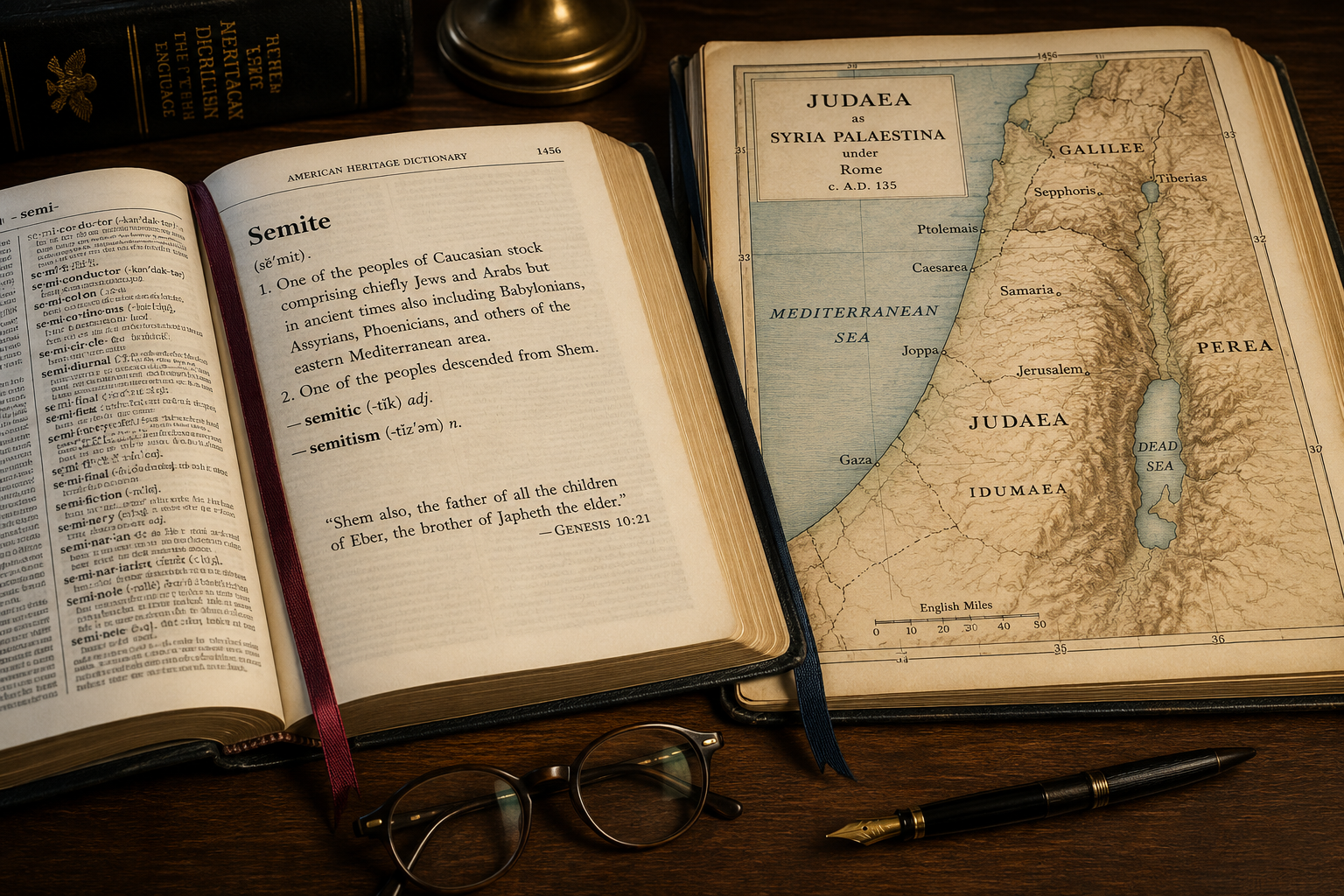
We also have the concept of repentance, and here is how the American Heritage dictionary defines the word, ‘repent’: “To become a more moral or religious person as a result of remorse or contrition for one’s sins.” If we want to turn that into psychology all we have to do is to remove one word and rephrase another: “To become a more moral person as a result of remorse or contrition for one’s moral errors.”
As a Christian, I believe that repentance brings us closer to God, but one need not be religious to understand that acting in a positive way when we feel bad about something we did helps to make us better people by discouraging us from doing it again.
Repentance, however, is personal.
Many people act as if nations need to repent, but nations have no ability to do so. Only individuals can. Even when people support a nation in doing something evil, repentance must come from those who supported it. Nations can pay damages, as Germany did after World War Two, but they do so by taxing people. People can collectively feel remorse, but collectively feeling remorse is still remorse at an individual level – just with multiple people feeling it at the same time.
We have choices. We can sin, or not. If we sin, we can repent, or not. We do it as individuals, or we don’t do it at all. Multiple people can do the same thing, but they all make individual choices.
Liberals used to believe in individual rights, just as most conservatives do. Over time, however, modern liberalism has split further and further away from classical liberalism, and they have done so over the question of collective guilt.
Classical liberalism is not a phrase I can find in my American Heritage Dictionary, but it is in the Encyclopedia Britannica, which calls it “an early form of liberalism, the political-philosophical doctrine which holds that the central problem of politics is the protection of individual freedom or liberty. The term classical liberalism may also refer to actual political systems that instantiate classical-liberal principles.”
The Encyclopedia Britannica goes on to say:
Both classical liberalism, which was first articulated in England in the mid-17th century, and modern liberalism, which was predominant in western Europe, North America, and elsewhere for much of the 20th century, hold that government is necessary to prevent individuals from being harmed by others. They also recognize that a necessary role of government is the provision of public services that private businesses are incapable of performing fairly or efficiently, such as law enforcement, education, health care, national security, and sanitation. All forms of liberalism, however, seek to limit the powers of government, because government itself can pose a threat to individual freedom. The problem that liberalism in general addresses, then, is that of devising a system that gives government the power necessary to protect individual freedom but also prevents those who govern from abusing that power.
The problem is compounded when one asks whether this is all that the government can or should do on behalf of individual freedom. Contemporary liberals in the classical tradition—the so-called “neoclassical” liberals, or libertarians—answer that it is. Modern liberals, however, have insisted that the powers of government can promote as well as protect the freedom of the individual. Indeed, according to modern liberalism, the chief task of government is to remove obstacles that prevent individuals from living freely or from fully realizing their potential—obstacles such as poverty, disease, discrimination, and ignorance.
I agree with the Encyclopedia Britannica that there was a form of liberalism that dominated the 20th century, but though it was not the same as conservatism, it was still within a classical liberal framework. ‘Modern liberalism’ as defined by the Encyclopedia Britannica involves a supposed freedom from want in which the government assumes the power to provide, and for the government to give something to one person, it must necessarily take it from someone else.
This, in turn, creates the question of who the government should take from and who the government should give to, and that opens the door for collective guilt. Collective repentance then becomes a call for reparations to cover the supposed guilt.
We like to say that white people had black people as slaves, but it is more accurate to say some white people had some black people as slaves. We like to say that the nation allowed slavery, but it is more accurate to say that specific states allowed slavery whereas other states did not, and that the Federal Government stayed out of it, to the degree possible, for the nation’s first 72 years.
If guilt and repentance were collective, then someone could get repentance without taking any personal responsibility by apologizing for whatever group they are a part of. When white people apologize for their whiteness, they are doing precisely this. It’s performative but not meaningful, and they feel morally superior to other white people through their performance.
Collective guilt and collective repentance also leads to mob mentality, and I can think of no better illustration of possession than what happens to individual people when they become part of a mob. The mob does not need a literal demon to make this happen – for all practical purposes, it is one.
Over the past 26 years, modern liberalism has used collective guilt to try to limit opportunity for some on the assumption that it can then provide opportunity for others. The best the government can do in this capacity, however, is to give jobs to people who are unqualified, and then to watch them fail.
That’s not to say that everyone who uses the term ‘liberal’ to describe themself follows this. It just means that the party as a group has been moving in that direction, and those who do not follow are increasingly finding themselves without a political home. When I talk about groups, I am not talking about every individual in the group, and that should be made clear.
I’ve often argued that what today constitutes modern liberalism was created in reaction to Richard Dawkins’ book, The God Delusion, published in 2006. Dawkins argued that science has absolutely no explanation for free thought, and that as such, free thought does not exist. Dawkins asserted that there is no rational difference between believing in free thought and believing in God.
The argument that free thought is contrary to natural science actually goes back to B. F. Skinner, in 1971, but I don’t think Skinner’s Beyond Freedom and Dignity had the same effect on the national discussion that Dawkins’ later work did. Dawkins’ book spent 51 weeks on the New York Times Bestseller list, and I think sometimes a repeat drives a concept deeper into the public consciousness. Also, Skinner challenged autonomous agency and free will rather than the existence of free thought. Dawkins taking the next logical step mattered.
Dawkins wrote that our brains are computers, driven by programming (DNA) and data (lived experiences), and acting in entirely predictable ways based upon those two things. As Dawkins put it, we are ‘mere meat machines,’ that are sufficiently complicated to ‘think that we think,’ but actual free thought and free will are simply not possible under natural science, and thus cannot exist outside of a purely religious context that any rational person should reject.
This denial of agency gave the fractured left something it had previously lacked: an intellectual rationale to unify its disparate movements. The Marxist could now say, “The worker has no responsibility. Class position determines behavior.” The Malthusian could say, “Reproduction cannot be restrained. Biology compels it.” The Alinskyite could say, “Truth is irrelevant. People cannot be persuaded, only conditioned.” And the environmentalist could say, “Humanity is inherently destructive, being programmed to consume.”
Before Dawkins, these ideas sat uneasily alongside one another, contradicting as often as they overlapped. With Dawkins, the contradictions dissolved. By declaring that free will is an illusion, he provided a common foundation on which each faction could claim scientific authority for its rejection of human responsibility. It was Dawkins’ denial of agency that split modern liberalism fully off from classical liberalism, whether he intended that or not.
Liberty requires agency. The denial of agency is a license for control.
The postliberal right arrives at the question of agency from a different direction. Its concern is that people cannot exercise freedom responsibly without first learning how to do so. Families, religious institutions, and communities teach the obligations that make freedom possible. If those institutions collapse, leaving people free will not restore their ability to govern themselves.
Their argument is that a child does not arrive in the world understanding responsibility, and an adult does not automatically become responsible. We learn from others, and the institutions surrounding us can encourage either restraint or indulgence. The postliberal believes that a society organized around individual liberty gradually undermines the authorities that teach restraint.
In Against the Dead Consensus, the authors argue that the old conservative commitment to individual autonomy failed to preserve family stability and communal solidarity. They reject treating small government as an end in itself when the institutions conservatives wanted to preserve continue to deteriorate. Their complaint is that the old political formula failed on its own terms.
Patrick Deneen extends this argument into economics. In his account, economic liberalization and social permissiveness have advanced together, weakening the relationships on which ordinary people depend. He advocates using public power to strengthen familial and civic institutions, combining economic intervention with conservative social purposes. A government that leaves markets alone can, in this view, permit economic forces to undermine the communities conservatives hope will sustain moral life.
Postliberals want government to serve what they call the ‘common good.’ Protecting individual choice is insufficient if the choices society encourages leave people isolated, dependent, or incapable of fulfilling their obligations. Deneen argues that political authority has a duty to direct people toward human flourishing through law and established custom. Individual freedom must be relegated within that purpose.
A classical liberal can agree that freedom requires moral formation. Recognizing that responsibility, however, does not to the classical liberal mean government should have authority over the moral lives of its citizens.
Looking back at Cain. God warned him, addressed his conduct, and held him responsible for his choice. Cain needed instruction, but instruction did not remove his responsibility. He could accept correction or reject it, and he rejected it. The failure was his.
A government can restrain a man from harming another, and can punish him if he does commit harm. It can also protect the freedom of those who would teach him to live differently, but compelling outward obedience cannot, by itself, make someone repent. That still requires the individual.
Nor does giving political authority resolve the problem. Cain does not become Abel if the government acquires the power to enforce a moral code. He just tries harder not to get caught.
Postliberalism must explain both how public authority will support moral formation and how that authority will be restrained when its holders become convinced that their wrongdoing serves a righteous purpose. Appealing to a shared moral order does not answer the question. Cain had received moral instruction directly from God.
Denying agency can justify managing people as products of their circumstances. Affirming agency while giving institutions comprehensive authority to direct its exercise creates a different danger: the individual remains responsible for choosing well while losing the freedom to make their own choices. Both bring us back to the same political question: what authority may one fallible person legitimately exercise over another?
Let’s look at our modern political movements based on how they differ across five dimensions of politics:
| Dimension | Classical liberalism | Modern Liberalism | Postliberalism |
|---|---|---|---|
| Primary political concern | Individual liberty and rights | Identity, power, structural relationships | Moral order and social cohesion |
| Universal principles | Central to political legitimacy | Frequently questioned or reinterpreted | Regrounded in substantive moral traditions |
| Role of institutions | Protect rights within limited jurisdiction | Address structural conditions and competing claims | Cultivate and preserve a shared moral order |
| Individual agency | Central to rights and responsibility | Not concerned with agency even where it accepts that it exists | Affirmed, but situated within formative institutions |
| Central tension | Liberty and legitimate public authority | Group recognition and equity | Moral direction and cultural conformity |
The table reveals that these movements disagree about the purpose of political authority even before they debate a particular policy. Classical liberalism places individual rights and responsibilities at the center. Modern liberalism increasingly focuses on relationships between groups, while postliberalism emphasizes the moral order within which individuals live.
Those priorities shape what each movement expects institutions to do. An institution charged with protecting individual rights has a different mandate from one charged with correcting structural inequalities or cultivating a shared moral order. Each mandate also requires an answer to what happens when an individual’s choices conflict with the institution’s purpose.
The row on agency exposes a particularly important distinction. Postliberalism affirms that people make meaningful choices, but gives formative institutions a central role in teaching them to choose well. That brings us to a question the table cannot answer: where does moral formation end and coercive control begin?
To follow these differences from philosophical premises into the actual exercise of political power, we need to ask four questions:
- What should society look like?
- What powers should government have?
- How should government be structured?
- Who should control government?
Politically, we tend to focus on questions 2-4, but really, question one is the critical one: what do we want society to look like?
A classical liberal has an easy time with this question, as they would deny that anyone has a right to decide what society should look like for anyone else. Society is, to the classical liberal, not a single thing, but the conglomeration of everyone who happens to be in society. Each person has a right to decide for themselves how they will interact with the rest of society, making what society looks like a collective decision we all make as a function of living our lives. To the classical liberal, what society looks like is derived rather than determined.
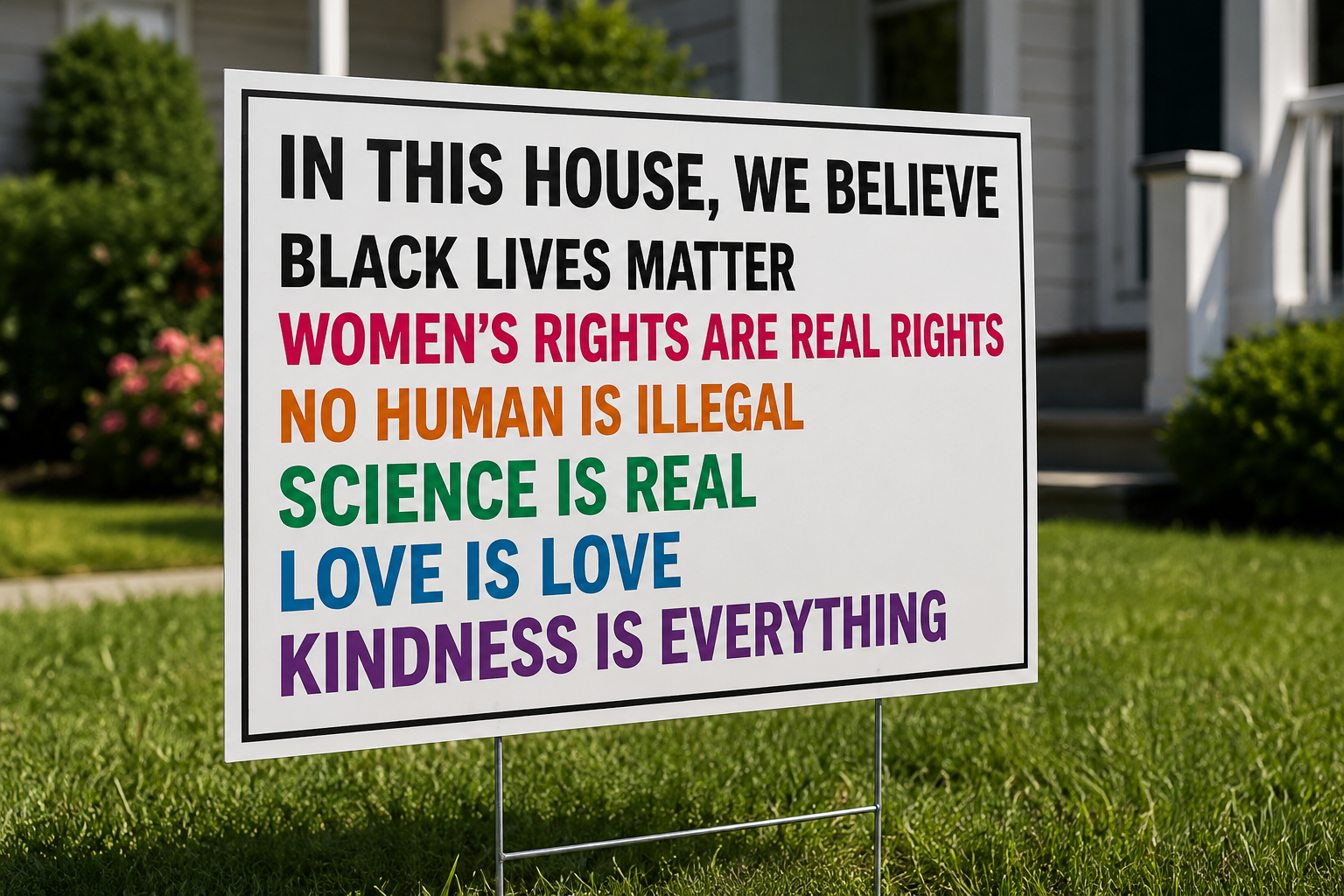
Modern liberals necessarily reject this view. Marxists, Malthusians, Alinskyites, and environmentalists all presuppose the right to define what society should look like, and then to mold society into that vision. These groups exist, in fact, out of the presumption that society, left to its own devices, does not look the way they want it to, and is thus broken.
If we deny agency, then Elon Musk has not done anything personally to justify his wealth. He’s just a meat machine reacting to DNA and lived experience. I could take anyone else, and if they have the same DNA and the same experiences, they will do exactly what Elon Musk has done. Similarly, without agency I have no reason to blame a criminal for the crimes they commit. They may be preordained by their DNA to commit crimes, they may be driven by lived experiences to do so, or they may be driven by a combination of those things, but they have no more control over their behavior than a stone has over falling if I drop it.
What Dawkins gave was the justification for society to be managed.
The denial of agency also explains the bizarre cultural paradoxes of the modern left. “Queers for Palestine” sees Palestinians as oppressed, which excuses them from all responsibility even when they want to kill gay people. With agency denied, the oppressed can never be guilty, no matter what they believe or what they do. They are, simply, reacting to their oppression, and there is something wrong with us for allowing them to remain oppressed. To the modern liberal, the Palestinians would not want to kill gay people if the Palestinians were not oppressed. Terrorism is not their fault – it is our fault for holding the terrorists down.
If Dawkins is correct that we are meat machines, then it is possible to control humanity by controlling our inputs, including our lived experiences. The purpose of the media, and everything else the public can see, hear, or experience, ceases to be about truth. Without agency the only purpose for information is to fill our heads with whatever data will optimize our behavior. The purpose of the media, in this environment, is not to inform the public, but to program it. The question of truth isn’t even relevant.
The elite don’t see themselves as meat machines though. Logically, they have to view themselves along those lines, but there is a difference between believing something on a logical basis, and emotionally connecting with that belief. As Jordan Peterson says, people act out their true beliefs, and the elite behave as if they believe in their own agency. It is the rest of us they seek to control.
As the Encyclopedia Britannica says, liberalism in the 20th century began to move away from negative rights and toward positive rights, removing obstacles such as poverty, disease, discrimination, and ignorance. Modern liberalism is the logical progression of this view: the belief that the government exists to provide freedom from want, for a public that lacks agency.
For most of American history, both parties have been dominated by classical liberals who differed on whether they were more afraid of government controlling our culture and morality, or of controlling our economic freedom, but who still broadly believed in limited government and free markets – just at different levels of balance. The difference now is that the Democratic Party is increasingly controlled by those on the left who have expressly rejected classical liberalism, leaving people like Bill Maher, Tulsi Gabbard, Bobby Kennedy Jr., and others without a political home.
To the modern liberal, people are for the most part interchangeable. The differences between people can best be understood by looking at the systems of privilege and oppression they live within. Society can be optimized by reducing the differences between people, and the world can be optimized by reducing the differences between different societies.
Interestingly, this has created a mirror image within conservative circles, with some conservatives also breaking away from classical liberalism, wanting to use the powers of government to restore the morality and culture modern liberalism seeks to destroy. These conservatives call their movement ‘postliberalism.’ Postliberals view individualism as the cause of multiculturalism, and seek collective control over the institutions of power in order to enforce a post-enlightenment Western culture.
Let’s move on to the second question: what powers should government have?
This too is a very easy question for a classical liberal to answer: it should only have as much power as the government needs to protect the liberty of the people.
For both the modern liberal and the postliberal – both of whom want to define what society should look like – limiting government to the powers necessary to protect liberty is grossly insufficient. It is in fact the liberty of the people that these groups believe gave us the broken society we currently have.
You hear this in their language. Postliberal Patrick Deneen wrote in his book, Why Liberalism Failed, “Liberalism has failed—not because it fell short, but because it was true to itself. It has failed because it has succeeded.” Bernie Sanders said on the floor of the Senate, “The economy is rigged, our campaign finance system is corrupt and we are struggling to control climate change.”
The Democratic Socialists of America says on their website, “Capitalism is a system designed by the owning class to exploit the rest of us for their own profit.” Alexandria Ocasio-Cortez said, on an episode of The Tight Rope, “our politics are so broken right now is because our relationships to one another as a society are really deeply broken,” and in Against the Dead Consensus, a 2019 postliberal manifesto, Sohrab Ahmari, Patrick Deneen, Rod Dreher, and others wrote, “The fetishizing of autonomy paradoxically yielded the very tyranny that consensus conservatives claim most to detest.”
I don’t think many people will read something with language like, “the fetishizing of autonomy paradoxically yielded,” but Vice President J.D. Vance takes Patrick Deneen seriously.
I would argue that modern liberalism’s focus on multiculturalism and moral relativism are the reasons our society has become morally and culturally fractured, and that the fastest way back to a unified nation is to return to classical liberalism. I would argue, in fact, that the classical liberal belief that each person should be free to live their lives however they wish, provided they allow everyone else to do the same, carries an inherent moral compass within it: one person’s freedom ends where another’s begins.
You can pack a lot of morality into that one little rule. Sins that don’t harm others can be left for God to judge.
Where classical liberals see each individual as a moral agent with inherent rights and responsibilities, both the postliberal and the modern liberal see the individual as something for society to control, and once people are no longer seen as moral agents with inherent worth, they become either resources to be optimized, or problems to be solved. Groups like the World Economic Forum and the Club of Rome make this explicit.
The Club of Rome and World Economic Forum call for all human activity to be globally managed, warning that population growth will otherwise destroy the Earth. Their “degrowth” rhetoric treats human life as a plague. By portraying mankind as a cancer on the Earth, these groups deny that human life has intrinsic value and call to have the population reduced, rationed, and restricted.
The logical endpoint is not just managed citizens, but fewer citizens. Once agency is denied, people lose dignity and can be rationed like electricity, or eliminated like pests. This is already happening in public policy.
When people are viewed as machines, the question is no longer how to cultivate their potential, but how to program, limit, or decommission them. That is the essence of anti-humanism: a philosophy that strips man of his soul, his individuality, his hope, and his value, and then calls the erasure progress.
For most of American history, conservatives have been classical liberals almost by definition, based upon a strong belief in limited government, but with much of the political right drifting into postliberalism, this is no longer true. A growing number of people who consider themselves ‘conservatives’ today want the government to have as much power as the modern liberal does, but they want that power used to enforce conservative social norms.
The postliberal right and the modern liberal left are moral opposites. They cannot peacefully coexist. What they agree on is that classical liberalism is a misguided failure. And of course they believe that – if your goal is to manage society from the top down, then the concepts of personal liberty and limited government are absurd.
How about our third question: how should government be structured?
This question is much more easily answered by the modern liberal or the postliberal.
The Democratic Socialists of America calls for the Senate to be abolished, for the President and Supreme Court to be chosen by Congress, and to be subordinate to Congress. Congress would consist solely of the House of Representatives, and would become a Parliament. Parliament then would have whatever power Parliament wants, over both the states and the people.
Not all modern liberals are Democratic Socialists, and theirs is an extreme view, but it is also where all the energy on the political left is, so we should view this as the direction the modern liberal is heading.
Postliberals want the government to have a similar amount of power, but want it structured within our current Constitutional framework. Postliberals are OK with how the government is currently structured, but want to remove the limits the Constitution places on it.
Classical liberals spent a great deal of time trying to decide how the government should be structured when they designed our country. They diffused power as widely as possible under the assumption that it can be, and generally will be, abused. They defined a bicameral congress, and separated powers between the Executive, Judicial, and Legislative branches. They created a Constitution that defines the scope of power each branch has, and they gave the Federal Government only the powers that could not be handled by the individual states, leaving the vast majority of power to the states, or to the people as individuals.
To the modern liberal, abuse of power isn’t really a problem. The people are assumed to be able to remove bad actors through voting, and modern liberals assume this is the only check state power needs. What the modern liberal worries about is not abuse of power by government, but abuse of power outside the government, which it believes necessarily happens when some people become wealthier than others. This is why the modern liberal hates billionaires.
Postliberals don’t worry about abuse of power either, believing that a shared moral and cultural framework would mitigate such things. If someone does something wrong, a just society would demand justice.
This brings us to our final question: who should control government?
The classical liberal answer is the people, through representatives exercising the limited powers the people have authorized. This is done not only to avoid the abuse of power, but also to avoid the concentration of power.
Modern liberals and postliberals face a contradiction: they claim to govern on behalf of the people, but neither accepts the society the people have created. Both want government to reshape society, which means overriding the choices of the people from whom they claim their authority comes.
A movement that supports democracy only when the public makes the desired choice necessarily places its agenda above the consent of the governed. It must either accept that people are free to reject its vision, or it must seek enough control over society to prevent rejection. To the degree that a movement rejects the agency of the people it governs, control becomes an easy choice.
The Democratic Party has not had a real primary since 2008, when Barack Obama defeated Hillary Clinton. That’s not surprising – Richard Dawkins’ The God Delusion was published two years earlier and it took time for the full implications of his denial of free thought to manifest itself in politics. By 2016, the party leadership decided the candidate, declaring so openly in court. This raises a question: do we use elections to decide who will run our government, or to provide an air of legitimacy to those who run our government?
Neither political party trusts the other with elections. Most Republicans don’t believe Joe Biden really got 81 million votes in 2020, and most Democrats believe Donald Trump was illegitimate in both 2016 and 2024.
According to a September 2026 Center for Strategic Politics/Liberal Currents poll, 59% of Democrats would support a military coup against Donald Trump today. That’s not exactly an endorsement of democratic principles.
Of course, the whole concept of self-government comes from classical liberalism, so as our political parties move away from classical liberalism we should expect them to move away from democratic means as well.
Classical liberalism asks us to accept responsibility for our own choices and to respect the freedom of others to make theirs. Its restraints protect us when our opponents govern, but they must also restrain us when we are in charge. Whether you accept that obligation matters more than whether you call yourself a Democrat or a Republican.
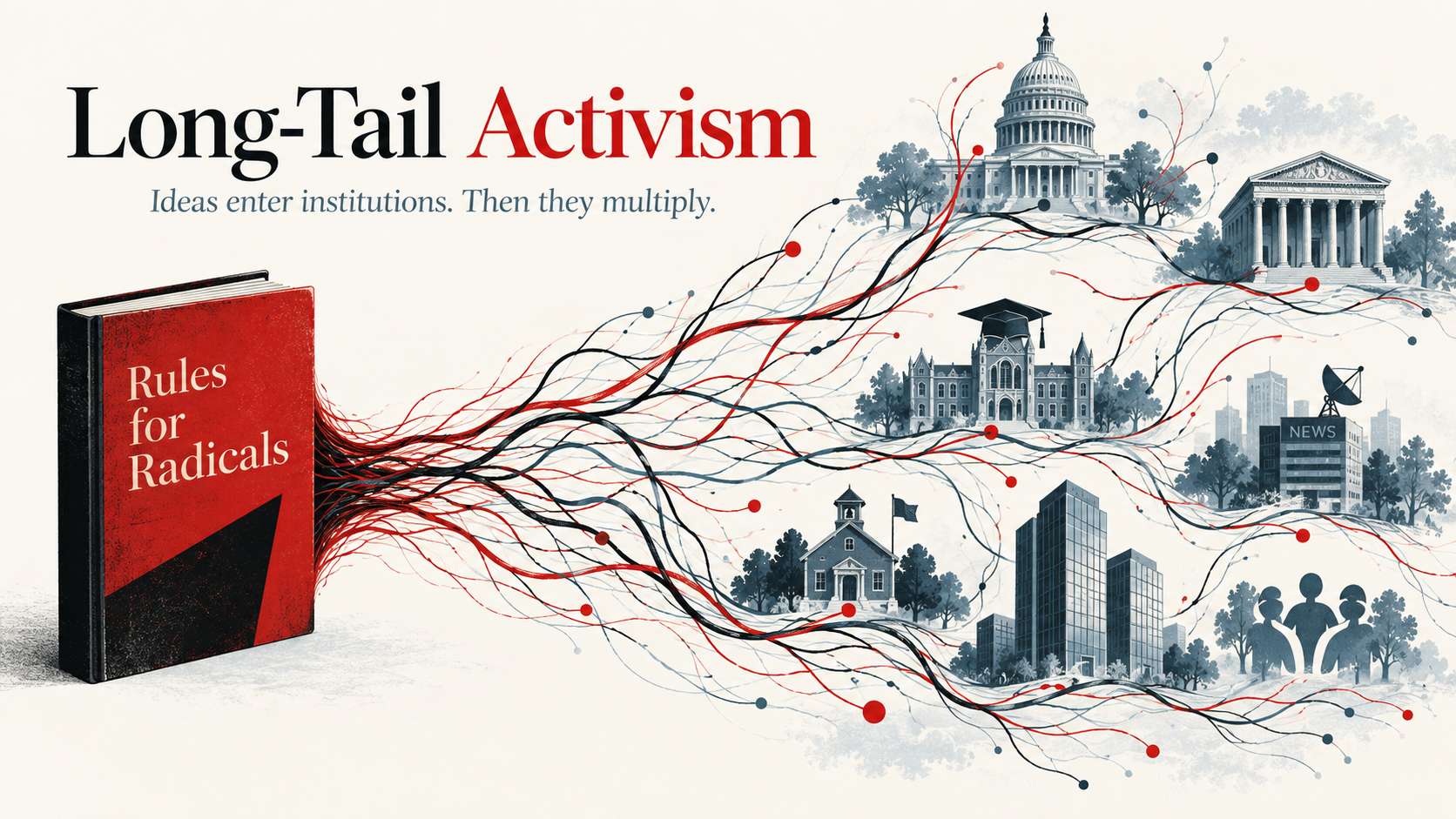
Classical liberals and postliberals both agree that our institutions are broken, having been captured by the modern left. I discuss this in detail in my essay, Long-Tail Activism. Both classical liberals and postliberals want to take the institutions back, but whereas classical liberals want the institutions to return to their original purposes – and to perform them faithfully, without political bias – the postliberal right believes that the institutions should be used to create society in the image the postliberal wants, and there are differences among different postliberal groups regarding exactly what that means.
Catholic integralists offer the most explicitly religious version. They believe political authority should recognize the truth of Catholic teaching, and that government’s responsibility for our earthly welfare must ultimately be subordinate to the Church’s responsibility for our eternal welfare. The Church and the state retain distinct functions, but they are not independent moral authorities. In this arrangement, taking institutions back means placing their purposes within a specifically Catholic understanding of the good.
National conservatives place greater emphasis on the nation’s particular history, religion, and inherited culture. Their statement of principles says that where a Christian majority exists, public life should be rooted in Christianity, while also providing protection for religious minorities. Their proposed order does not require every nation to become Christian, but it does require public institutions to sustain a national moral and cultural inheritance rather than treat competing cultural visions as equal.
Another overlapping current focuses on the economic conditions that sustain families and communities. Organizations such as American Compass argue that markets should be judged by whether they support workers, strengthen families, and preserve domestic industry. This approach favors a more active economic role for government. It can overlap with postliberalism without requiring everyone who supports it to accept integralism or reject constitutional liberalism.
These are overlapping currents rather than neatly separated camps, and their differences would become important if they acquired control over the institutions. A university directed toward Catholic teaching, one directed toward national cultural renewal, and one directed toward economic reconstruction would be used differently, and calling each purpose the ‘common good’ does not resolve those disagreements.
Preserving our republic requires more than putting the right people in office. It requires limits that bind those people once they get there, and a public willing to defend those limits even when they obstruct some of our personal political goals. We can disagree about what society should look like while recognizing one another’s right to help shape it. We can promote our beliefs, build institutions around them, and persuade others to join us. What we cannot claim is unlimited political authority to make everyone else conform.
In other words, preserving our republic requires a lot less Cain, and a lot more Abel.
When people fail to build the society they want through their own efforts and example, they can reconsider their conduct, or they can seek the power to compel others to produce the desired result. These are the same choices Cain had, and like Cain, their disappointment becomes a justification for controlling someone else. The modern left and the postliberal right offer different visions of society, but each must answer for the authority it claims over people who reject that vision.
The sins of the father tend to be visited on the son, and Cain’s story begins with his parents, Adam and Eve, who had also faced a moral boundary, a temptation, and a choice. God had warned Adam that eating from the forbidden tree would bring death. The serpent’s first lie contradicted God: “You will not surely die.”
The serpent then promised a benefit. Their eyes would be opened, and they would become like God, knowing good and evil. Sin, then, was presented as growth.
The way things actually worked was exactly as God had warned. Adam and Eve, now aware of good and evil, found that they could not always avoid the temptation of sin, and being sinful, they had to be expelled from God’s perfect garden. Being expelled from the garden also meant being removed from the Tree of Life, and that meant they would eventually die.
The promise that greater power will become safe once righteous people possess it requires us to forget what Genesis teaches about those people. They remain capable of temptation and self-deception. Adam blamed Eve, and implicitly God for giving her to him. Eve blamed the serpent. Cain denied knowing where his brother was. Wrongdoing was followed by an effort to escape personal responsibility, and no office, institution, or declaration of moral purpose removes that human tendency.
Government has legitimate work to do. It must protect Abel from Cain, punish wrongdoing within just limits, and protect even the guilty against excessive punishment. Families and religious institutions must teach responsibility, while individuals must decide whether to accept that teaching. A free society depends on people doing this work faithfully.
At the same time, the power to enforce cultural values through the application of law on the institutions that guide us is a power no government should ever have. Governments who have exercised this power have always eventually abused it, as they do today not only in China, but increasingly in Canada and Europe as well.
The United States has a responsibility not only to remain a nation devoted to freedom and individual liberty, but also to preserve freedom and liberty such that those values can be exported back to Europe, and eventually to the rest of the world. We must preserve our republic.
We cannot preserve our republic by pretending that liberty frees us from moral obligations, nor can we preserve it by surrendering those obligations to people who promise to make us good. We have to exercise responsibility ourselves and accept limits on the power we wield over others, including when we believe our purposes are righteous.
The warning to Cain remains a warning to each of us. Sin desires to master us, and we must master it. We cannot fulfill that obligation by acquiring the power to master everyone else.
We fulfill that obligation by acquiring the power to master ourselves, and in so doing, to master our desire for the sin lurking at our door.






Leave a Reply